Don Hotel, Swinton

Don Hotel, Swinton - 17.08.13 (1)

Don Hotel, Swinton

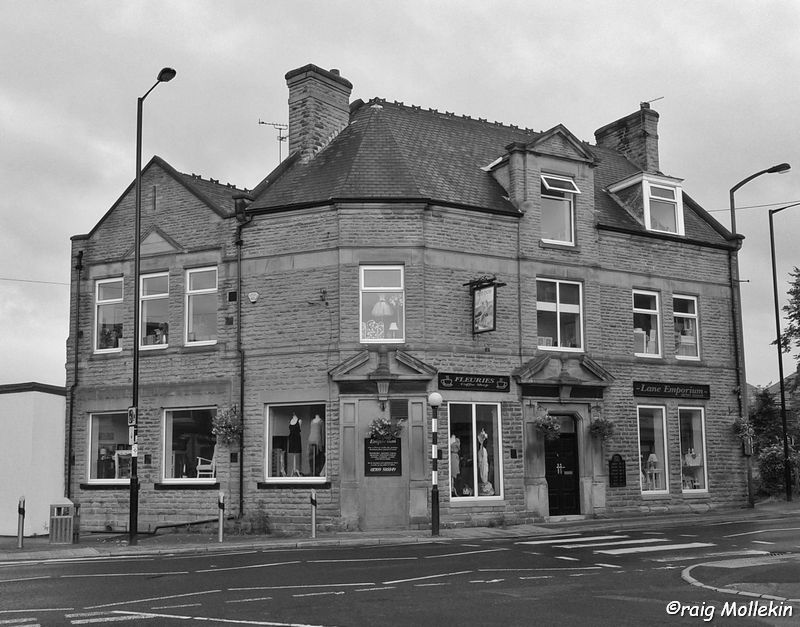
This 19th century public house closed for business in early 2010 and it was planned to convert it into residential accommodation. It is currently the home of Lane Emporium.

Landlords have included:-

  • John Gaunt – 1891
  • Luke Barber – 1901
  • Derek & Ivy Wall – Early 1970s
  • Tom & Rita Prescott – 1970s
  • Pickering & Dorothy Goddard – 1980s
  • Geoff Salmons – Early 1990s
  • Dave Evans – Late 1990s
  • Steve & Jane Burton Early 2000s
  • Michelle Hathaway – Circa 2005
  • Philip Dungworth
  • Bob Ingham
  • Craig Sutton

A familiar face that drank here whilst Geoff Salmons was the Landlord, was Paul Shane, the actor.

Ward & Sons, Swinton

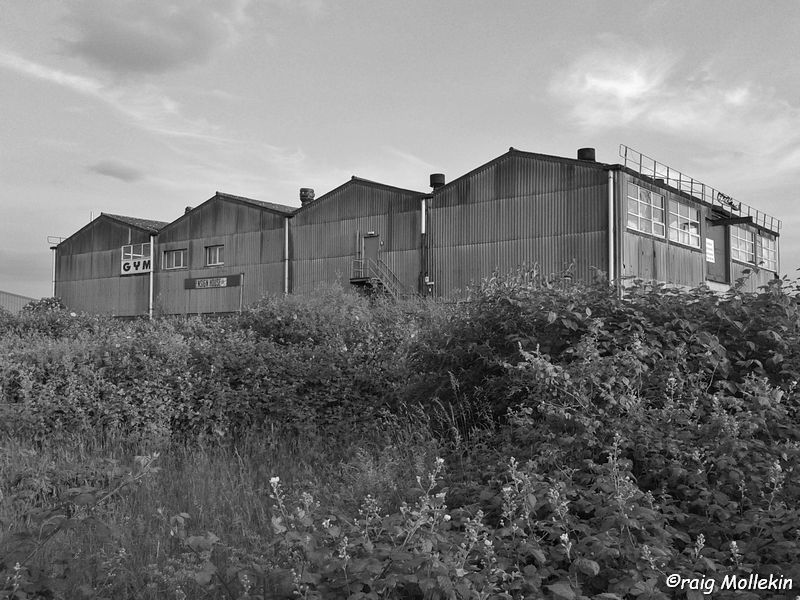
Ward & Sons, White Lee Road, Swinton - 25.06.13 (3)

Ward & Sons, Swinton

This business, located on Market Street, was established by Charles Jackson of Bridge Street and A. & C. Derwent, initially in Crossland Street in 1870 which became the ‘Bala Water Company’ in 1874. William Ward established ‘Mineral Water Works’ circa 1900 and ‘Ward & Sons’ began bottling ale for Bass and Worthington breweries.

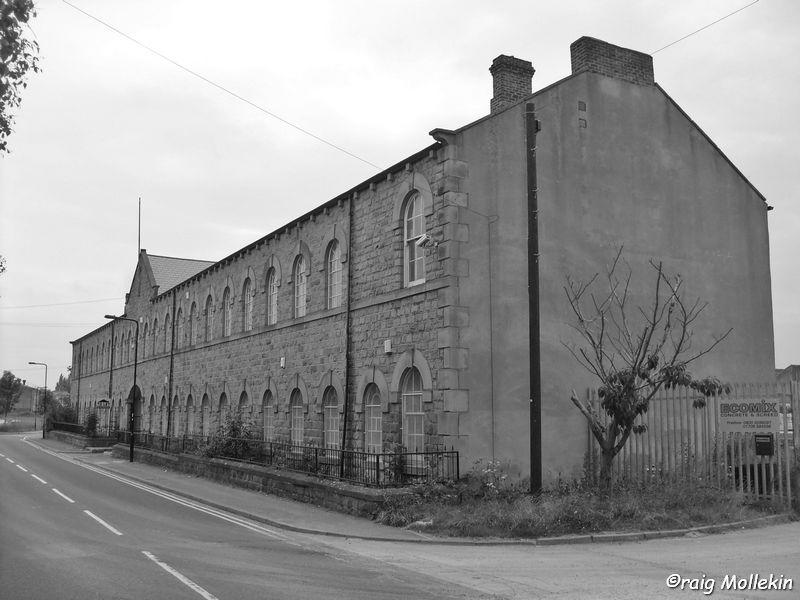
Ward & Sons possibly ceased trading in 1982, when operations were moved to Bass Charrington’s brewery in Sheffield. Much of the factory was demolished, some of it quite recently, but an old dilapidated looking section of it remains that is accessed from White Lee Road. This surviving, storage part of the factory where bottles etc. were kept, was taken over by A.C.R. Packaging who named it Ensign House. A.C.R. Packaging packed greetings cards etc. and possibly stored sweets too. It most recently appeared to be trading in furniture and a gym occupies/occupied the rear of it.

Chapel Hill Farm, Swinton

Chapel Hill, Swinton - 01.07.17

Chapel Hill, Swinton

John Sharpley, born circa 1829 in Penistone, married Emily Crawshaw in 1873. Together, they had a very large family, issuing at least eighteen children. John was a farmer and in the 1880s, he and his family, moved to live and work in Swinton.

The Sharpley family had, over the years, to my knowledge, four businesses in Swinton; a farm at Chapel Hill, Church Street (Church Farm that dealt with dairy), Fitzwilliam Street (Manor Farm) and a butchery at Swinton Bridge. It may be that Chapel Hill Farm and Church Farm were one and the same farm.

Sons of John and Emily that followed into the faming business, were, James (who initially farmed at Wombwell, then Swinton’s Manor Farm and latterly at Elm Tree Farm, Hooton Roberts), Thomas (known as Tom) (Chapel Hill Farm), Ben (Church Farm), John (Chapel Hill Farm & Manor Farm) and Albert (who became a butcher). Their youngest son, Colin, may also have helped with the business although he died relatively young at the age of 23, but was living at Church Farm at the time of his death.

The farm at Chapel Hill, which included an orchard, was demolished when St Johns Road and Chapel Hill bungalows were constructed. At the time, Tom Sharpley was operating from here and following the construction of the new bungalows on St Johns Road, he resided at 9 Chapel Hill.

Canal Tavern, Swinton

The Moorings, Bridge Street, Swinton - 23.05.16

The Moorings & Hamshaw Bridge, Swinton

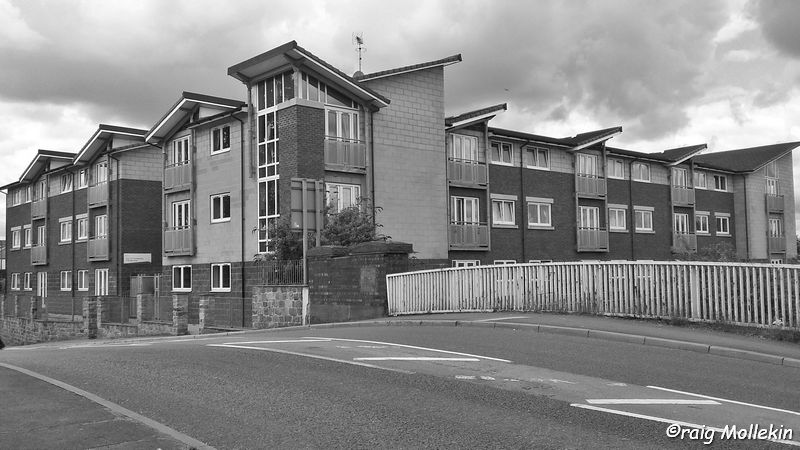
This 19th century public house was renamed, firstly, to, ‘Tow Path’, ‘Bar G’ (mid 1970s) and finally, ‘Canal Bar’ in the early 1990s. It closed for business circa 2006 and was demolished soon after. It is now the site of modern residential accommodation called ‘The Moorings’.

Landlords have included:-

  • George Hampshire – Mid 1800s
  • Lucy Hampshire (nee Newton) – 1860s/70s
  • John Bingham – Early 1900s
  • Harry Taylor – Early 1970s

I believe that Hamshaw Bridge, near to this public house, was named after George & Lucy Hampshire.

Travellers Rest, Swinton

Travellers Rest, Swinton

Travellers Rest, Swinton

This public house dates back to the 19th century but was considerably extended in the mid to late 20th century.

It was sold to the Mansfield Brewery in the early 1990s by owners, Gerry Wade, Joe Foster & Nigel Haigh.

In 2013, it was converted into private residential accommodation and ceased to trade as a public house.

Landlords have included:-

  • Fanny Knowles – Late 1800s
  • Jack & Daisy Probert – ?
  • John Percival Fieldhouse – ?
  • Gordon & Maureen Rayner – Mid 1970s
  • Tom & Wendy Stead – ?
  • Brenda Skelton – ? to circa 1982
  • Paul & Sherry Clamp – ?
  • Frank & Jean Rollett – Early 1990s
  • Eddie Miles & Diane Trow – May 1991 to January 1993
  • Eddie Miles & Margaret Barker – January 1993 to circa April 1996
  • Tom & Wendy Law – Circa April 1996 to ?
  • Graham ? – Late 1990s
  • Lorraine Lidster – ? to 2004
  • Darrell ? – Circa 2004
  • Paul & Sheila – ? to 2011

Over the years, there have been many claims that this pub is/was haunted by the ghost of Fanny Knowles. Partial research conducted by myself found that Fanny moved away from Swinton after leaving the pub.

Charles Peace, the infamous murderer, occasionally conducted shady deals here in the 19th century.

111 Queen Street, Swinton

Former shop opposite Queen Street School, Swinton - 29.05.13 (1)

111 Queen Street, Swinton

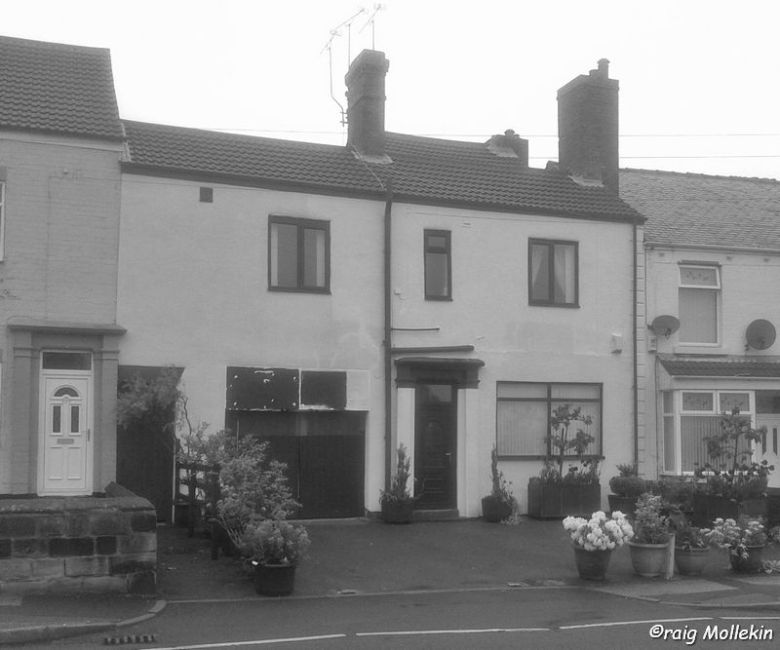
This property is now a private residence, but it had previously belonged to Mr. Knowles who was a Scottish newsagent. I’m not sure exactly when Mr. Knowles took ownership, but it was probably in the late 1960s or early 1970s.

My earliest memories of this shop are from when I started attending Queen Street Primary School across the road in 1980; my mum would walk me to school and buy me crisps from the shop for my break time.

In later years, I worked for Mr. Knowles between 1990 and 1993, delivering the Rotherham Star newspaper daily at tea time, six days a week, with an additional delivery on Saturdays for the ‘Green ‘Un’. For this, I received £5 per week. After a few months, I switched to a morning round that paid £8 per week, which was £1 more than the other morning rounds due to it being longer. After a while, I switched to a shorter round that paid £7.

Mr. Knowles taught us to how fold a newspaper properly and always insisted that we posted the papers all the way through the letterboxes – very basic skills, but ones which most current newspaper deliverers don’t appear to have. Saturdays and Sundays were the hardest days with the various newspaper supplements and we’d either have to carry two bags or go back for the second one. Monday to Friday was a 07:00 start, Saturdays was a 07:30 start and on a Sunday we’d have a lie in as we didn’t have to start until 08:00. I think the only day we had off was Christmas Day, writing of which, Christmas was always a good time for tips; I’d usually make around £25.

Mr. Knowles didn’t say much (what he did say was hard to understand) and perhaps even came across as grumpy, but he was cheerful in his own way and was pleasant to work for. He’d always have a pipe in his hand and the shop had a permanent odour of pipe tobacco smoke. I never remember Mr. Knowles being ill, but around March 1993, when we arrived at the shop one morning, it was closed and we couldn’t get in. It transpired that Mr. Knowles was ill with bronchitis and had to be taken away to a hospital. I never saw him again. I was told, some years later, that he’d gone into sheltered accommodation in Rotherham and died just a few years later. He’d always seemed like an old man to me and he must have been in his 80s by the time he’d left the shop.

After Mr. Knowles, a lady bought the business and ran it for maybe three or four years. I believe it then changed owners again; I remember in late 1997, it was opening later and I think it was even selling alcohol. The last time I remember patronising this shop was in late 1999 and it ceased trading shortly after.

Prior to Mr. Knowles, the shop was owned by a Mr. Redditt who was also a newsagent and general dealer.
Queens Foundry, Swinton

Queens Foundry, Swinton

Queens Foundry, Swinton

Following the great Sheffield flood of 1864, Thomas and Charles Hattersley relocated their iron foundry at the end of Queen Street in 1864 and called the premises, Queens Foundry. These premises were demolished in 1936. The business was moved to much larger premises in 1869. These works provided employment for hundreds of Swinton people and produced stoves and grates. At some point in the 20th century, the works were acquired by the Stelrad company who specialise in the production of domestic radiators. In the 1990s, the building was divided into small units in order to cater for small businesses.

24 Bridge Street, Swinton

Meraki Hair, Bridge Street, Swinton - 30.05.17

24 Bridge Street, Swinton

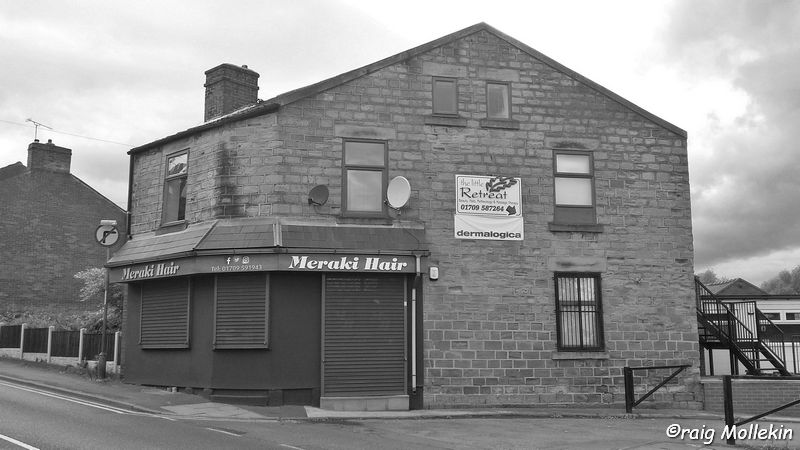
24 Bridge Street is currently the location of ‘Meraki Hair’. In earlier years it had been occupied by Harold Lowe and at the back was a slaughterhouse. Before or after Harold Lowe, it was a Chemist’s shop. Later, it became a motorbike shop belonging to Peter Cresswell. Pete was fond of dogs and even owned a black Labrador that would suck a dummy outside of the shop on the pavement. When Pete died in 1989, many people attended his funeral on motorbikes. Pete’s wife, Margaret, kept the shop open for a few more years. Until last year, the building was occupied by ‘Barrons Hair Salon’.

Mad Ron, Swinton

Church Street, Queen Street & Station Street Junction - 13.06.15 (2)

Queen Street Junction, Swinton

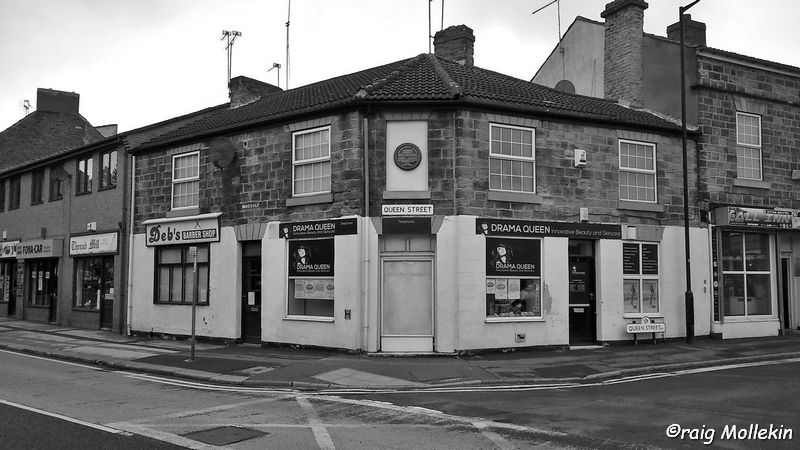
2 Church Street is currently occupied by ‘Deb’s Barber Shop’. Previously, a very well known Swinton barber had traded from there who was known as ‘Mad Ron’. Ron was quite a character who anybody having had their hair cut by him knows. Before Ron, there was another eccentric, Scottish, barber trading from the same premises, called Joe Alexander, who lived on Queen Street and would sometimes make cat-like noises whilst cutting hair. Mr. Alexander’s shop was once robbed but the Police caught the culprits on the top deck of a bus on Racecourse Road.

Miners Arms, Swinton

Fitzwilliam Street, Swinton - 23.11.08 (10)

Fitzwilliam Street, Swinton

This public house was located at 87 Fitzwilliam Street and on the 1901 Census was occupied by Joseph Purcell and his family.