Dearne & Dove Canal, Swinton

Dearne and Dove Canal, Swinton

Dearne & Dove Canal, Swinton

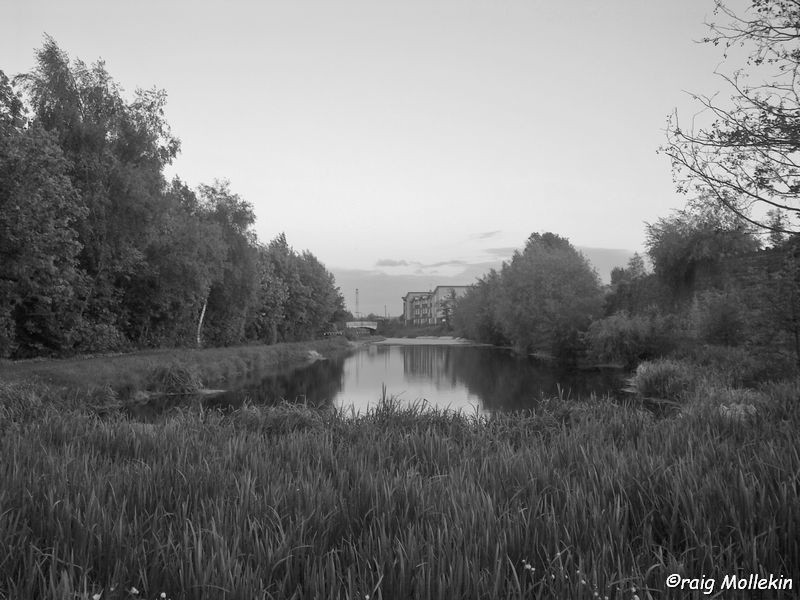
In the 18th Century, Swinton was the junction of the Dearne & Dove canal. Boat building was first started in 1770 and carried on by Thomas Scholey and present day, E.V. Waddington. The canal ran for nine miles from Swinton to Hoyle Mill. Due to reduced demand and infrastructural maintenance difficulties, much of the Swinton canal was filled in, in the 1960s.

Warren Vale Colliery, Swinton

Warren Vale Colliery, between Swinton and Rawmarsh, owned by the Warren Vale (High Hazel) Coal Company was closed on Saturday 21st March 1943, the reason given was for the “efficient prosecution of the war.” The colliery employed 180 men. The bulk of the men were to be transferred to Manvers Main and Kilnhurst collieries. Men too old to find work in the coal industry would be absorbed into other work. The drawing of coal from the colliery only started in 1937 and a pit-head canteen was installed a year or two before closure at a cost of £2,000. Dr. H. S. Houldsworth, Regional Controller for the North Eastern Region, Ministry of Fuel and Power said “This concentration of manpower is required in order to get the coal we shall require for next winter. The scheme will probably be widespread and not confined to Yorkshire.”

Swinton Boys In Trouble

YORKSHIRE TELEGRAPH AND STAR, TUESDAY EVENING, FEBRUARY 15, 1916

SWINTON BOYS IN TROUBLE.

Six boys, aged from 9 to 13 years, whose homes are at Swinton, were each bound over (through their parents) for 12 months at the Rotherham West Riding Children’s Court to-day. They had visited Parkgate and stolen several belts from the inside of a shop door. Five of them were also concerned in the theft of silk handkerchiefs value 10s. 6d., under similar circumstances.

In the latter instance, while riding towards Swinton in a tramcar, one of the handkerchiefs was offered for sale to a passenger, who was a pawnbroker’s assistant. He collected all the property, but was unable to persuade the lads to accompany him for inquiry.

According to Inspector Hoyle two of the defendants were worse than the others. A party had visited the Parkgate district on other occasions, and a box of cigarettes and a Treasury note for 10s. were alleged to have been taken. The Bench admonished the parents as to the care of their children, and ordered them to pay 5s. each towards the costs. The probation officer was directed to give attention to the boys.

Old Hall, Swinton

This building incorporated a 16th Century structure and it is alleged that King John’s butler lived here and that King John himself slept here when journeying through the area. In 1881, this house was occupied by Richard Hattersley and his family.

Swinton Billiard Licence

Station Street, Swinton - 12.10.14 (3)

Station Street, Swinton

THE ADVERTISER, SATURDAY, MARCH 8, 1924.

SWINTON BILLIARD LICENCE.

Mr. W. J. Bradford applied on behalf of Mr. Edwin Morgan for a billiard license for premises to be erected in Station street, Swinton.

Mr. Bradford said that the applicant had bought the land, and proposed to erect a thoroughly up-to-date billiard hall. There was provision in the plans for 16 tables, but at first it was proposed to have only 12.

The application was granted subject to the plans being passed by the Urban Council.

The hall would be allowed to be open from 10 a.m. to 10 p.m., and no one under 18 years of age admitted.

Fitzwilliam School, Swinton

Fitzwilliam School, Swinton

Fitzwilliam School, Swinton

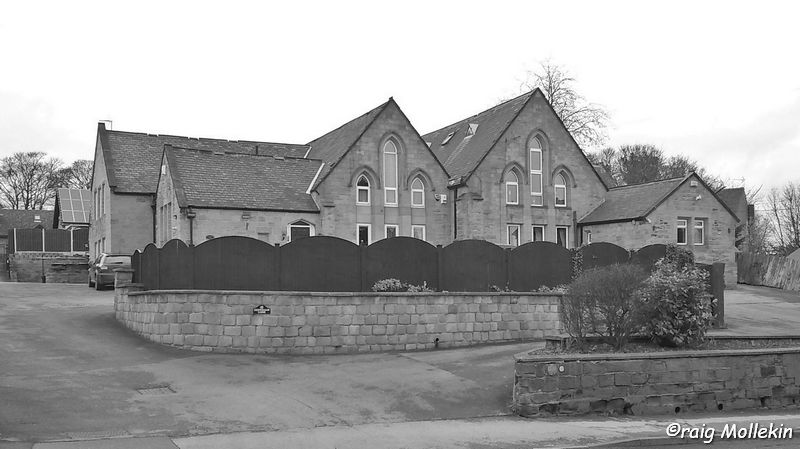
This School was built in 1860 and closed in 1952 to infants and to juniors in 1978. Pupils were transferred to a new school on Rookery Road, of the same name which was opened in 1952 and extended in 1978.

Teachers at this school have included (please supply service years if known):-

  • Mrs. Barker
  • Miss Barraclough
  • Mr. John Benbow
  • Mr. Biram
  • Mrs. Brettle (Head Teacher)
  • Mr. Byron
  • Mrs. Cameron
  • Mrs. Pauline Coates
  • Mr. Cooke
  • Mrs. Cooper
  • Mr. Crook
  • Mr. Dennis
  • Miss Downing
  • Mrs V. Drury
  • Mrs. Edwards (nee Millington)
  • Mrs. Elliott
  • Mr. Foley
  • Mrs. Gill
  • Miss Gillot
  • Mrs. Heeson
  • Mrs. Hirst
  • Mr. Holmes
  • Mrs. Horsefield (Head Teacher)
  • Mrs. Hurt
  • Mr. Jeavons (Head Teacher)
  • Mrs. Johnson
  • Mr. Laird
  • Mr. Lowe
  • Miss Lynskey
  • Miss Millican
  • Mrs. Milne
  • Mr. Parker
  • Mr. Peat
  • Mrs. Ratcliffe
  • Mrs. Roberts (Head Teacher)
  • Mrs. Pat Scherdle
  • Mrs. Shaw
  • Mrs. Shepherd
  • Mrs. Temple
  • Mrs. Uren
  • Miss Vickers
  • Mrs. Walsh
  • Mrs. Wells (nee Wwyman)
  • Mrs. Yuron

Other staff included (please supply service years if known):-

  • Mrs. Adey (Dinner Lady)
  • Mrs. Margaret Barke
  • Mrs. Beatson (Dinner Lady)
  • Mrs. Caldershaw (Dinner Lady)
  • Mrs. Eaton (Dinner Lady)
  • Mr. Durose (Caretaker)
  • Mrs Haines (Dinner Lady)
  • Mrs. Halstead – Circa 1971 to 1979
  • Mrs. Harding (Dinner Lady)
  • Mrs. Hilton (Dinner Lady)
  • Mrs. Lockwood (Dinner Lady)
  • Mr. Bill Mason (Caretaker)
  • Mrs. Moran (Dinner Lady)
  • Mrs. O’Brien (Mr. Jeavons’s Secretary)
  • Mr. Ryan (Caretaker)
  • Mrs. Townsend (Head Cook)
  • Mr. Waterfield (Lollipop Man)
  • Mr. Wild (Caretaker)

The vicarage field at at Saint Margaret’s Church was used for physical education and the Church Hall was used at dinner time.

Saint Michael’s and All Angels’, Swinton

SHEFFIELD AND ROTHERHAM INDEPENDENT, MONDAY, OCTOBER 1, 1900

NEW CHURCH FOR SWINTON.

On Saturday afternoon the Bishop of Beverley visited Swinton in connection with the foundation stone laying of the new church which is to be known as St. Michael’s and All Angels’. The Parish Church is situated at the opposite end of the town, and there has been a strong desire on the part of the church people to have a building to accommodate the inhabitants in this thickly populated part of the township. Lord Fitzwilliam had given the land, which is facing the extensive works of Messrs. Hattersley Bros., near White Lee road. The cost of the proposed structure is about £2400, and towards this about £1500 has been realised, including £750 from the well-known Marriott bequest. The architect is Mr. J. D. Webster, of Sheffield, and the contractors are Messrs. Geo. Longden and Son, of Neepsend, Sheffield. The style of architecture is to be Early English, and the edifice is to seat about 180. At present it is not intended to complete the scheme. Underneath the chancel is to be a large meeting room.

The stone-laying was witnessed by several hundred persons as well as the clergy from Mexbro’, Denaby, Conisbro’, Swinton, Kilnhurst, and Thurnscoe. Admiral Douglas attended for the purpose of formally laying the stone, and amongst those present was Mr. Talbot, who represented Earl Fitzwilliam.
Butterfields, Swinton

Butterfields, Swinton

Butterfields, Swinton

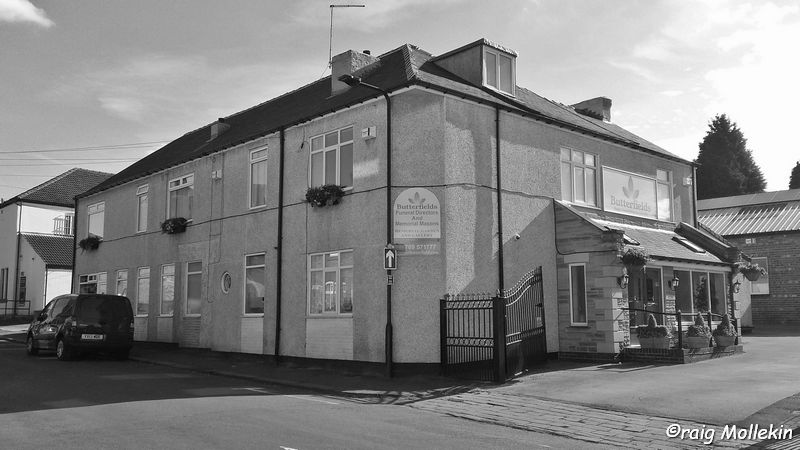
This business can be traced back to 1874 and was started by John Butterfield who was born in 1849 and set off in the wheel and wagon works trade. To supplement his income, John began making coffins etc. As a result of circumstances resulting from World War One, the business was left to John’s son, Charles Thompson Butterfield, to run. It is in this era that the business began to concentrate on Undertaking as its core business. The business is currently based on Wood Street and has connections to this site dating back to the 19th Century. The business is still family owned and is in its fifth generation.

Saint Margaret’s Church, Swinton

Saint Margaret's Church, Swinton

Saint Margaret’s Church, Swinton

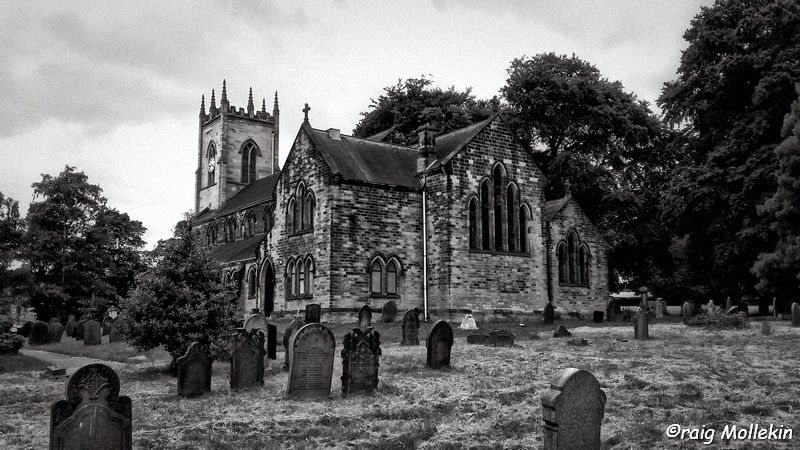
Saint Margaret’s Church was designed by Mr. Pritchard of York at a cost of around £6,000. Earl Fitzwilliam of Wentworth paid for most of this cost. Saint Margarets’ and the adjoining Churchyard were consecrated on 15th June 1817. Sadly, in 1897, there was a devastating fire in the Church – the tower being the only feature to be saved. The rest of the Church was subsequently rebuilt in a larger form which reopened in 1898.

Creighton Wood, Swinton

Lychgate, Swinton

Creighton Wood, Swinton

In 1948, Swinton Council purchased 22 acres of woodland stretching from Warren Vale Road to Piccadilly Road from Earl Fitzwilliam. This wood contains oaks and beeches planted late in the 18th Century. The wood was made in honour of the Creighton family due to their public service to Swinton and long association with the wood – the Creighton family were head gardeners living in the wood. A lychgate was erected in the 1940s and was gifted by Miss E.K.L. Harrop in memory of the men who served in the wars.

Creighton Wood was originally formed by the creation of a number of different plantations, the names of which have now fallen into disuse, but included, Chain Bar Plantation, Long Plantation, Piccadilly Wood, Stake Hole Plantation and Swinton Nursery.