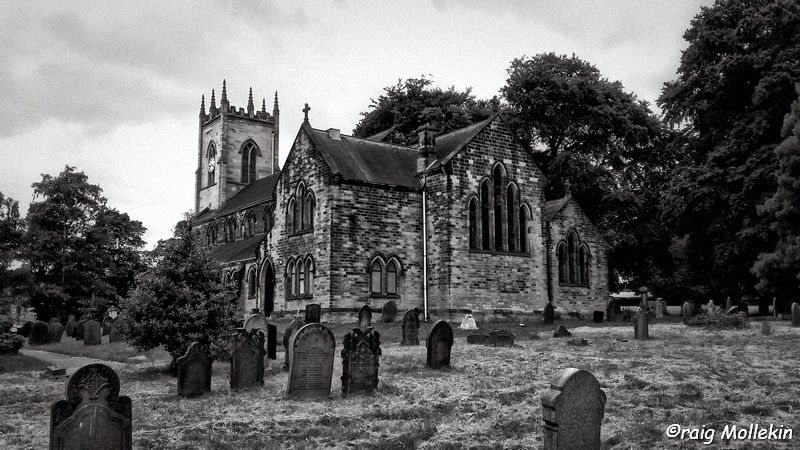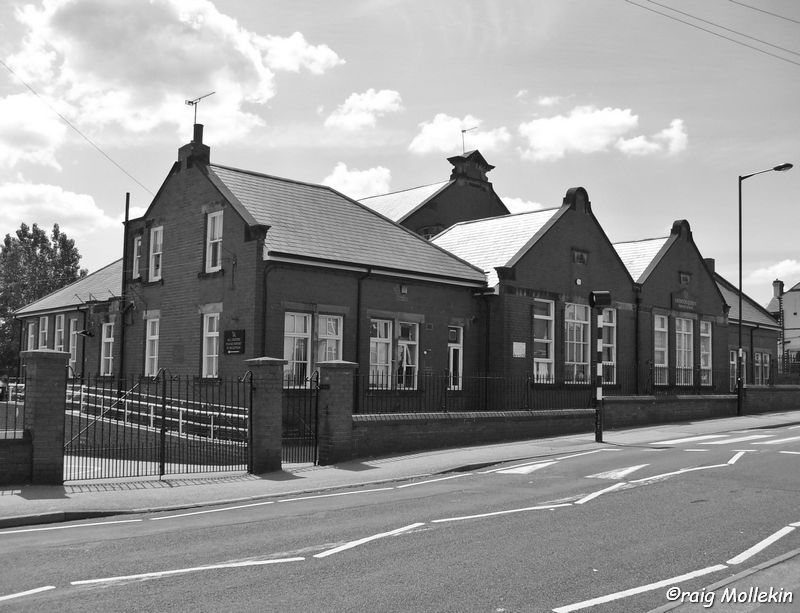
This was originally a Teacher Training College and was erected in the 1950s and 1960s. It became a Comprehensive School in the 1960s. In the 2000s, its name changed to Swinton Community School and in October 2016 became Swinton Academy.
WEEK 42 compliments my website @ Robert Craig Online as well as my own personal interests.
Either use the search box below to find what you’re looking for or click on any of the links in the category cloud. Please note that the ‘Newspaper’ and surname categories only pertain to entries relevant to my own family.
This was originally a Teacher Training College and was erected in the 1950s and 1960s. It became a Comprehensive School in the 1960s. In the 2000s, its name changed to Swinton Community School and in October 2016 became Swinton Academy.
SHEFFIELD AND ROTHERHAM INDEPENDENT, SATURDAY, JUNE 25, 1881
THE CHURCHYARD QUESTION AT SWINTON.
On Thursday, Dr. Hoffman, who had been instructed by the Secretary of State to report on the Swinton Churchyard, attended to inspect it and to take evidence. There were present to meet the Inspector – the Rev. J. Levett (Vicar), Dr. C. S. Blythman (Medical Officer of Health), Mr. E. T. Harrop (Guardian), Mr. Thos. Hattersley and Mr. G. Shaw (Overseers of the Poor), Mr. J. C. Haller (surveyor to the Local Board), and a few other gentlemen. Neither of the churchwardens were present. – Dr. Hoffman remarked that he had sent notices of his visit to the overseers, as well as the churchwardens, because he considers that Dissenters had an interest in the matter, and in fairness they ought to have such notice as well as Churchmen, though his predecessor had only made it a practice to send notices to the Church parties. Evidence was then given by the sexton as to the present capacity of the churchyard, and by Dr. Blythman, who said he could not condemn the burial ground from a sanitary point of view, as it was not injurious to health, being favourably situated. The Inspector then examined the plans prepared by the surveyor, of the enlargement that has just been carried out by the Local Board, also the piece of land that has been added,, and which now forms part of the churchyard. A discussion ensued respecting the consecration of the new portion, the vicar stating that there was no title to it, and Lord Fitzwilliam, he thought, would not be willing to give one. Dr. Blythman was of opinion that Lord Fitzwilliam need not be consulted on the matter, as he had given the land years ago to the parish. – The Vicar contended that it was only given as an approach to the churchyard, and should be used for that purpose. – Dr. Blythman maintained that it was a bona fide gift, and had been in the possession of the parish for a great number of years. – The Vicar thought the Archbishop would consecrate it without title after the lapse of 12 months. – The Inspector said he should report to the Home Office favourably as to what they had done. He saw no necessity to order the churchyard to be closed at present. The land they had added would probably tide them over four or five years, taking into consideration the remaining space at disposal in the old yard. There was nothing to hinder them in the meantime from looking out for another piece of land.
This house was built and situated on Milton Street, remains of which can still be seen in a boundary wall.
THE ADVERTISER, SATURDAY, AUGUST 12th, 1944
SWINTON WAR WELFARE FUND GALA.
Swinton War Welfare Fund annual garden fete and gala were held in the grounds of Milton House, Swinton, the home of Mr. and Mrs. S. E. Baker, on Monday, when the proceedings were opened by Sir Charles des Forges, C.B.E. (Town Clerk of Rotherham). Lady des Forges was also present. There were numerous side-shows, stalls and competitions and the gardens were crowded. It was hoped to raise £600.
Queen Street Elemental School, Swinton, cost £4,829 to build and opened on Saturday 19th September 1908.
The school was built to accommodate 360 children and each classroom was designed to accommodate 60 children with the plans providing for four additional classrooms if needed. Special attention was given to the lighting, with each desk being flooded with natural light. Each classroom was separated from the main hall with glaze so as to allow easy supervision without inconveniencing the class.
The “Natural” system of ventilation was adopted throughout the school, with fresh air being admitted through windows, while the vitiated air was taken off at ceiling level through ceiling grids connected to ridge extracts. The ventilation was so arranged to give each classroom a flush of fresh air when required without inconveniencing the children.
The heating throughout the school was the “low pressure” hot water system with pipes and radiators in sections, each section being under control and each radiator regulated independently.
The drainage for the school had been carried out on the point-to-point system, allowing the drains to be easily inspected and cleaned out.
A portion of the land had been reserved for an infants’ school when the needs of the locality required an extension.
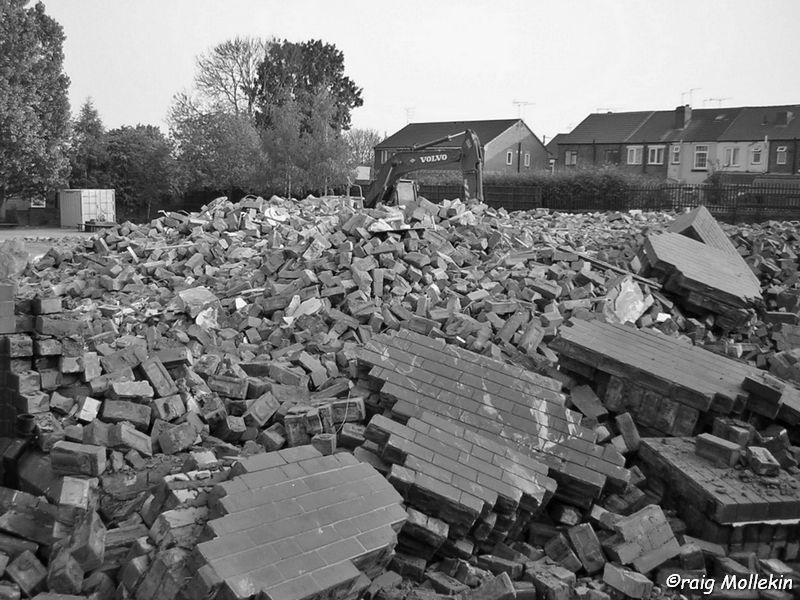
It was announced circa 2008 that the school would be demolished and rebuilt. Demolition took place in April 2011 and the new school (Swinton Queen Primary School) was opened in the same year following a year of construction.
This was a three storey 19th Century house. In 1901 and 1911, John William Hattersley and his family are occupying this house.
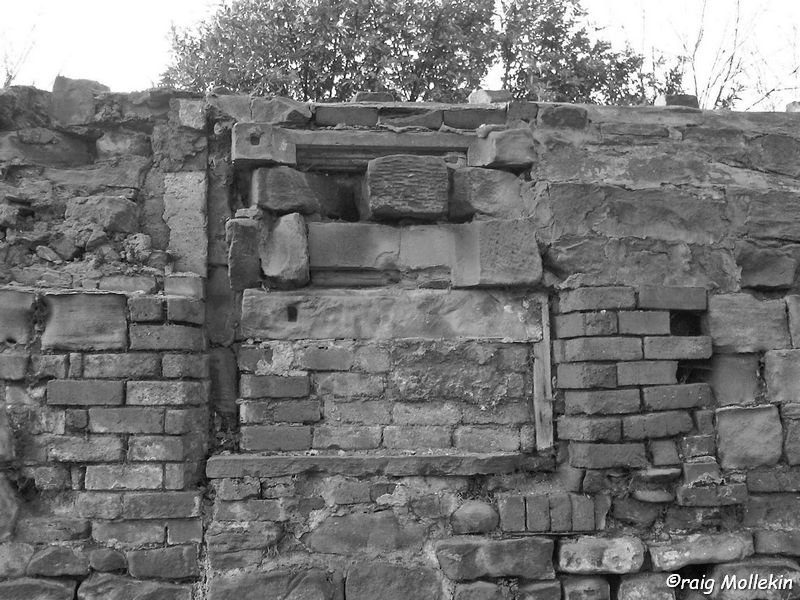
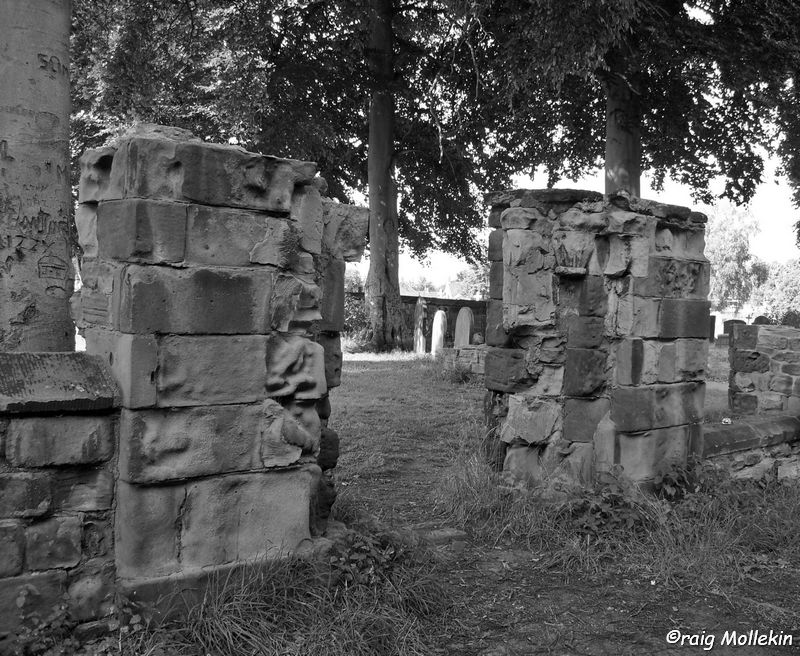
Swinton’s first Church, located at Chapel Hill, was a chapel of ease to Wath and was built in the 12th Century. When the present day Saint Margarets’ was built in 1816, this chapel was demolished. However, John Brameld of Rockingham Pottery saved the chancel arch of this chapel and the doorway and it was re-erected in the vicarage field to the rear of Saint Margaret’s Church. Much of this has since crumbled and has been taken down and buried. Repair work was carried out on the remaining stonework circa 2004.
Although mining had been taking place in the area for hundreds of years, it was not until the 19th century that it really took off. Small mines were established at Warren Vale and Swinton Common but mining in the area became a massive concern with the opening of Manvers Main Colliery in 1870 and Wath Main in 1875. These two coal mines resulted in a population explosion in Swinton and provided employment for thousands of men for over one hundred years until their demise in the 1980s.
At the bottom of Cliffefield Road were a couple of shops which have now been converted into residential accommodation.
The shop of the left hand corner was in the 1980s and 1990s (and maybe before) a grocery shop, known as ‘Georges’ which belonged to George Alexander and his wife. Before George, the shop belonged to the Adams’ family who would close the main part of the shop at 19:00 and it would then become an off license.
The shop on the right hand corner was Ron Wharin’s butchers shop and after Ron had left, it became Cutler’s fruit and vegetable shop. After it ceased selling fruit and vegetables, it became known as Cutler’s Warehouse which was basically an unsupervised youth club.
The Don Pottery was founded at the very end of the 18th Century by the Green family of Leeds. In 1834, Samuel Barker purchased the business. The pottery ceased operating in 1893.
For almost one hundred years, Swinton Pottery was one of the most important businesses of Swinton. Swinton Pottery was operational between 1745 and 1842.
It was originally founded by Edward Butler. From 1787 it was operated by a company called, Greens, Bingley & Company. In 1806, the firm became Brameld & Company – John and William Brameld previously being partners in Greens, Bingley & Company.
It was during the Brameld era that the company took on the name of the Rockingham Pottery and its products were sold all around the world.
The Waterloo kiln is the only remaining kiln of the three originally built.