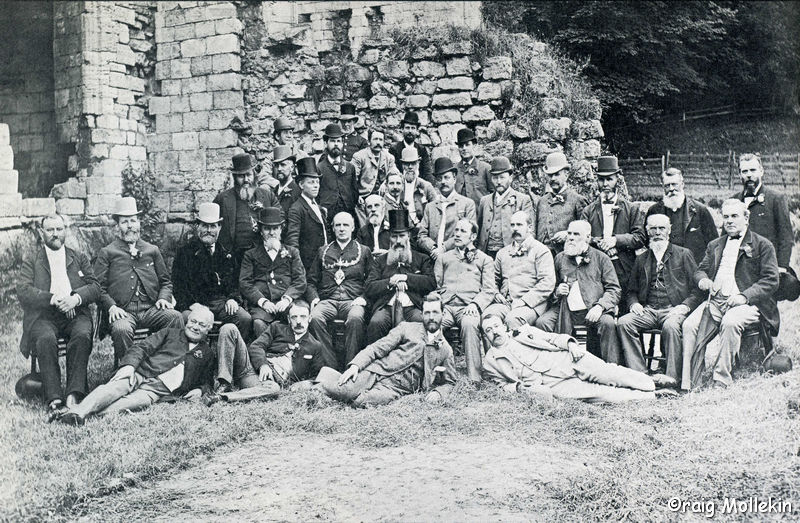
Luke Berry

Luke Berry - Roche Abbey, Maltby - 1889

Luke at Roche Abbey

Luke Berry is my third great grandfather and he was born in 1823 in Kexborough, Barnsley. In 1845, Luke married Jane Walker.

Luke and Jane issued seven children, four of which did not survive infancy; three succumbed in quick succession during the 1860s from Scarlet Fever. The surviving children were, Hannah Berry (1845 to 1924), Agnes (1847 to 1916) and Priscilla Walker (1852 to 1918). Hannah is my second great grandmother and she married Francis Pinder in 1867.

In the 1850s, Luke and Jane moved to live in Rotherham, where they remained. Luke died in 1891 and Jane in 1897. Their headstone still survives in Moorgate Cemetery, Rotherham, but has now toppled over and the inscription is no longer visible.

frederick-street-rotherham-copyright-colin-leonard-1965-1

Rotherham Waterworks

THE ROTHERHAM ADVERTISER – SATURDAY 19th DECEMBER 1891 – DEATH OF MR. L. BERRY, OF ROTHERHAM

We regret to have to record the death of Mr. Luke Berry, which took place at his residence, the Waterworks, Frederick Street, Rotherham, on Saturday evening. The deceased gentleman was 68 years of age. He had not been thoroughly well since June last, when he had the misfortune to be thrown out of a trap on his way to Ulley Reservoir. On that occasion he received a severe shock, and his heart had been in weak state ever since. However, he had only been confined to the house for about three weeks and was downstairs a few days before his death. Dr. Baldwin had been his medical adviser, and recently, Dr. Dyson, of Sheffield, was consulted. The cause of death was angina of the heart, coupled with an asthmatic condition.
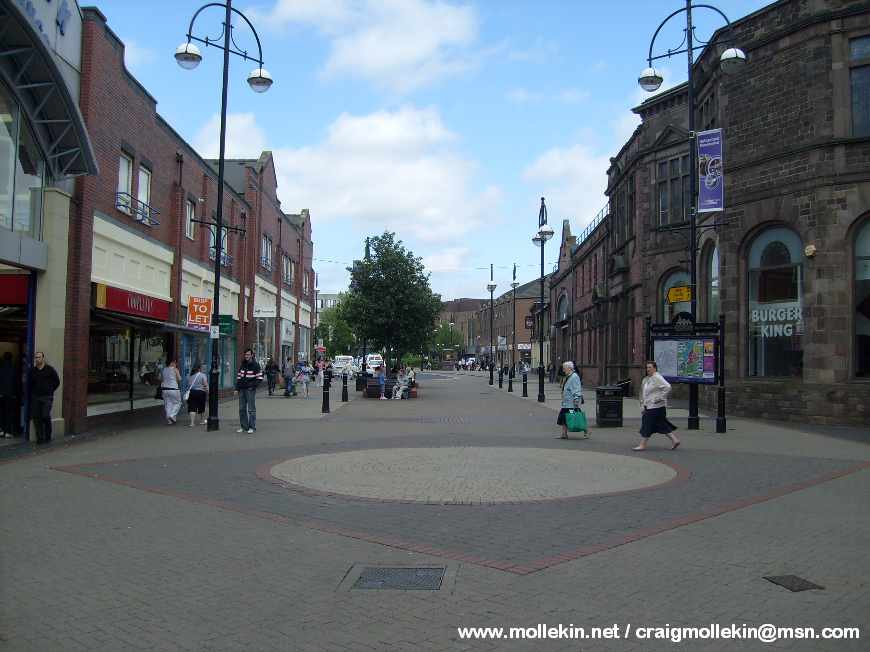
Frederick Street, Rotherham - 28.05.09 (3)

Frederick Street

Mr. Berry was a native of Kexbro’, near Barnsley. In his younger days he was engaged at Taylor’s Mills, Redbrook, and subsequently he was employed at Mitchell’s Ironworks, Worsbro’ Dale, as engine fitter and pattern maker. After a few years in that position he proceeded to the Kirkstall Forge, Leeds, belonging to Messes. Beecroft and Butler. It was at these works that the large engines at the Waterworks were produced. Mr. Berry had worked himself into a position of trust, and amongst other places visited Germany on the firm’s account. When the engines were erected at Rotherham, he had the management of the work, and as was customary with the firm with which he was identified, he stayed six months after their completion to see that all the work was in proper order. At the completion of that period the Local Board of Health secured his services as resident manager and engineer, a position which he retained for a period of 36 years.
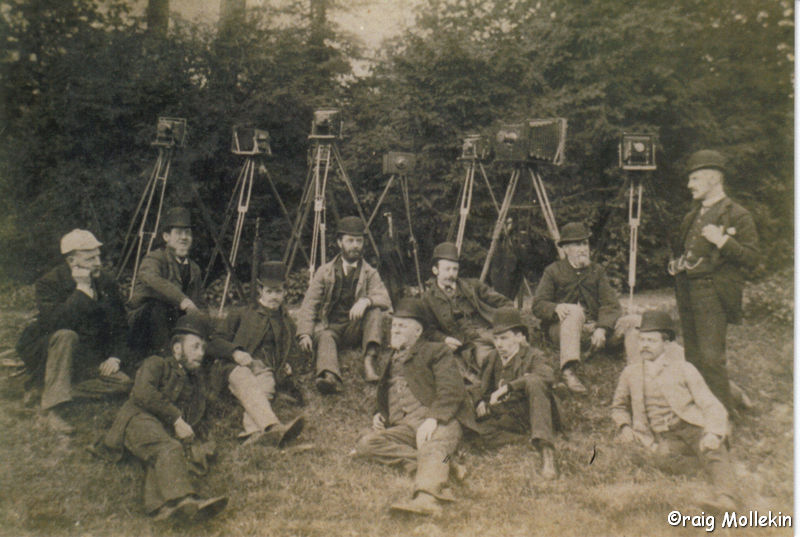
Luke Berry - Roche Abbey - Circa 1889 (Copyright Liz Early)

Luke at Roche Abbey

Mr. Berry followed many scientific pursuits, and the observatory in the yard adjoining the house was an indication of the manner in which his mind was bent. Chemistry may be said to have been his favourite science, especially analysis, and he was able to test water and other liquids in a practical way. His apparatus shows he spared no expense in the acquisition of knowledge not only for the purposes of his profession, but also for his amusement. He constructed a valuable telescope, and also a sidereal timepiece, to and him in astronomical studies. At the time of his advent to Rotherham he made an organ. This instrument was used on one occasion at the Mechanics’ Hall, when an oratorio was performed. The organ was afterwards sold to Dr. Sewell, then organist of the Parish Church, and later it came into the possession of the Rev. Dr. Falding, and was used at the old Independent College, in College Road, Masbro’.
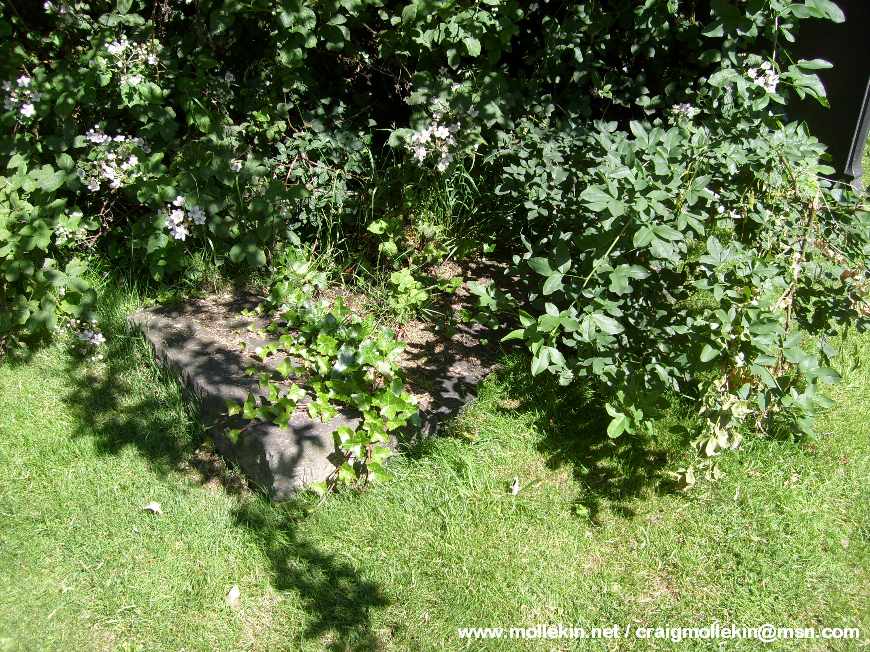
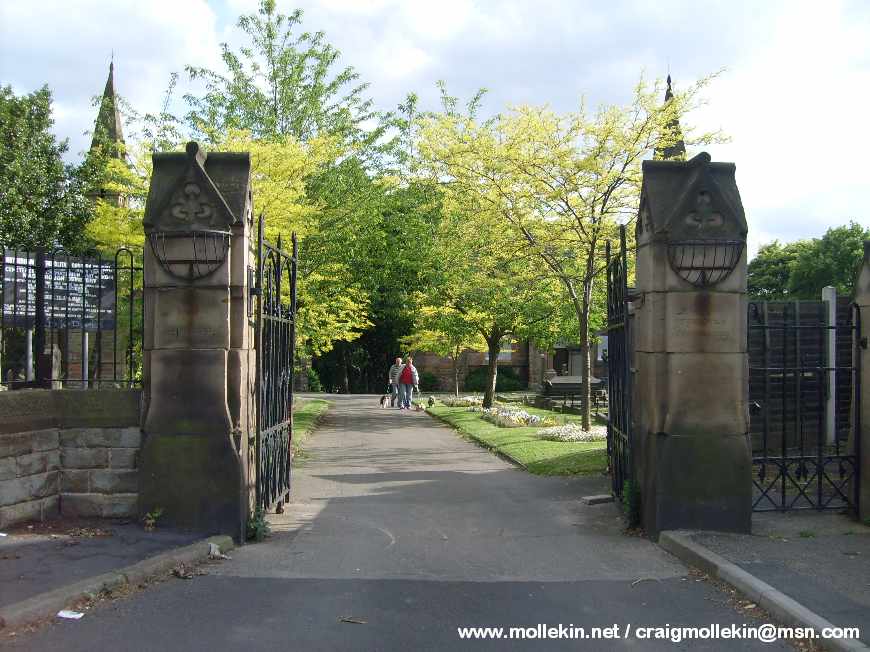
(Grave No. 69) Moorgate Cemetery, Rotherham - 24.06.09 (2)

Berry grave

Mr. Berry was fond of the microscope, and devoted some attention to photography, being a member of the council of the Rotherham Photographic Society, and also of the Rotherham Naturalists’ Society. Electricity found in him an earnest student. He introduced a system of electrical indicators, by which he could ascertain the depth of stored water at the reservoirs. He brought out several patents, one being a smoke consumer which is in use at the works at the present time. About twelve months ago he introduced a method by which two large boilers would do the work which four used to do, and saved something like £50 per month in fuel alone. As an organiser, his tact was clearly demonstrated in 1886, when there was a famine. For years he contended that Dalton was a necessity, the supply at Ulley, Pinch Mill, &c., not being adequate in the case of a continued dry period. The force of this brought home to the opponents of the scheme by the night and day labour which had to be done in a time of drought, to secure the use of the Dalton water. Mr. Berry took little or no part in politics although his views had a Conservative tendency.

For many years Luke was a local preacher in the Wesleyan Methodist denomination, first being identified with Talbot Lane and latterly with Eastwood Chapel. The deceased gentleman was held in great respect, and his demise is regretted by a large circle of friends. He leaves a widow and three daughters, viz, Mrs. F. Pinder, Mrs. J. Early, and Mrs. Brelsford.

Moorgate Cemetery, Rotherham - 13.07.09 (4)

Moorgate Cemetery

The interment took place at the Rotherham Cemetery, on Thursday, the officiating minister being the Rev. A. Westcombe. The mourners were Mrs. Berry, Mr. and Mrs. F. Pinder, Mr. and Mrs. J. Early, Mr. and Mrs. Brelsford, Mr. Mark Berry, Senior, Sheffield; Mr. Mark Berry, Junior; Mr. and Mrs. A. Price, Master Harry, the Misses Edith and Beatrice Pinder, Mr. W. A. Brelsford, Mr. Geo. A. Early, Mr. Walter Early, Barnsley; Mr. F. A. Early, Mr. Ernest Early, Mr. Jno. Walker, Barnsley; Mr. and Mrs. Geo. Wilson, Mr. J. Wilson, Miss Wilson, Hoyland; Mr. Herbert Walker, Miss S. A. Walker, Miss L. Walker, Miss M. A. Pinder, Mr. Palfreyman, and Mr. W. Crabtree, Doncaster. The members and officials of the Corporation followed in seven carriages. There were present Alderman Wragg, and Councillors F. Mason, G. Gummer, J. Pearce, T. Charles, J. Chesterfield, J. Cox, E. Hickmott, D. L. Winter, J. B. Habershon. The Mayor (Councillor W. L. R. Hirst) had written expressing his regret that he should be prevented by another engagement from attending the funeral. The Town Clerk (Mr. H. H. Hickmott) was unavoidably absent in consequences of having to be present at an important mining inquiry at Sheffield. The borough officials present were Mr. C. H. Muss (sic), borough accountant; Mr. E. Cooper, borough collector; Mr. G. J. Thurgarland, assistant to Town Clerk; Mr. J. Enright, chief constable; Mr. T. Bellamy, gas secretary; Mr J. Taylor, baths manager; Mr. H. Albiston, park keeper; Mr. E. C. May, park keeper; Mr. O. E. Parkin, sanitary inspector; Mr. H. J. Wright, stores keeper; Mr. J. Goodwin, gas manager; and Mr. W. Law, deputy market inspector. Wreaths had been forwarded by employees of the Waterworks, the officials of the Corporation, and from members of the family.

This post was originally published on Mollekin Portalite on 29/06/2011.

Herbert Mollekin

Herbert Mollekin (centre)

Herbert Mollekin (centre)

Johann Hermann Mölleken (known as Herbert Mollekin) is my great grand uncle and was born in Sunderland, in 1863, to parents, Johann Mölleken and Henriette Muehlenweg.

In 1888, Hebert married Bertha Kennington in Hull. Together, they issued sixteen children, who were called, George Herbert (1889 to 1970), John Ernest (1890 to 1974), Bertha Lily (1892 to 1927), Harold (1893 to 1893), Alice Ada (1894 to 1942), Harry Leonard (1896 to 1976), Mabel (1897 to 1974), Dorothy May (1898 to 1970), Albert Sydney (1899 to 1976), Gertrude Ivy (1901 to 1931), Stanley (1902 to 1989), Sybil (1903 to 1993), Edward Arthur (1904 to 1904), Norman Frederick (1906 to 1990), Claude (1908 to 1968) and Jack Everatt (1910 to 1963).

Herbert was a prolific house builder and was considered to be a good employer by his workers. Further details regarding Herbert’s building activities can be read here.

Below is a newspaper article which gives an insight into Herbert’s life and achievements.

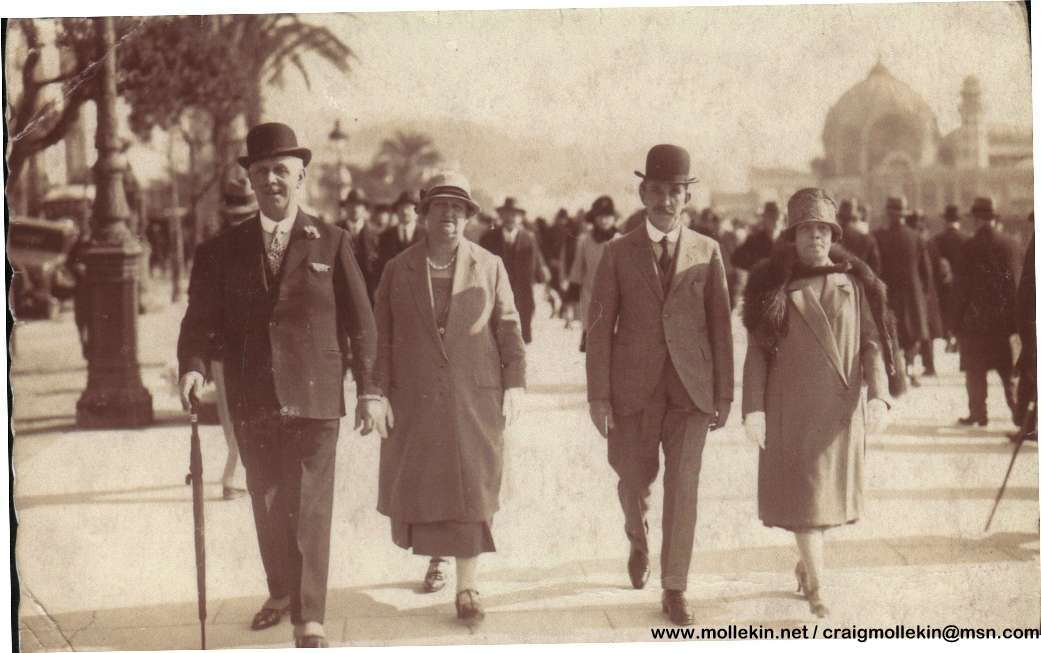
Herbert Mollekin in Nice (left)

Herbert & Bertha in Nice

ROTHERHAM ADVERTISER – SATURDAY 2ND MARCH 1929 – MR H. MOLLEKIN –

DEATH OF WELL KNOWN MALTBY CONTRACTOR

TURF SUCCESS

The death took place in a Sheffield nursing home on Monday night of Mr. Herbert Mollekin, of The Grange, Maltby. He had been in a critical condition for some days.

The news of Mr. Mollekin’s death caused profound regret throughout South Yorkshire, for he was well known both as a builder and a Turf personality. A typical self-made man, he started his career as a working joiner, his energy and enterprise winning for him an enviable position in the building industry. The firm of Mollekin and Sons may, in fact, claim to be one of the largest building contracting firms in the district. He was a Northerner, but spent the greater part of his early days in Hull and Pontefract. Leaving joinery and becoming a bricklayer, he went to Pontefract, where he first worked as a builder.

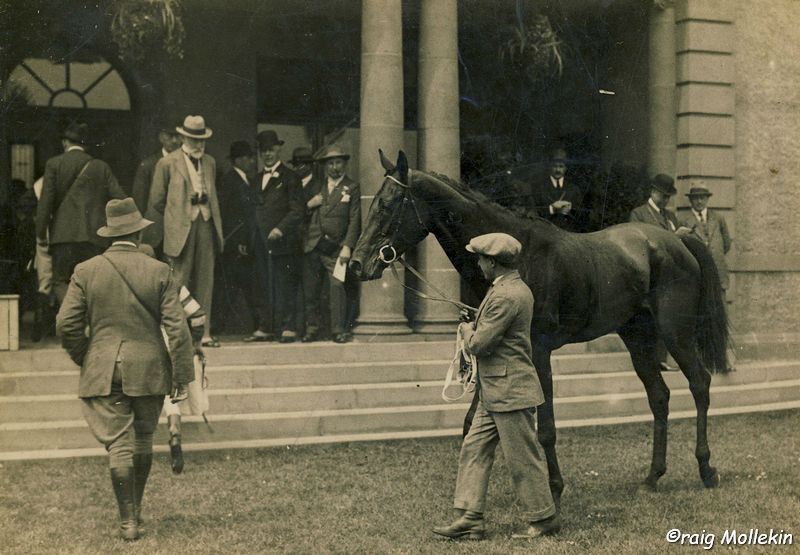
Hebert at the Doncaster Races with the Earl of Scarborough

Hebert at the Doncaster Races with the Earl of Scarborough

It is now over twenty years since he went to Maltby and carried on his trade, his business enterprise being eventually rewarded. He always took a keen interest in Maltby, both as a business man and as a resident. He was virtually responsible for the rebuilding of practically the whole of Maltby, and there are many other mining villages throughout a wide area which have developed municipally under his hand. He started about 1910 to build the model village at Maltby, and although the progress of the scheme was impeded by the War, Mr. Mollekin took it up again afterwards. When sinking operations commenced at Thurcroft about the year 1913, he secured building work there, and again achieved the distinction of establishing almost an entirely new village.

He also built Rhodesia village, near Shireoaks; Council houses at Rawmarsh, Thurcroft, Blackwell, and South Normanton. Other contracts executed by him included the new elementary school at Thurcroft, the Technical Institute at Dinnington, and the new-type elementary school at Bramley.

Herbert Mollekin (right)

Herbert Mollekin (right)

PROMINENT TURF PERSONALITY.

Mr. Mollekin was also widely known through his career on the Turf. His association with Melton Vasey, his trainer and chief advisor, was a most satisfactory one, although it commenced only in 1922, when he made his debut as an owner. He was a very popular figure at all the northern meetings, and particularly at York, Manchester, Pontefract, Ayr, Newcastle and Redcar. At all these he had taken valuable prizes, and although he was not so successful at Doncaster, he was always well represented at all three meetings. He and Melton Vasey did a great deal to establish training in Doncaster and to increase its importance as a centre, apart from it’s importance as a meeting place. He commenced in a very modest style in the sport which claimed his undivided enthusiasm. He followed his horses wherever they were and the success of his first purchases, Balzac and Pickwell encouraged him to extend his operations. While he never gave a great amount of money for his horses, he and his trainer had a remarkable knack of picking up things cheaply. One of his most prolific winners was Miss Connie, which he purchased at the Doncaster September sales for £100 and which won him in stakes something like £5000, including the Old Newton Cup at Haydock Park and a £1000 race three years ago. The horse, Amazement also proved a successful investment, for he bought it out of a selling race at Doncaster and it afterwards took the Gosforth Park Cup and the Carlton Handicap. King Willow came very close to taking the season’s first big race at Lincoln several years ago when it ran 3rd to Tap in. It will be recalled that five years ago a number of horses at Belle Vue got loose, including a number of Mr. Vasey’s charges, King Willow being rather badly kicked, while another, Soval, upon which Mr. Mollekin and Mr. Vasey had set high hopes, was badly injured. Foul play was suspected and the affair caused a remarkable sensation in racing circles. It was always thought that someone had deliberately set the horses loose. Mr. Mollekin offered a substantial reward, but the culprit or culprits were never traced.

The Grange

The Grange

KEEN PERCEPTION.

Keen perception was illustrated in the purchase of Mr. Vasey, on behalf of his patron, of four yearlings at the Newmarket Sales. Abbott’s Luck, which cost 100 guineas; Abbott’s Son, 80 guineas; Corn Sheaf, 60 guineas; and Tracite, 35 guineas. All won races. Abbott’s Luck taking the Corby Plate, worth £500, at Carlisle, and a £1,000 race at Manchester.

Other of his horses which did well were French Martin, Bold Wase, Poet’s Dream, Savage Lass, Rock Ruby, Battery Smoke, Baalbeck, and Balglick, while Dryhead, bought out of a seller, won the Batthyany Stakes, worth £500, at Lincoln. Hard Rock, which Mr. Mollekin bred himself, was his nomination for this year’s St. Leger, and had already been well spoken of. Noctiluce was still another good winner; while Great Speech also took first place several times. Last season Silver Castor, which cost only £50, won three good races.

Mr. Mollekin took a keen interest in his Tickhill Stud, where he had a number of good class animals in training.

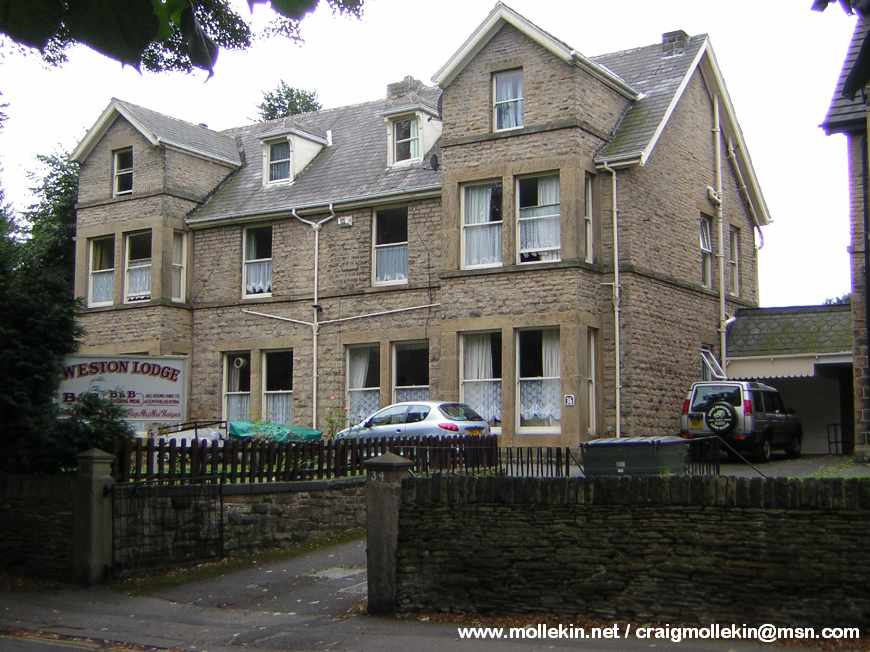
Broomhall Place

Broomhall Place

Six of Mr. Mollekin’s sons are engaged in the business, one of them, Mr. Jack Mollekin, spending a short time under Mr. Vasey but increasing in weight put an end to his competitive riding. Mr. Jack Mollekin is now in charge at Tickhill.

Mr. Mollekin also leaves six daughters.

THE FUNERAL.

The funeral took place at Maltby yesterday. Prior to the interment in the Maltby Churchyard, there was a service in the church, conducted by the Rev. H. R. Everson (Vicar).

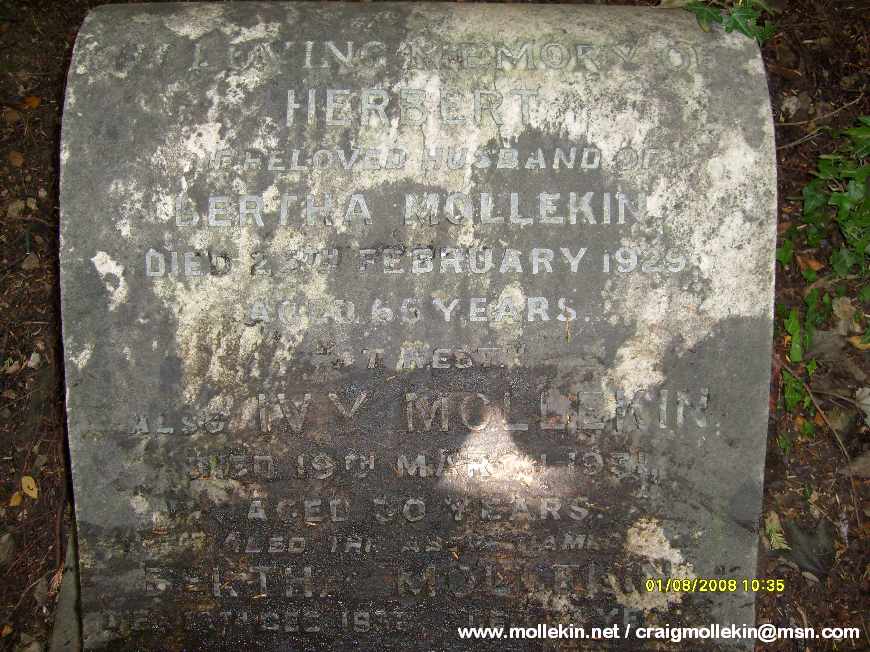
Ivy's grave

Herbert’s grave

The family mourners were Mrs. Mollekin (widow), Mr. and Mrs. G. H. Mollekin (son and daughter-in-law), Mr. and Mrs. E. Mollekin (son and daughter-in-law), Mrs. H. Nicholson (daughter), Mr. and Mrs. E. McGlade (son-in-law and daughter), Mr. and Mrs. Harry Mollekin (son and daughter-in-law), Mr. and Mrs. H. Brooks (son-in-law and daughter), Mr. and Mrs. Stanley Mollekin (son and daughter-in-law), Mr. and Mrs. Sidney Mollekin (son and daughter-in-law), Miss Ivy Mollekin (daughter), Mr. and Mrs. J. R. Sadler (son-in-law and daughter), Messrs. Fred, Claude and Jack Mollekin (sons), Mr. Jack Mollekin (brother), Mr. and Mrs. Skerrow (brother-in-law and sister-in-law), Mrs. Pearson (sister-in-law), and Mr. H. Crompton (son-in-law). Others present were Mr. Joe Taylor (stable jockey), Mr. Melton Vasey (trainer), Mr. T. Frost (Bawtry), Mr. Herbert Fox (Doncaster), Messrs. J. T. Downing and K. Downing (Sheffield), Mr. Chas. Farrar of Doncaster (representing the West Riding County Council Education Architects’ Department), Mr. C. N. Hodgson (Rotherham), County Alderman E. Dunn, J. P. and Mr. Hugh Ross (representing the local branch of the Yorkshire Miners’ Association and the Maltby Urban Council). Mr. F. Roebuck (clerk to the Council), Mr. M. R. Jones (surveyor) and Mr. R. G. McNaught (assistant surveyor), Mr. H. C. Harrison (representing the Doncaster Rural District Council), Messrs. H. Barnard, G. Fitton, and E. Nelson (Tickhill stud employees), Messrs. E. H. Lockwood (representing the Maltby Show Committee), Mr. T. Fawcett (Doncaster), Mr. and Mrs. T. B. Buckley (Maltby), Mr. F. Lidgett, Dr. E. E. Dufty, Mr. and Mrs. R. P. Marsh, Mr. G. H. Ashforth (Rotherham Builders’ Supply Co.), Mr. George Fox (Yorkshire Amalgamated Products), Mr. W. Catchpole (Maltby Metallic Brick Co.), Mr. Gilbank (gardener at The Grange), Messrs. E. Raper, A Fisher, and A. Stables (representing the Maltby Cricket Club), Messrs. H. Cutts and C. Daniels (Maltby Salvation Army). A large number of employees of the firm of H. Mollekin and Sons also attended, among them being Mr. F. Hunter the oldest workman who has been with the firm for thirty years. Messrs. J. Beeden, G. Lawrence, J. Wrigley, B. Reid, G. F. Clarkson, W. Goodacre, H. Wingfield, M. Wilding, N. White, F. P. Arker, H. Box, R. Longbottom, G. Smith, J. Wood, G. Brown, and T. Hunter. Wreaths were sent by the following, Mrs. Mollekin and children, Mr. and Mrs. Sadler, Mr. and Mrs. Skerrow, Mr. and Mrs. Pearson, Mr. H. Crompton and grandchildren, Mr. and Mrs. A. J. Booth, Mrs. Brooks, Mr. and Mrs. R. P. Marsh, Mr. C. Chambers, Dr. and Mrs. Dufty, Mr. and Mrs. T. Fawcett, Mr. and Mrs. J. Crowther, Mr. and Mrs. Melton Vasey, Mr. and Mrs. J. Taylor, Mr. and Mrs. Longbottom, Mr. and Mrs. Thompson and family, Mr. and Mrs. Hunter, Ald. And Mrs. Dunn, Mr. and Mrs. Doyle, Mrs. A. H. Brown, Mr. and Mrs. Booth (Worksop), Mr. and Mrs. Armstrong, Mr. and Mrs. Middleton, Mrs. Berwick, Mr. Stoepling and family, Mrs. Morgan and children, Maltby Branch of the Y.M.A., Directors of the Maltby Metallic Brick Co., Yorkshire Amalgamated Products Limited, Maltby Show Committee, staff of the Tickhill Stud Farm and the employees of Messrs. H. Mollekin and Sons.

This post was originally published on Mollekin Portalite on 15/06/2011.

Kicked in the neck

Masbrough Cemetery

Amelia Pinder, born in 1868 in Rotherham, is my great grand aunt and daughter of Francis Pinder and Hannah Berry.

In 1891, in Rotherham, Amelia married Alfred Thomas Price and together they issued four children, called, Ernest Alfred, Reginald, William Cecil and Charlotte Grace.

As a child, I remember my father telling me a story that had been told to him by his father about how in Wickersley, a Milkman called Les Birkett was kicked in the neck by a horse and subsequently died. I later discovered that Les Birkett was quite closely related to my family and according to the 1925 edition of Kelly’s Directory for Rotherham had his milk business registered on Fitzwilliam Road. However, I also discovered that Les Birkett didn’t die until 1975 aged 79 in Scarborough, so he almost certainly didn’t die as a result of being kicked by a horse on his milk-round.

Whilst reading the Rotherham Advertiser dated, Friday 27th May, 2011, I came across an article in the ‘100 years ago’ section which suggests that there may have been some truth in my father’s tale regarding somebody getting kicked by a horse and dying.

ROTHERHAM ADVERTISER
SATURDAY MAY 27, 1911
A tragic occurrence, resulting in the death of Mr. Alfred Thomas Price, Gavenny, Kimberworth, a well-known tradesman and a partner of the firm of Stenton and Price, glass and china merchants, Wellgate, took place on Monday. Mr. Price was attending to the horse, used for business purposes, when it became troublesome and he received a kick to the neck and died almost immediately. The inquest was held on Tuesday afternoon in the Kimberworth Wesleyan Schoolroom by the Deputy District Coroner (Mr. J. Kenyon Parker). Evidence of identification was given by the wife of the deceased, Amelia Price, who last saw him alive shortly before nine on Monday morning. He was going to the stable at the Effingham Arms, Bradgate, to put the horse in the tub. At a quarter past nine she saw her husband dead at the public house.

Alfred was buried in Masbrough Cemetery on, 25th May 1911.

Amelia died in October 1924 and was also buried in Masbrough Cemetery, on 17th October 1924, presumably with Alfred. There is no surviving headstone.

THE ADVERTISER, SATURDAY, OCTOBER 18, 1924

PRICE. – At “Gavenny,” Kimberworth, Oct. 14, Amelia Price, widow of the late Mr. A. T. Price, and daughter of Mr. Francis Pinder, aged 57, after many years of suffering died peacefully at the end. “Peace, perfect peace.” The interment took place Masbro’ Cemetery, Oct. 17.

The family of the late Mrs. Price thank all friends for their sympathy and kindness shown towards them during their loss.

The location of Alfred’s death, The Effingham Arms, is still standing in Bradgate and can be viewed in Google Street View by clicking here. I believe Gavenny to be roughly located here (Google Street View will open again).

With regards to the business of Stenton and Price mentioned in the above newspaper article, there was such a business trading from Sheaf Street in Sheffield according to the 1925 and 1936 editions of Kelly’s Directory for Sheffield. However, I do not know if the Price family had any concern with the business after Alfred died or in what year the business ceased trading or even if the business continued to have a presence in Rotherham after Alfred’s death.

This post was originally published on Mollekin Portalite on 01/06/2011.

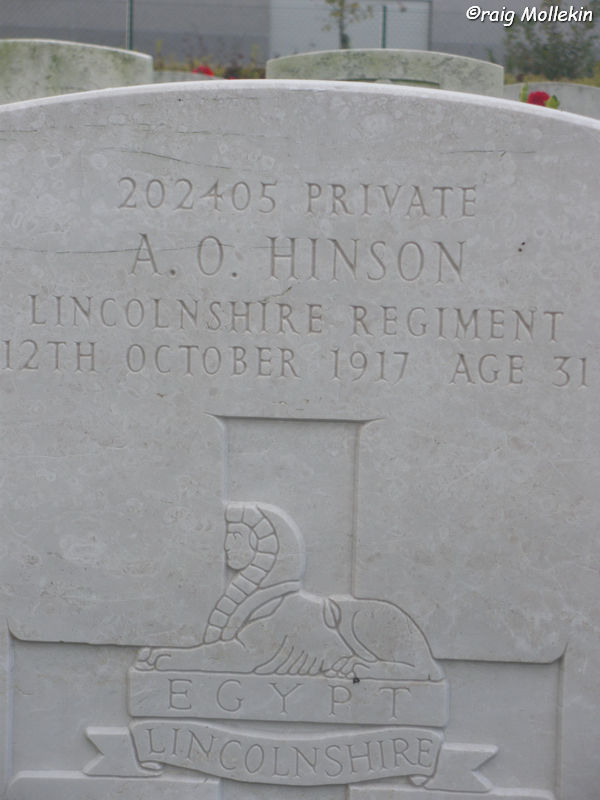
Alfred Octavius Hinson – War Casualty

Alfred’s Headstone

Alfred Octavius Hinson is my third cousin, thrice removed. He was born circa 1887 in Bourne, Lincolnshire. Special thanks are owed to Trevor Higgins for writing the following text:-

Alfred Hinson was a member of the 7th Lincolnshire Regiment, drafted to take part in General Plumer’s ‘bite and hold’ offensives in the Third battle of Ypres in 1917. The regiment was attached to the attacking force at the first battle of Passchendaele, which took part in the area towards the ridge (Westrozebeke) on which the village stood. It was conducted in conditions of mud, after several days of rain, and was to prove costly to both German and British armies. The Germans had just at this time reinforced their lines, with soldiers from the Eastern Front, and were well prepared for the anticipated attack. On the 12th October the battle began, with the Lincolnshires supporting ANZAC troops, and the first wave was met with mustard gas (burning of th skin) and fierce artillery.

Alfred was removed from the battlefield and his final resting place is Cement House Cemetery, situated between Langemark and Poelcappelle. The cemetery was begun in August 1917 (231) burials)) and added to from 14 other battlefield burial plots during the autumn of 1917. There are 3592 burials there, 2425 of which are unidentified.

When Passchendeale was eventually taken, 310,000 British and 260,000 German troops were dead or missing.

This is a revised version of a post which was originally published on my WordPress Blog on 28/12/2009 and republished on Mollekin Portalite on 31/05/2011.

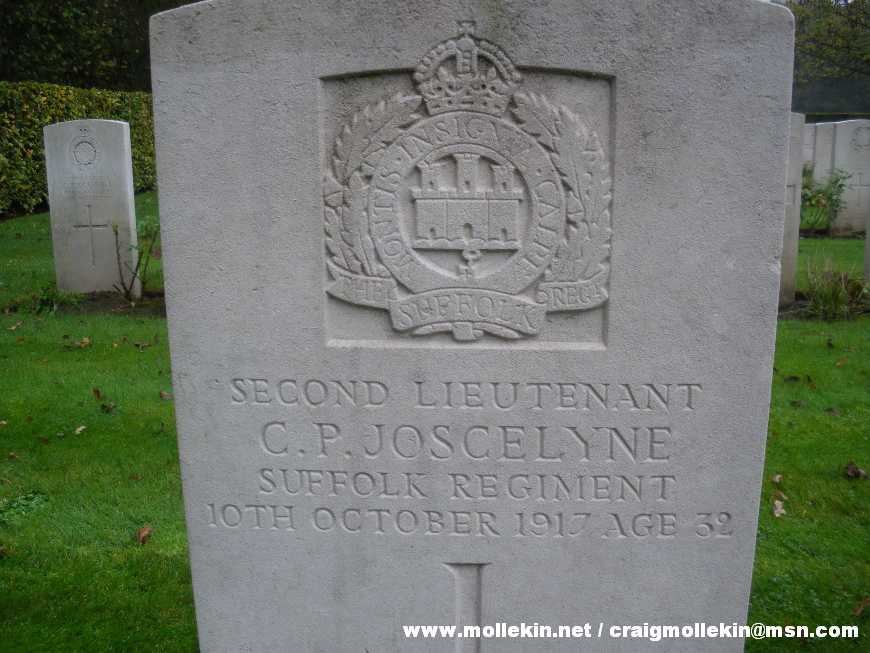
Clement Percy Joscelyne – War Casualty

Headstone

Clement Percy Joscelyne is the husband of my fourth cousin, twice removed. It is interesting to note that his sister in law is the mother of the Author, Eileen Mary Challans (A.K.A. Mary Renault). Special thanks are owed to Trevor Higgins for writing the following text:-

Lt Joscelyne did not join the Suffolk Regiment until the 10th August 1917, and he and his battalion took part in the first of Gen Plumers ‘bite and hold’ battles of the third Ypres offensive. The attack on Poelcappelle, commencing on the 9th October was not successful in gaining ground from the Germans, and at some cost. Lt Joscelyne was removed from the battlefield and taken to Dozinghem Casualty Clearing Station, where he died from his wounds on the 10th October.

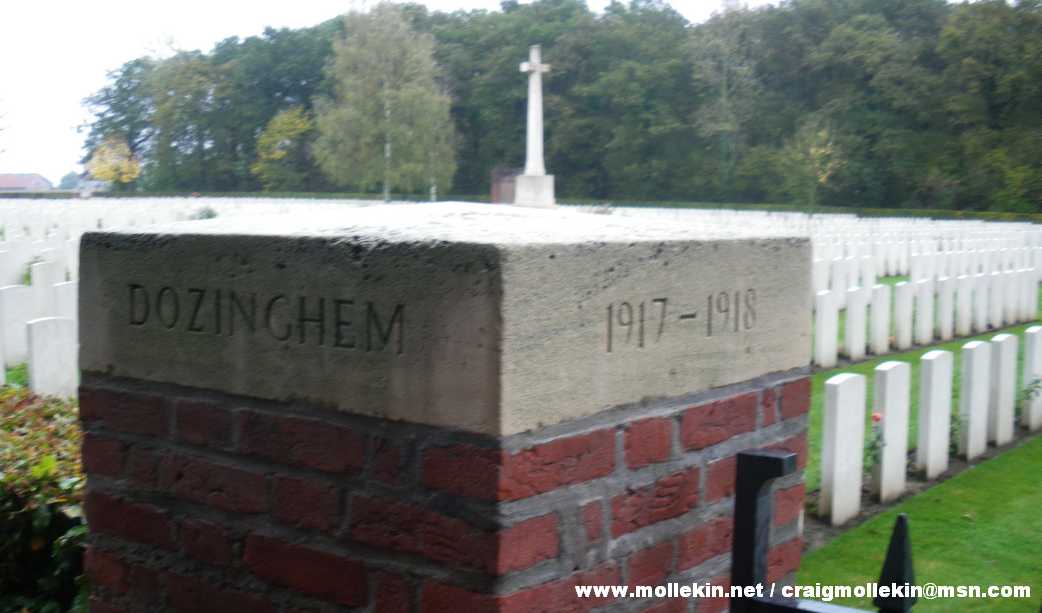
The three clearing stations, specially prepared for this offensive were named by the troops who no doubt had a wry sense of humour in that Dozinghem (dosing them) Mendinghem (mending them) and Bandaghem (bandaging them) dealt with the troops on their severity of injury. Dozinghem, then chosen as the burial place, no doubt dealt with those with casualties with mortal injury. There are 3174 burials within the cemetery.

Dozinghem Cemetery

Lt Joscelyne’s headstone is inscribed with a line from the ‘ Epilogue to Asolando’ by Robert Browning and ‘Speed fight on, fare ever there as here’.

This is a revised version of a post which was originally published on my WordPress Blog on 28/12/2009 and republished on Mollekin Portalite on 31/05/2011.

Herbert Amory – War Casualty

Memorial

Herbert Amory is the husband of my fifth cousin, once removed. He was born in 1888 in Park, Sheffield. Special thanks are owed to Trevor Higgins for writing the following text:-

Herbert is commemorated on Le Touret Memorial within the cemetery of the same name , north east of Bethune. The Memorial has inscribed some 13,000 names of soldiers who died within a defined area and were never found. The geographical area as defined, covered the battles of La Bassee and Armentieres. (James Wilfred Loukes died on the 24th October 1914 in an engagement within the same area).

Le Touret

Le Touret

The battles and engagements around Bassee and Armentieres were the BEF’s attempt at stopping the Germans advancing south, and ably assisted by French battalions, stemmed the flow, but at great cost. The Germans made use of field artillery and many soldiers were killed in a 20 kms area south of Armentieres. German snipers also caused many deaths during times when the British ‘moved’ during quiet times.

When the numbers of the two memorials Le Touret and Ploegsteert are added together, 24000 names, one can appreciate the loss of life in this area, that is without the named buried in countless cemeteries.

This is a revised version of a post which was originally published on my WordPress Blog on 10/09/2009 and republished on Mollekin Portalite on 16/05/2011.

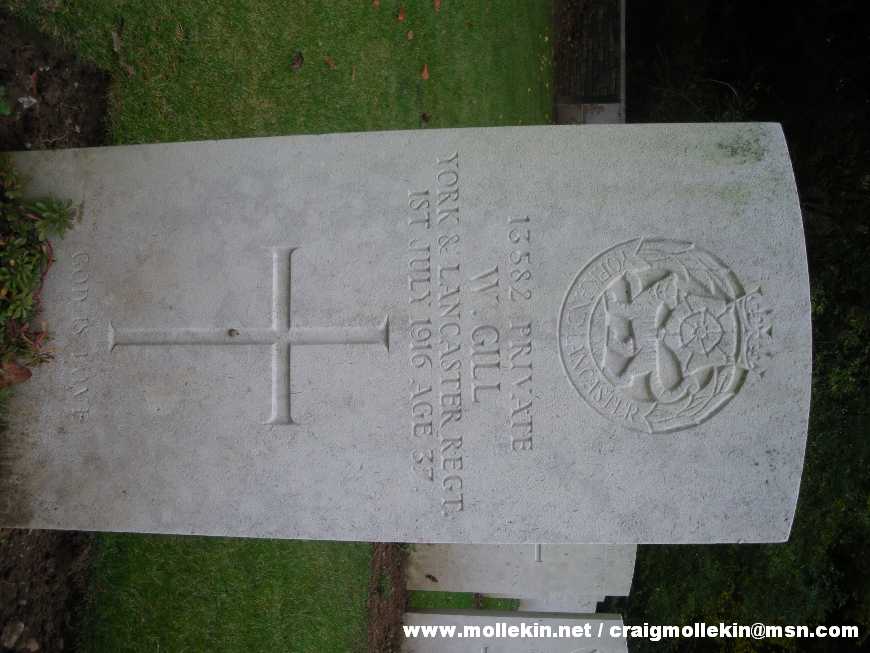
Walter Gill – War Casualty

Headstone

Walter Gill is my second cousin, thrice removed. He was born circa 1879 in Manchester. According to the 1911 Census he was a Sanitary Labourer for Sheffield Borough Council and lived at 9 Weigh Lane, Park, Sheffield. Special thanks are owed to Trevor Higgins for writing the following text:-

Walter was a member of the 8th btn York and Lancaster Regiment, which was formed from men of the same geographical area at Pontefract. It was a regiment never given the ‘Pals Battalion’ title as were many other locally formed regiments.

The 8th were part of 70th Brigade and assigned to the Western Front of theSomme. On the night of the 30th June 1916, the soldiers of the battalion were located to trenches between Authille Wood and Ollivers . Their orders were to take the village of Ollivers when the attack was launched at 7.30 am on the 1st July.

The attack did not go well and many men were killed almost immediately. Those that remained, 70 of them, actually reached the third line of defence of the Germans, but none ever returned. Of those left defending the first trench, including members of the KOYLI Regiment, stood their ground until eventually overwhelmed.

Of 680 soldiers and 23 Officers, only 68 remained to return to the rear.

Blighty Valley Cemetery

The Battle of the Somme is written in history as the greatest military loss in one day of conflict, some 19857 men killed or missing. It has also been suggested it was never a battle designed to win but, a campaign to cause the Germans to withdraw troops from Verdun in the south to defend the Western Front. Whatever the reason the battle was bloody and sacrificial. German losses were described as ‘the muddy grave of the German Field Army’.

Walter is buried in close proximity within Blighty Valley Cemetery, Authuile Wood, which lies 4 klms north of Albert on the Somme. He are buried with other casualties of the 8th Battalion York and Lancaster Regiment, and is probably one of those interred at the commencement of the cemetery shortly after the 1st July 1916. There are 1027 burials within the cemetery, 536 of which are unidentified.

This is a revised version of a post which was originally published on my WordPress Blog on 10/01/2010 and republished on Mollekin Portalite on 16/05/2011.

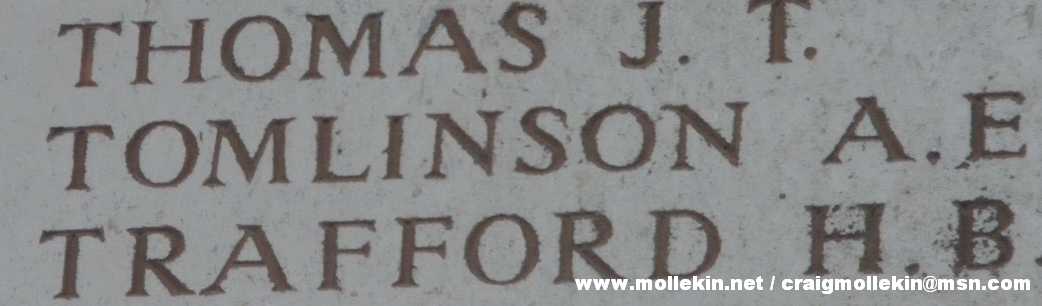
Aylmer Erling Tomlinson – War Casualty

Aylmer Erling Tomlinson is my fifth cousin, three times removed. He was born in 1897 in Worksop, Nottinghamshire. According to the 1911 Census he was living at Cabin Hill, Clumber Park, Worksop. Special thanks are owed to Trevor Higgins for writing the following text:-

Aylmer was a member of the 1/4 Loyal Lancaster Regiment, which was tasked to join other battalions in the attack on Pilkem Ridge, part of the assault at Passchendaele. The area was a complete quagmire after heavy rain, in which artillery bombardment had destroyed the drainage system of the area. The front was heavily defended by German forces, in particular their artillery.

Menin Gate

The rain had eased during the early hours of the 31st July, and the decision was made to launch the attack at 3.50 am. The ridge extended from the outskirts of Ypres south east towards the Menin Road and ran for some 12 miles. The Lancashires attacked at a point south of Zonnebeke, and were severely hampered by unbroken wire, well entrenched pill boxes and mud which was knee deep. Gains were made up to lunchtime, but deteriorating weather conditions caused the British to halt and dig in as best they could. They were subjected to a fierce bombardment from the Germans during late afternoon, followed by counter attacks. The British line held, but no further advance was made, and they were compelled to hold their position until better weather.

The cost was enormous and some 400000 soldiers were dead or missing. Aylmer was one of them and he is commemorated on the Menin Gate.

This is a revised version of a post which was originally published on my WordPress Blog on 04/01/2010 and republished on Mollekin Portalite on 16/05/2011.

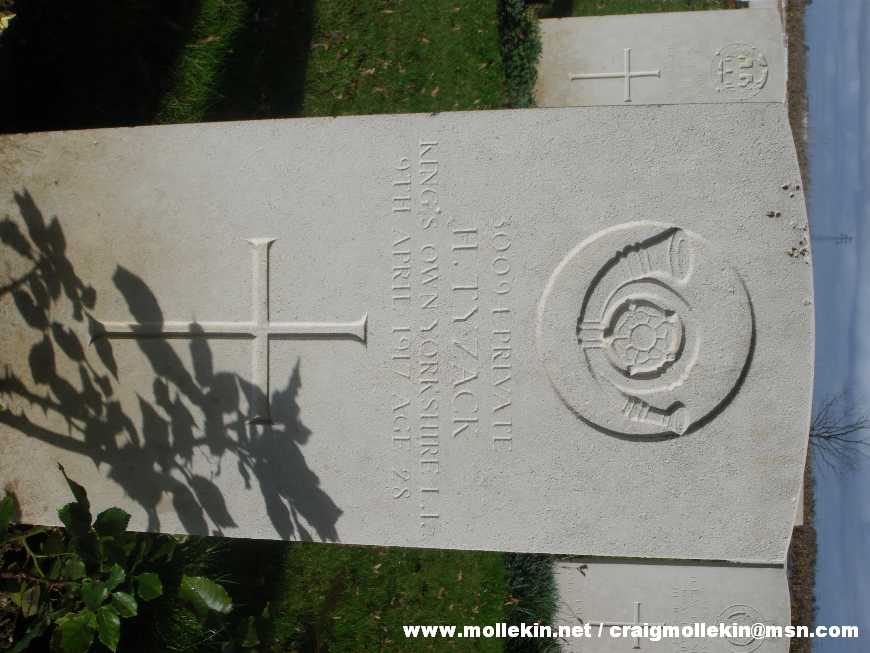
Harry Tyzack – War Casualty

Headstone

Harry Tyzack is my fourth cousin, twice removed. According to the 1911 Census he was an Oil Merchant’s Clerk and lived at Woodburn Road Council School, Sheffield with his parents. Special thanks are owed to Trevor Higgins for writing the following text:-

Harry was a member of the 6th Btn KOYLI, who were in position south east of Arras, in preparation of what is now known as the first battle of the Scarpe (river). On the 9th April their orders were to take the village of Tilloy-les-Mofflaines on the Wancourt Ridge. The Germans held a well fortified trench which held the village and the surrounding ridge. British casualties were high.

Tilloy Cemetery is some 2 miles from the battle scene and Harry is buried in Plot III. Plots I and II contain the burials of immediate casualties as the cemetery was initially a casualty clearing station. It suggests Harry was initially buried in either Artillery Track or Harp Redoubt burial plots, where the bodies of some 90 soldiers were recovered and later interned in Tilloy. The cemetery was added to later and now contains 1642 bodies of which 611 are unidentified.

This is a revised version of a post which was originally published on my WordPress Blog on 29/12/2009 and republished on Mollekin Portalite on 11/05/2011.

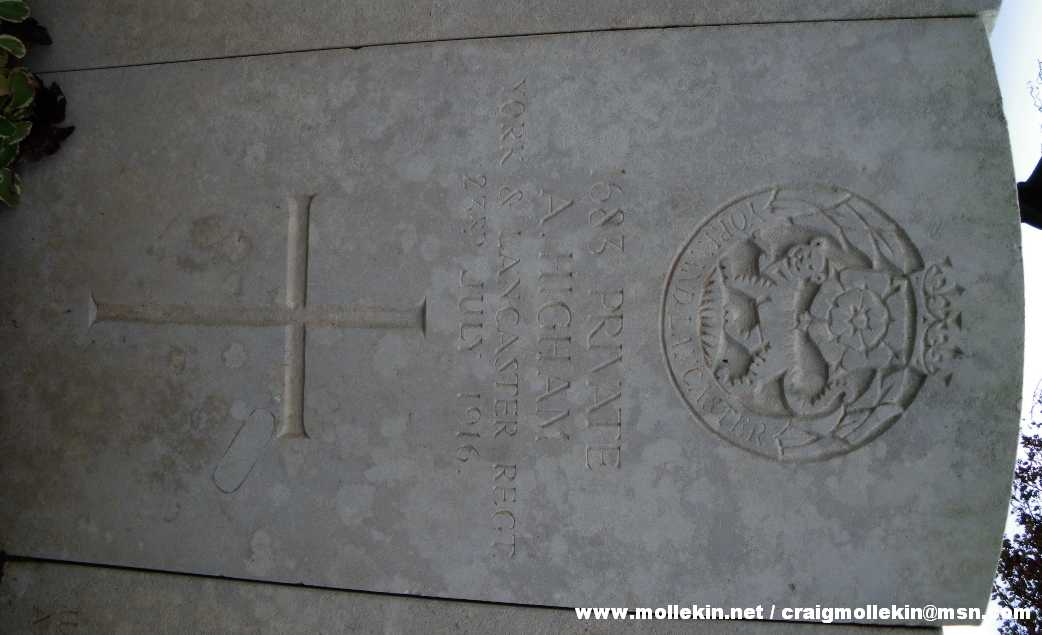
Arthur Higham – War Casualty

Headstone

Arthur Higham is my fifth cousin, once removed. He was born circa 1896 in Sheffield and according to the 1911 Census was living at Hermitage Street, Sheffield. Special thanks are owed to Trevor Higgins for writing the following text:-

The 1/4th York and Lancaster Regiment (Hallamshires) of which Arthur was a member, was held in reserve at the outbreak of the battle of the Somme on the 1st July 1916. However, as things did not go too well for the Allies in the following days, the Regiment was brought forward and tasked to help ANZAC forces to take Poziers, a village situated on the Albert to Bapaume Road. This road formed a ridge and was beneficial to whichever army held it, because of surrounding views. There were several battles for Poziers in mid July, none of them of much success and at great cost to the Australians.

On the night of 23rd July, the Hallamshires , supporting other ANZAC troops carried out a frontal attack on German positions, which extended either side of the road. German machine guns killed many soldiers, and the wounded ones were removed to the 44th CCS at Puchevillers. Arthur was buried in the cemetery there. There are 1756 burials there, most of which were buried after the German advance of 1918.

This is a revised version of a post which was originally published on my WordPress Blog on 05/01/2010 and republished on Mollekin Portalite on 11/05/2011.