Crucifying Tax

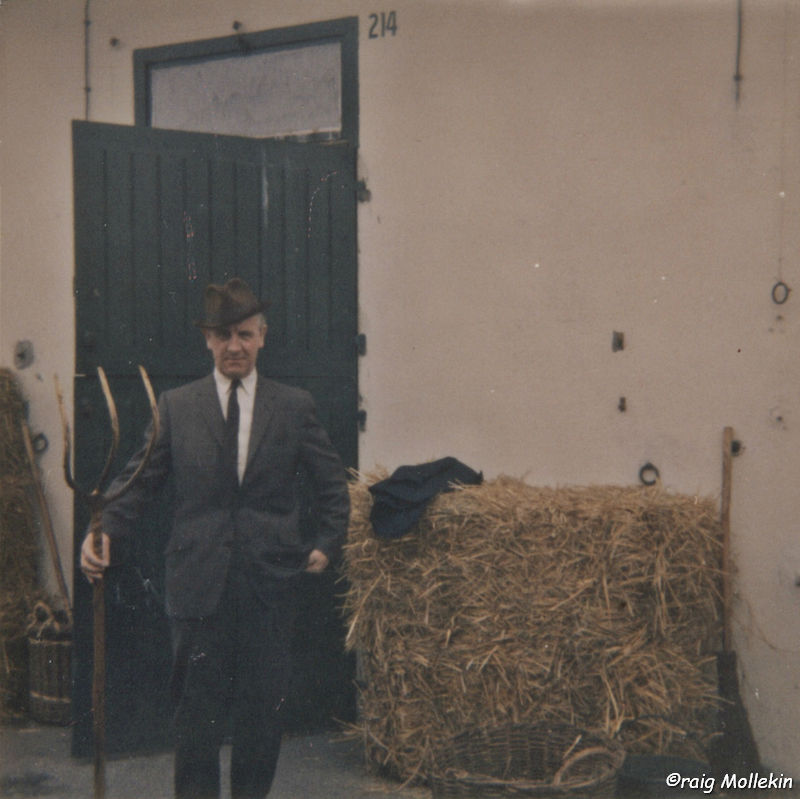
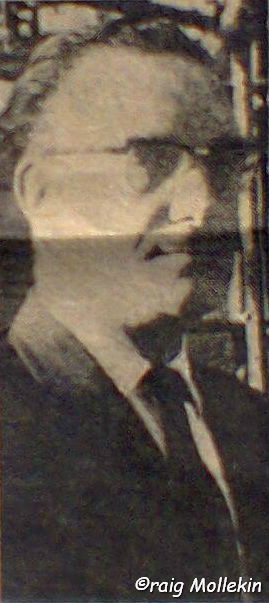
George Jarvis - 70 Effingham Street, Rotherham - 1969

George Jarvis at 70 Effingham Street

George Jarvis, born in 1888 in Rotherham, is my second cousin, twice removed and son of Eliza Jane Bowler Crossland and Frank Jarvis. In 1910, he married Gertrude Padley, in Rotherham.

Below is a newspaper article pertaining to the closure of his business due to pressures from a change in taxation laws. The S.E.T. was eventually replaced by V.A.T.

THE ADVERTISER, SAT., MAY 10th, 1969

‘Crucifying Tax’ leads to closure of another shop

The “crucifying” burden of S.E.T. has led to the decision to close another old-established Rotherham business – the town centre tobacco and confectionery shop of Mr. George Jarvis.

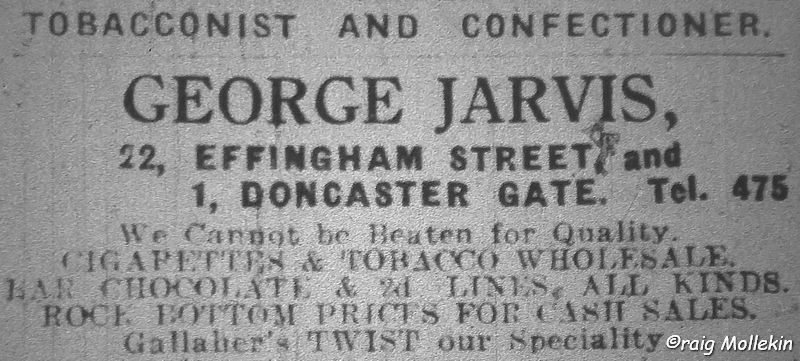
George Jarvis (advert) - 1930

George Jarvis (advert) – 1930

Just a fortnight ago, “The Advertiser” revealed that increased delivery costs and Selective Employment Tax had forced one of the town’s oldest family grocery shops (Beaumont and Stevenson, at Wellgate) out of business.

Now, Mr. Jarvis, who is to close his Effingham Street shop on May 31st, or when present stocks run out, says his retirement is not something which he has sought.

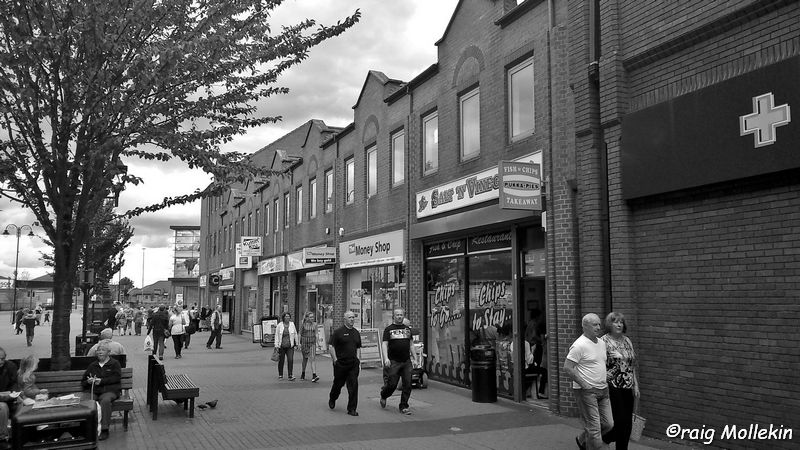
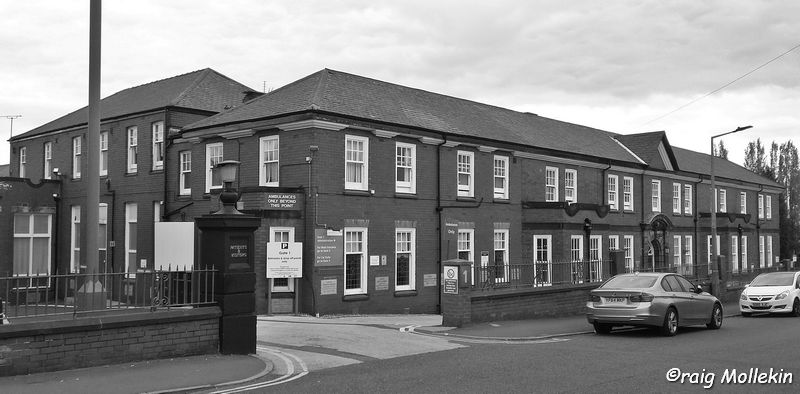
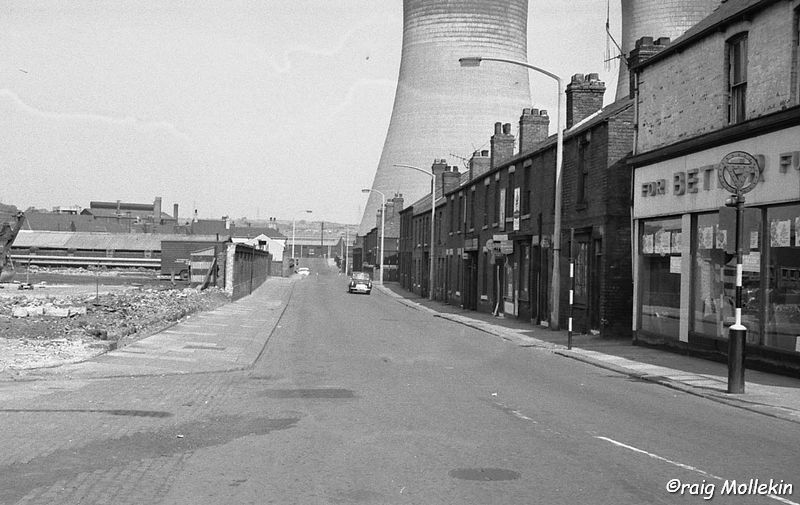
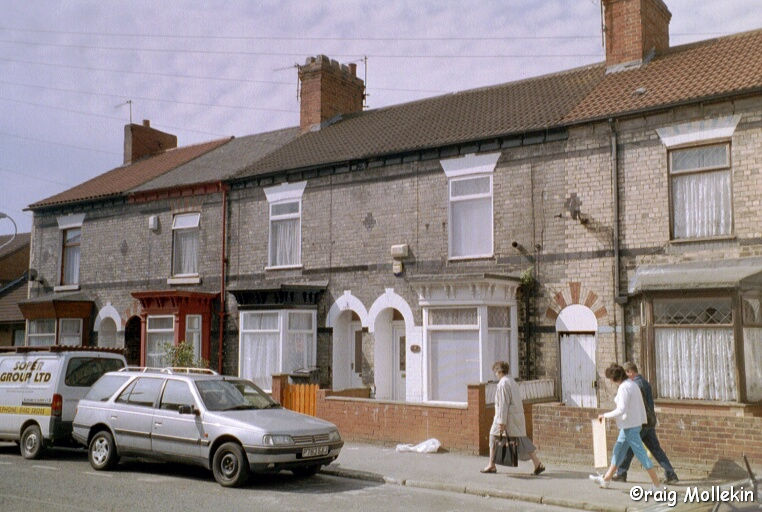
Effingham Street, Rotherham - 25.07.15

George’s Effingham Street shop would have been along this row of shops (now demolished and replaced)

“Crucifying S.E.T. was the major cause of the decision to close down, he said.

It’s difficult

“The present Government have made things more and more difficult for the small shopkeeper, and I just can’t see small shops surviving in this particular trade,” he said.

Mr. Jarvis, whose business has also included wholesaling, added: “We in this trade have been working for a microscopic margin of profit, and now with the present legislation, plus cut price trading, the position is becoming impossible.”

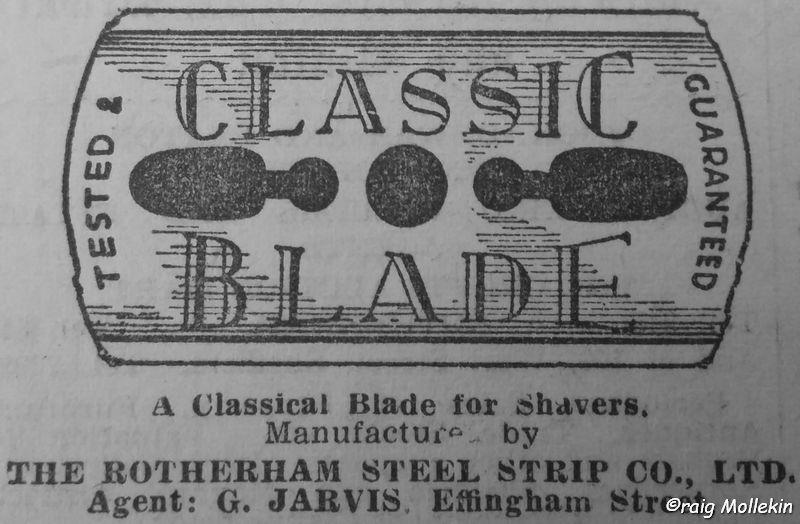
Rotherham Steel Strip Classic Blade - George Jarvis - 1937

Rotherham Steel Strip Classic Blade – 1937

One of Mr. Jarvis’ biggest regrets is that present retailing trends will bring an end to the personal service aspect of shopping of which he has been a champion for nearly half-a-century.

Mr. Jarvis owned two shops in Rotherham for more than 40 years, after first setting up his own business in 1919. His shop at Doncaster Gate was recently sold, and now his Effingham Street shop, which he has owned for 48 years, is to close.

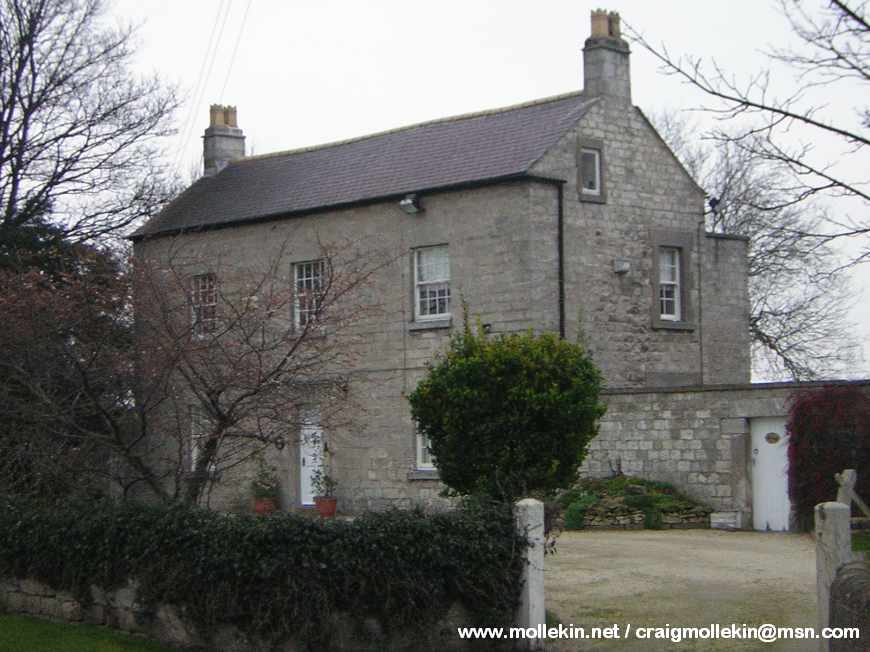
Tusmore Street, Rotherham - 1966

Tusmore Street – 1966

Although he is still very active, Mr. Jarvis also feels that his health is not sufficiently good to maintain the pressure he requires of himself to stay in business, although he has no particular plans for filling his leisure hours.

Born at Tusmore Street, Rotherham, he moved into retailing after some time in the tailoring trade. Over the years, he developed a keen interest in horse racing, and has owned horses for several years, with 18 winners since 1954.

He now owns only one horse, Linton Spring, trained at Wetherby.

His biggest ever success was in 1955, when his Dalstar won £1,323 at Haydock in the John Buggins Nursery.

Cheeky Raiders

Claude Mollekin (Copyright Ann Mollekin) (1)

Claude Mollekin

Claude Mollekin, born in 1908 in Rotherham, is my first cousin, twice removed and son of Herbert Mollekin.

Below is a newspaper article regarding somebody going for a joyride in his car.

THE ADVERTISER, SAT, NOV. 28th, 1964

‘Cheeky’ raiders grab new car

MALTBY building contractor Mr. Claud Mollekin received an unpleasant surprise on Wednesday morning when it was discovered that his new car had vanished, and the culprits had been so cheeky they had closed the garage doors after them.

The car, a Jaguar 3.8 “S” type, was taken from the garage at Mr. Mollekin’s house, “The Grove,” Roche Abbey Road, after Mr. Mollekin had left it there at about midnight on Tuesday.

“I don’t understand not hearing them, as we have a good dog,” Mr. Mollekin told “The Advertiser.” “Another car in the garage was untouched.”

Blyth Road (The Grove), Maltby - 06.02.05 (4)

The Grove

FOUND AT CRAGS

The car was found run off the road at Wood Lea, Maltby Crags, at about 9.30 on Wednesday morning, and Mr. Mollekin estimates damage done at about £60.

“I assume it was some young hotheads who took it for a joy ride, and I suppose they live locally, or they would not have brought it back to Maltby,” said Mr. Mollekin. The car had been driven about 90 miles.

Maltby police said yesterday that inquiries were being made.

Dalton Assault Case

Rotherham Town Hall (Formerly Rotherham Magistrates Court) - 13.07.17

Rotherham Magistrates Court

Rodger Ogden, born in 1909 in Rotherham, is my third cousin, twice removed and son of Albert Edward Ogden and Elizabeth Surtees. Rodger’s siblings, Alice, Martha and Clarice, are also featured on this website.

In 1933, Rodger married Nellie Davies, in Rotherham and together they issued two children.

Below is a newspaper article regarding a feud that Nellie had with her neighbour.

THE ADVERTISER, SAT., OCT. 2nd, 1954

“Feud” Hint In Dalton Assault Case

When two Dalton housewives appeared at the Rotherham West Riding Court on Monday on summonses for assault, the suggestion was made that there had been “more or less a feud” between the parties concerned.

Nellie Ogden (42), of 23, Norwood Street, Dalton, was charged with assaulting and occasioning bodily harm to Alice Cawthra (46), of 14, Parva Cottages, Dalton. Mrs. Cawthra was cross-summonsed by Mrs. Ogden for assault.

Mrs. Ogden was fined £3, with 3s. costs, and bound over in the sum of £10 to keep the peace for 12 months. The cross-summons against Mrs. Cawthra was dismissed.

Chief Insp. L. Farmer, B.E.M., said that at 2 p.m. on Friday, August 27th, Mrs. Cawthra was washing the steps leading to the back door of her mother’s house, 25, Norwood Street, Dalton. Mrs. Ogden was in the doorway of her house, 23 Norwood Street, which was next door but one. Mrs. Cawthra had almost finished cleaning the last step when Mrs. Ogden shouted out in a sneering manner “Don’t forget your gate step.”

There had been some previous argument about the gate step, explained the chief inspector. Mrs. Cawthra replied that she didn’t want any bother. Mrs. Ogden, however rushed across and got hold of Mrs. Cawthra’s hair, struck her repeatedly and knocked her head against a wall.

A witness, Mrs. B. Sanderson, of 14, Norwood Street, Dalton, intervened and pulled the accused away. Then Mrs. Cawthra went into the house.

When Mrs. Cawthra later reported the assault to the police, went on the chief inspector, she was in a very distressed condition. The front of her pinafore was covered with blood and she had cuts and abrasions on her face, and two lumps on her head.

Two constables interviewed Mrs. Ogden at her home that day and she made the following statement “She asked for it; she had been skitting and I let her have one. It must have been my ring that did it. I didn’t know she was that easy. She is always gossiping about me. If she had come off best it would have been all right.”

“SOME TROUBLE”

Mrs. Cawthra said she was in the habit of cleaning her mother’s steps. There had been some trouble about the particular gate in question. Mr. M. W. Field (representing Ogden), to Mrs. Cawthra: There has been a lot of trouble over all sorts of things in the past, hasn’t there? – Not with me there hasn’t.

Your mother and you have been having more or less a feud with the Ogdens. You are not on very good terms with them are you? – No.

Were you not making faces at Mrs. Ogden? – No, I wasn’t.

Mrs. Cawthra denied having rolled up her sleeves and asked Mrs. Ogden to “come over,” and said Mr. Ogden had urged his wife on to make the assault. Mrs. Cawthra also denied kicking the accused, or touching her in any way.

Beatrice Mary Sanderson said she saw Mrs. Ogden go over and attack Mrs. Cawthra, and had tried to part them.

“Mr. Ogden shoved me off and told his wife to get back at her. Then he shoved me out of the yard,” said witness.

When it was suggested that Mrs. Cawthra’s mother, Mrs. Green, had tried to pick up a bucket, then a brush, to come to her daughter’s aid, Mr. Field said Mr. Ogden had to restrain her.

In reply to a question by Col. J. W. B. Landon (chairman) it was stated that Mrs. Green was 71.

Ogden said that Mrs. Cawthra and her mother had been falling out with her husband all morning.

Mr. Field submitted it was just an unfortunate disagreement between neighbours that happened form time to time. it was always difficult in these matters, he said, to decide who started things.

Finding Ogden guilty, and dismissing her cross-summons, Col, Landon said: “Presumably she only brought proceedings after receiving the summons for assault. It was a barefaced assault.”

The Murder of Gladys Merrick

gladys-merrick

Gladys Merrick

Ellen M. Barlow, born in 1920 in the Rotherham area, is my second cousin, twice removed and daughter of Herbert Barlow and Mary Burton.

An entry regarding Ellen’s great-grandparents, Thomas Burton and Ann Pickersgill, can be read here.

In 1940, Ellen married Douglas Fair.

Via my family tree website, I made a connection with Frank Barlow, the nephew of Ellen, who told me a rather shocking story; in Frank’s words:-

Ellen married Douglas (Dave) Fayre who was a soldier in the war, he returned and his nerves were shot to bits. A young girl called Gladys Merrick was murdered behind the Estoria picture house in Goldthorpe and Dave Fayre went to the police and told them my father (Fred Barlow) had committed the murder and he was duly arrested and then released (he was down Houghton Main Colliery at the time of the murder). Dave Fayre was taken in for questioning and his beret was found close to the murder. The case was never proven but Dave Fayre was detained at Rampton Hospital for the criminally insane. In the 60’s my fathers brother Herbert was an electrical contractor based in Farnham, Surrey and he won the contract to re-wire Rampton Hospital, where he met Dave Fayre again after many years, shortly afterwards Dave Fayre killed one of the wardens and was committed again for life, where he died shortly afterwards.

Frank’s account prompted me to eventually uncover the following newspaper accounts. If anybody has any information or photos of the locations to add, please get in touch and I’ll credit you.

I have so far been unable to find a death entry for Douglas and consequently, do not know his fate.

Yorkshire Evening Post – Wednesday, 10 February, 1943

ATTACKS ON GIRLS

Goldthorpe Murder revives Discussion

Police investigation into the death of Gladys Merrick (16), of Thurnscoe, whose body was found at Goldthorpe on Monday, continues. The girl’s clothing was torn and there were marks on her throat.

The tragedy has caused a revival in the district of discussion concerning attacks on girls, which are stated to have taken place at Goldthorpe some months ago. A resident says one night two girls were chased in Straight Lane, one being attacked from behind by an assailant who struck her with a stick. The other girl was chased but eluded her pursuer. Straight Lane is at the opposite end of the village to the plot of ground on which Gladys Merrick’s body was found.

Manchester Evening News, Thursday, 11 February, 1943

Dance Halls Searched in Murder Case

FOLLOWING a comb-out of dance halls, cinemas, clubs, and public houses in the Goldthorpe district, South Yorkshire, officers from Doncaster headquarters of the West Riding Police are narrowing down the inquiries into the murder of Gladys Merrick (16), a munition girl, of Briton-street, Thurnscoe, whose strangled semi-nude body was discovered on a piece of waste land behind a club at Goldthorpe on Monday.

Daily Mirror, Friday, 12 February, 1943

HOMECOMING OF A SOLDIER

Called home by an urgent telegram, Private George Merrick, last-war veteran, stood waiting for a bus at Doncaster on the last stage of his journey.

Some women in the queue were discussing the murder of a 16-year-old girl.

Merrick asked who the victim was and learned that it was his own daughter.

The girl, Gladys Merrick, was found strangled and almost naked on waste land at Goldthorpe, South Yorks, on Monday.

Private Merrick, now in the Army Catering Corps, had travelled for fifteen hours from the South of England in response to the telegram.

Men in the queue assisted him as he nearly collapsed and he was taken home to Thurnscoe in a police car.

Police have found a khaki forage cap near the scene of the crime.

SOUTH YORKSHIRE TIMES AND EXPRESS, FEBRUARY 13, 1943

THURNSCOE GIRL STRANGLED

Tragic Discovery at Goldthorpe

CLOTHES TORN FROM BODY

Throughout the week intensive investigations have been pursued by the West Riding police in the Goldthorpe area in an effort to throw some light on the death of

GLADYS MERRICK (16), only daughter of Mr. and Mrs. G. Merrick, of 38, Briton Street, Thurnscoe.

The girl’s body, from which all clothing had been stripped with the exception of socks and shoes, was discovered on a small plot of waste land near the rear of the Reform Club, at Goldthorpe. There were evidences that the girl had met a violent death, and marks on her throat indicated that she had been strangled.

On Thursday night the police intimated that they were pursuing a certain line of action, and that “developments were expected.” Yesterday, however, it was learned that the clue investigated had not produced the results expected, and enquiries were renewed in other directions.

PENSIONER’S DISCOVERY.
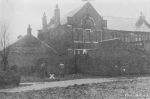
murder-scene-of-gladys-merrick

Murder scene

The girl’s body was found at 11:15 a.m. on Monday by an old age pensioner, Mr. T. Lockwood, of Goldthorpe, who was taking his usual morning walk along the path which runs along the back of the Reform Club, Goldthorpe.

When Gladys left home at 7.15 p.m. on Sunday she was wearing a blue blouse and skirt, a three-quarter length brown coat, blue overalls, a brown scarf with yellow stripes, and a yellow scarf worn as a turban. But when found next day she was wearing only a pair of men’s socks and a pair of shoes. Her other clothing was strewn around her body. When the discovery was reported to the police vigorous investigations proceeded immediately, but it was not until late on Monday afternoon that the body was identified.

The dead girl, until three weeks ago an employee of a Doncaster firm, was a former pupil of Thurnscoe Hill School. She left her work at Doncaster intending to find something more suitable. There are two brothers, John Robert, aged 19, who is a haulage hand at Barnburgh Colliery, and a younger brother, aged 14. Mr. Merrick, who has been in the Army for three years and was formerly a miner at Hickleton Colliery, was sent for by the police, and arrived home late on Wednesday. Gladys was about 5ft. 3ins. tall, and had fair hair and grey-blue eyes.

The club behind which the body was found, stands just off the main road, and the body was about 15 yards from the road. When questioned, the doorkeeper of the club said he was certain that no girl corresponding to Gladys Merrick’s description had entered the club on Sunday. If so he would certainly have noticed her because only one woman wearing trousers entered during the evening. The club steward, Mr. R. Marriott, said that he was up until late on Sunday, and although his bedroom window was only ten yards from the place of discovery, he heard no disturbance or noise. Mrs. Bailey, who lives nearby, said she heard sounds of someone running and a scream, and Mrs. Bray, who lives at the bungalow adjoining the plot of land, thought she heard a scream about 9.15 p.m. on Sunday.

MOTHER’S STORY.

When a “Times” reporter visited Mrs. Merrick at her home yesterday (Thursday), Mrs. Merrick said that her daughter often went out on Sunday nights. She did not attend dances because her parents thought she was too young to do so, but enjoyed standing in the doorways of local dance halls and watching the dancers. On Sunday night, Mrs. Merrick was busy mending Gladys’s shoes, and consequently did not take much notice of what her daughter was doing. Before Gladys went out she said, “I promise I’ll be back at 9.30 mother,” 9.30 being the time specified by her mother for her to be in. When Gladys did not return by 9.30 no enquiries were made because the girl had been in the habit of visiting her grandfather at the other end of Goldthorpe. Mrs. Merrick said that Gladys had only two girl friends with whom she customarily went out, and last week-end neither of these girls was in Thurnscoe, both being employed in other towns. So far as she knew her daughter had no boy friends and never spoke to her of meeting young men.

A neighbour, Mrs. C. Clifford, of 40, Briton Street, told our reporter that Gladys went in just before 7 p.m. on Sunday to ask Mr. Clifford to cut out some soles for her shoes. She often went in and chatted with Mrs. Clifford. The girl heard the radio programme change at 7 p.m., and asked about the time, saying that she had “somebody to see.”

Mr. W. Dutton, who lives on the main road not far from the Reform Club, said in his opinion the fact that some people were said to have heard screams on Sunday night was “nothing at all to go by.” Every Sunday it was quite usual to hear screams and shouts of girls going home about this time.

Talk in the district of attacks on girls which are said to have taken place several months ago, was revived by the tragedy. It is stated that one young girl was hit with a stick from behind by an unknown assailant and was unable to work for three weeks.

Ever since the body was found, the West Riding police have been making the closest investigations into the case. The police have taken statements from a large number of people, including soldiers and pit lads. Police officers from outlying districts have been called in to assist in the investigations. Supt. J. Walker, of Doncaster, is in charge, together with Detective Chief Inspector W. Lee and Detective Chief Inspector C. Marston, of Wakefield.

The funeral has been fixed for Saturday at Bolton Cemetery at 2.30 p.m. A postmortem examination has been conducted by Professor P. L. Sutherland, County Pathologist.

Yorkshire Evening Post, Saturday, 13 February, 1943

MYSTERY OF DEAD GIRL

An announcement was broadcast at cinemas in Goldthorpe last night at the request of the police, who are investigating the death of Gladys Merrick (16), who was found strangled at Goldthorpe on Monday. The announcement asked anyone who saw her on Sunday night, after 7 o’clock, to inform the police immediately. They are anxious to trace the girl’s movements from the time she left home, just after 7 p.m. on Sunday.

The funeral took place at Bolton-on-Dearne this afternoon.

SOUTH YORKSHIRE TIMES AND EXPRESS, FEBRUARY 20, 1943

STRANGLED GIRL’S FUNERAL

Crowds Watch Thurnscoe Ceremony

Hundreds of people in Thurnscoe and Goldthorpe lined the streets on Saturday as the funeral of 16-year old Gladys Merrick, of Briton Street, Thurnscoe, whose body was found behind the Reform Club, Goldthorpe, on February 8, passed.

gladys-merricks-funeral

Funeral

The crowds included many young people who had known the dead girl, and miners on their way from the pits stood in their pit dirt with bared heads bowed as the cortege passed through the streets on its way to Bolton Cemetery. Many of the women in the crowd outside the Central Hall, Thurnscoe, where a short service was held proceeding the interment, were in tears. The service was conducted by the Rev. A. W. Sheldon.

Mourners included the dead girl’s parents, Mr. and Mrs. G. Merrick, her brothers, and other relatives and friends.

Throughout the week the police have been pursuing the most detailed enquiries in an effort to unravel the problem of who strangled the girl and tore off her clothes, before leaving her on a plot of waste ground where the body was ultimately discovered.

Late last Thursday the solution of the crime appeared to have been reached, but under the exacting scrutiny applied in such cases a promising development did not prove satisfactory. On Friday morning the hunt for the killer was resumed at full pressure involving many fresh lines of enquiry. The police have a difficult task in view of the absence of clues. One puzzling aspect is that no one has yet come forward who saw the girl after she left home at 7 p.m. on Sunday, February 7th. Her movements after that time until her body was discovered are a mystery.

Mr. G. Bateman, Houghton Road, Thurnscoe, had charge of the arrangements for the girl’s funeral.
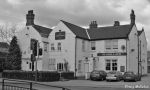
Horse & Groom, Goldthorpe - 06.04.08 (6)

Horse & Groom, Goldthorpe

SOUTH YORKSHIRE TIMES AND EXPRESS, MARCH 6, 1943

“SOMEONE SHOULD BE BROUGHT TO JUSTICE”

Coroner’s Comment on Thurnscoe Girl’s Tragic Death

The inquest on Gladys Merricks (16), daughter of Mr. and Mrs. G. Merricks, of 38, Briton Street, Thurnscoe, who was found strangled at Goldthorpe on February 8th, was opened at Goldthorpe on Friday and was adjourned until March 26th. The Doncaster District Coroner (Mr. W. H. Carlile), who conducted the enquiry with the assistance of a jury, after expressing sympathy with the girl’s parents at the conclusion of the proceedings said: “I only hope that anyone who saw the girl between the time she left home on the Sunday night and the time she was found later will come forward and give assistance to the police, for a crime of this sort does need that someone should be brought to justice for it.”

MAP AND PHOTOGRAPHS

Present at the inquiry were Superintendent J. Walker, in charge of the Doncaster Division of the West Riding Police, and Detective Chief Inspector W. H. Lee. The parents of the dead girl also attended, but there were no members of the public present other than the witnesses. On the wall behind the Coroner’s table was a specially prepared large scale map of the Thurnscoe and Goldthorpe district with such points as the girl’s home and the place where the body was found marked with small flags. Superimposed on the plan were two photographs of the place where the girl was discovered.

The Coroner said the girl was 16 years 10 months old, and resided with her parents at 38, Briton Street, Thurnscoe. On the evening of Sunday, February 7th, she left home at about 7.15. She did not tell her mother where she was going and was not asked, but the mother apparently assumed she had gone to see her grandfather, John Thomas Fairchild, at Goldthorpe. On Monday, February 8th, at about 11.15 a.m. Thomas Lockwood, of Goldthorpe, was taking a walk along the back of Doncaster Road, Goldthorpe, when he saw the body. The girl was lying on her back on a piece of spare land near Ward’s garage. She was almost nude, and her clothing was strewn about in the vicinity. “I don’t propose this morning to go very far with this,” added the Coroner.

IDENTIFIED BY BROTHER.

John Robert Merricks, colliery haulage hand, of 38, Briton Street, Thurnscoe, identified the body as that of his sister. He said that she was the daughter of George Merricks at present serving in the Corps of Military Police, and formerly a collier at Hickleton Colliery. Witness said the girl was a munition worker but was not working at the time of her death. She was getting ready to go away to Bradford to work in the mills. On Sunday evening, February 7th, witness said he left home at 6.45. His sister and mother were in the house. he did not know that his sister would be going out but thought she would be. That was the last time he saw his sister alive. He returned home at 10.15 and went to bed at 10.45. He did not know then that his sister had not returned, and did not get to know until the following day about mid-day. Later he informed the police she was missing, and at about 6.30 p.m. identified her body at Mexborough.

Thomas Lockwood, retired miner, of 47, Nora Street, Goldthorpe, said on February 8th at about 11.15 a.m. he was walking along a road at the rear of Doncaster Road, Goldthorpe, and on a piece of spare land at the rear of Ward’s garage he noticed the body of a woman lying on her back. She was about seven yards inside the space and about five or six feet from the garage at the other end. She was naked except for some string round her body, a pair of men’s socks, and a shoe on the right foot. The left shoe was near the left foot. Her legs which were outstretched were pointing towards the footpath on which he was walking. Her right arm was outstretched and the left arm was by her side. He thought at first that her throat had been cut and called to two men working nearby. He sent one of them for Dr. Jayaker, who has a surgery nearby, and when the doctor came he said she had been strangled and had been dead for several hours. Clothing was scattered round the body, some of it torn. He found a pair of blue overalls near the corner of the plot, and near them was a yellow turban. There were four of five pieces of torn grey skirting a little distance from the body, and what appeared to be a dark coloured scarf was on the top of a roofless shed near by. He sent for the police who were quickly on the scene, and remained there himself till nearly 3 p.m.

Answering Supt. Walker, witness said he did not disturb anything or take anything away, and while he was there until the photographs were taken, no one touched anything.

GROUND ROPED OFF.

Montagu Hospital, Mexborough

Montagu Hospital, Mexborough

Sergeant Thomas William Glasspool, of the West Riding Constabulary stationed at Goldthorpe, said he received information of the discovery about 11.30 a.m. and roped off the piece of spare land immediately. He remained there until the arrival of Supt. Walker and other senior officers. He examined the land where the body was lying without going on to it. The grass had been trampled down near the wall about seven yards from where the girl was lying. On the left arm of the girl was a blue dress, short brown jacket and brown overcoat. There was an elastic string round the centre of the body. There were red marks round the front of the throat. Nothing was touched until the arrival of the photographers. Identification of the girl could not be established, and at 3.10 p.m. he took the body to the mortuary at Mexborough Montagu Hospital.

The Coroner: Apparently then the clothing had been torn? – Presumably wrenched from her; and that was why it was still partly on her left arm.

POST-MORTEM FINDINGS.

Dr. Peter Lindsay Sutherland, West Riding County Pathologist, gave evidence of conducting a post-mortem examination of the body. He said the body was well nourished and well developed and the height was 5ft. 3ins. There were signs of violence on the body. On the front of the neck there was a reddish mark measuring four inches across the neck and one inch broad at its broadest part, which was at the middle in front. At the sides of the neck the mark disappeared and there were one or two small abrasions at the back of the neck. The mark was not grooved. The discolouration on the mark was irregular as if it had been made with a ligature with an irregular surface. There were numerous small abrasions on the chin and on the left cheek. There was a small bruised and abraded area on the upper lip. There were abrasions on the back of the right hand and left wrist. The lower part of the left forearm was soiled with dirt. On the outer surface of the right thigh above the knee there were numerous parallel abrasions. The thigh was also soiled with dirt. On the outer surface of the left thigh there were two areas of very superficial abrasions.

Dr. Sutherland went on to say that the tongue was protruding just between the teeth and inside the mouth on the palate was a stalk of grass. He described internal injuries to the throat and said the abdominal organs were normal. There was no evidence of rape or attempted rape.

Cause of death was asphyxia due to strangulation by ligature.

The Coroner: Did it appear there had been considerable force used when the ligature was applied? – Yes.

Coroner: were you able to say how long she had been dead? – No, I could not say that. When I saw her first at 1 p.m. she was perfectly cold and rigor mortis was absolutely complete.

The proceedings were then adjourned as stated.

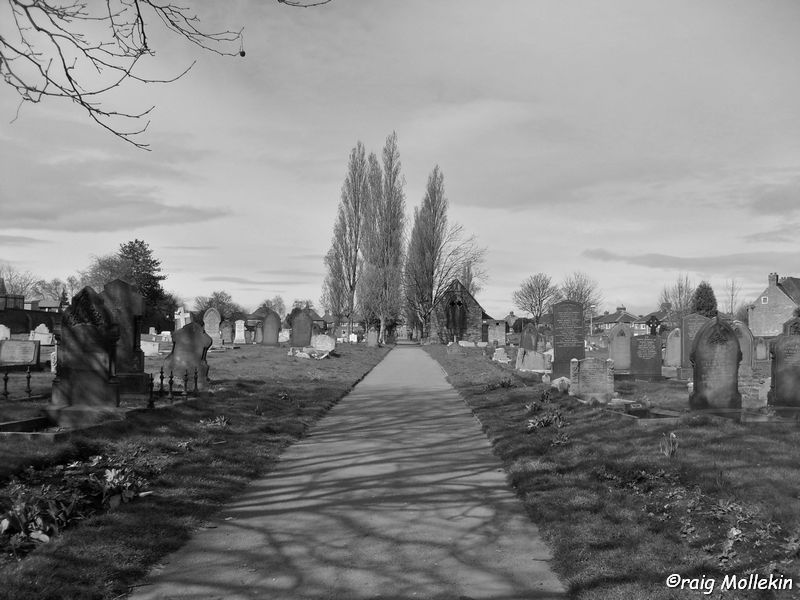
Cemetery, Bolton - 25.03.08 (1)

Bolton Upon Dearne Cemetery

SOUTH YORKSHIRE TIMES AND EXPRESS, APRIL 3, 1943

STRANGLED GIRL CRIME

Further Adjournment of Inquest

The mystery surrounding the death of Gladys Merricks, 16-year-old daughter of Mr. and Mrs. G. Merricks, of 38, Briton Street, Thurnscoe, who was found strangled at the rear of the Reform Club, Goldthorpe, on February 8th was still unsolved when the inquest was resumed at the Horse and Groom Hotel on Friday.

The District Coroner (Mr. W. H. Carlile) said it was not proposed to offer any further evidence at the moment. The police were continuing their investigations, and he proposed to adjourn the inquest again for two months to May 21st, when it was hoped they could come to some definite conclusion.

In addition to relatives of the girl, there were present at the inquiry Supt. J. Walker and Detective Chief Inspector W. H. Lee, of the West Riding Police. Supt. Walker told a South Yorkshire Times reporter that there were several lines of enquiry which had not yet been exhausted and which were being thoroughly investigated.

it is understood that over 500 statements have been taken by the police, who have interviewed several thousand people in the course of their enquiries.

The South Yorkshire Times and Mexborough & Swinton Times.
SATURDAY, JULY 3, 1943

MURDERED GIRL’S FATHER

Warned About Attitude To Police

The father of the girl who was recently found murdered at Goldthorpe, George Merrick (44), soldier, living at Thurnscoe, was summoned at Doncaster West Riding Court on Tuesday for using bad language, and was bound over to be of good behaviour for twelve months.

A condition attached was, “and in particular that your attitude towards the police shall be a correct one, and that you leave them alone in the performance of their duties and that you do not interfere with them or any of the witnesses in the unfortunate case.”

P.c. Tulley said that on June 24th he received a telephone message to go to shop premises in Doncaster Road, Goldthorpe. At the same time Merrick ran into the Goldthorpe police station. He had had some drink and used bad language. As witness went to the shop Merrick went along and used more bad language.

Asked if he wished to question the policeman, Merrick said: “I ask a liar nothing.” Later he said, “The case is one of trying to find out who murdered my daughter.” He declared that he had been caused much trouble over the inquest proceedings.

The Chairman (Mr. M. L. Nokes) told Merrick that if ever the police had tried to find a solution to a murder the police had in the Goldthorpe case.

Asked if he would cease using bad language because his trouble had not been settled, Merrick asked what he was to do.

The Chairman: Be a good lad.

Merrick: I have tried being quiet as long as possible, but nothing has been done.

The Chairman told Merrick that if there was a repetition of his conduct the result might be serious for him.

Yorkshire Evening Post, Saturday, 03 September, 1949

Man questioned about 6-year-old murder – but no charge made

WEST RIDING police officials told the Yorkshire Evening Post this afternoon that there would be no charge preferred against a man who had been brought to Doncaster from Manchester to-day for questioning following a statement in which he was alleged to have implicated himself in the murder of a girl at Goldthorpe in February, 1943.

The body of 16-year-old Gladys Merrick, of Briton Street, Thurnscoe, was found on waste land behind the Reform Club at Goldthorpe on February 8, 1943.

There were marks on the neck and it was thought that death was due to strangulation.

West Riding police, under Chief Detective-inspector Lee and Detective -sergeant Denver, carried out investigations at the time and issued a description in which it was said death might have taken place from six to 12 hours before the body was found.

Ernest James McGlade

Ernest J. McGlade

Ernest J. McGlade

Ernest James McGlade, born in 1883 in Washington, Durham, married my first cousin, twice removed, Mabel Mollekin, in 1923.

Below are a couple of newspaper articles pertaining to Ernest’s retirement from the Central Motor Works company, in Rotherham, which he founded, along with his obituary.

The South Yorkshire and Rotherham Advertiser

SATURDAY, FEBRUARY 12th, 1955

MOTOR TRADE VETERAN TO RETIRE

AFTER being in the motor trade since 1908 and being an executive in it since 1911, Mr. E. J. McGlade, sales director of the Central Motor Works, Ltd., Wellgate, Rotherham, is to retire on March 1st.

Mr. McGlade, who at present resides at 52, Munsbro’ Lane, Greasbro’, plans to move to Wickersley in the next few months. He will remain a director of the Central Motor Works.

Central Motor Works Limited (advert) - 1936

Central Motor Works Advert – 1936

After early experience as a mechanic and an apprentice coach builder he joined the Yorkshire Motor Car Company in Sheffield in 1911, taking over the panel beating department. Later he took over the management of another branch of the company in Sheffield, until 1913, when he became stores manager for the Dart Motor Company in Sheffield. Within a year, he was in the Coldstream Guards in France, reaching the rank of Sergeant, and he was commissioned in the King’s Regiment in 1915.

IN EAST AFRICA

While seconded to the King’s African Rifles, he spent two and a half years in East Africa, finishing his service there as Acting Adjutant of the 2/2 King’s African Rifles.

Ernest J. McGlade (2)

Ernest J. McGlade

After the war, he joined Laycock’s in their experimental departments at Millhouses while they were making the Charron – Laycock car. From that firm he went to the Maltby Engineering Company as manager. It was in 1921 that he joined Mr. Robert Pacey (still chairman of the Central Motor Works Ltd.) in Rotherham. Together with Mr. Pacey and Mr. O. Rodgers, they formed the Central Motor Works, Ltd., being himself director and secretary.

Mr. McGlade took over the sales side, and in those days it was common in the motor trade to work throughout the weekend, seeing to customer’s inquiries, those being the happy days when one could walk into a showroom and order a car for immediate delivery.

With the outbreak of the second World War, Mr. McGlade took up temporary duties with the Ministry of Supply in the Army auxiliary workshops of Northern Command, and remained with them for four years.

A director of Gepsco, Ltd., factors, of Rotherham, Mr. McGlade will retain that office. In 1930, he was chairman of the Sheffield branch of the Motor Trades Association, and he has also been actively connected with the Rotherham branch of the Commercial Travellers’ Association.

THE ADVERTISER, FRI., OCT. 2nd, 1970

Director dies in retirement at Bournemouth

A Director of Central Motor Works, Ltd., Rotherham, Mr. Ernest James McGlade, died suddenly in hospital at Bournemouth, last Friday.

Mr. McGlade, who was born in Durham, lived in the Rotherham area for many years. He served his apprenticeship with Simplex Ltd., of Sheffield, who built the Simplex motor car during the early part of this century. During World War One, Mr. McGlade served as an Army Captain in South and East Africa.

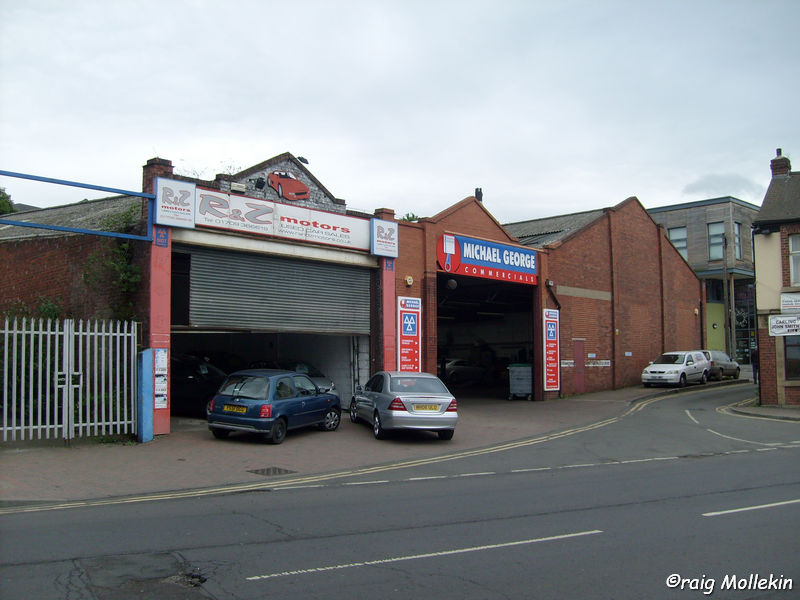
Central Motor Works (site of), Wellgate, Rotherham - 08.06.17

Central Motor Works (site of) in 2017

He then opened the Pioneer Garage in Maltby, and in 1923 he joined Mr. R. Pacey and formed the Central Motor Works Ltd., where he was Sales Director until his retirement in 1954.

Mr. McGlade was a member of the Rotherwood Lodge of Masons, and when he retired to Bournemouth became a member of the Purbeck Lodge. He also became a member of the Durham Society and the Yorkshire Society.

He stayed on the Board of the Central Motor Works, and visited Rotherham every year.

He leaves a widow, Mrs. Mabel McGlade.

Cremation took place at Bournemouth yesterday.

Mr. Riley Retires This Month

rileys-coach-depot-westgate-rotherham-18-05-11-2

Riley’s Coach Depot

Dorothy May Berry, born in 1904 in Parkgate, Rotherham, is my third cousin, thrice removed and daughter of Harry Berry and Agnes Wood. Dorothy’s brother, Frank, is also featured on this site.

In 1928, in Rotherham, Dorothy married Leonard Riley and together they issued two children.

It is interesting to note that Leonard’s brother, Cecil Riley, was the proprietor of the very well known Rotherham business, Riley’s Coaches, which was founded early in the 20th century. Riley’s coach depot was located on Sheffield Road in the Westgate area of Rotherham. Leonard and his family were a Westgate family, living there when the 1911 Census was conducted. Riley’s Coaches were taken over by Gordon’s Coaches of Rotherham in the 1990s.

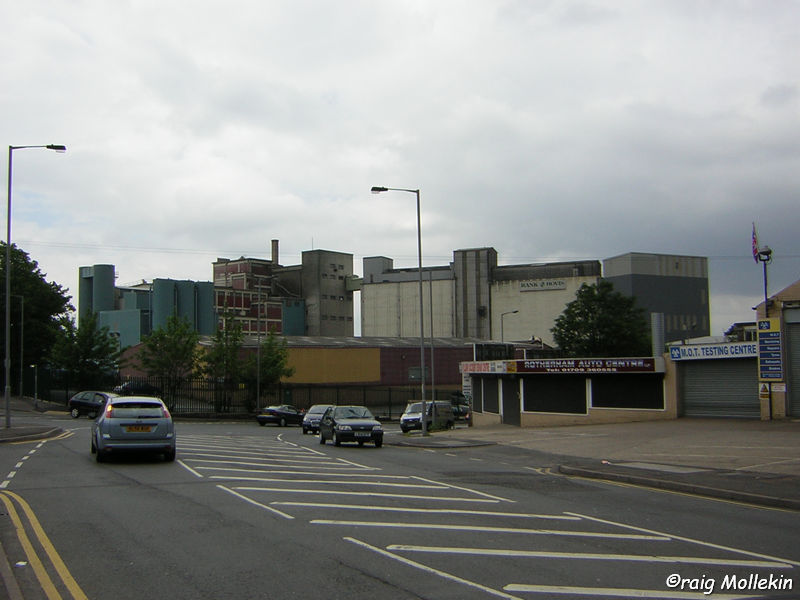
rank-hovis-mill-rotherham-17-06-07-2

Rank Hovis Flour Mill

Below is a newspaper article pertaining to Leonard’s retirement in 1966. Leonard worked at the Rank Hovis flour mill, located on Canklow Road, in the Westgate area of Rotherham. Premier Foods, the owners of Rank Hovis, closed the mill in 2008 and it was demolished in January 2012.

THE ADVERTISER, SAT., JULY 23rd, 1966

Mr. Riley retires this month…

Mr. Leonard Riley, of 19, Beechwood Road, Rotherham, received two presentations at an informal gathering, at the Town Corn Mills of Hovis, Ltd., Rotherham, on Tuesday, from Mr. E. A. Williams, Activity Chief Executive (Technical), Flour Milling, Joseph Rank, Ltd.

Mr. Riley was first presented with a gold clock to mark the completion of 40 years with the firm, and was afterwards presented with an engraved silver cigarette box from his colleagues, to mark his retirement later this month.

Starting with the firm in 1922 as an accounts clerk Mr. Riley became commercial manager, a position which he has occupied for many years.

Mr. Herbert Graham, of 9, Nidderdale Road, Rotherham, was presented with a stainless steel tray and tea set and a coffee table and cutlery to mark 40 years service with the company. He is the head warehouseman.

Harry Higgins

harry-higgins-supplied-by-peter-higgins-1965

Harry Higgins

Harry Higgins, born in Denaby Main, is my fourth cousin, twice removed and son of Harry Higgins and Annie Gomersal.

Harry had an unfortunate start to life, with his mother dying just four months after his birth, but below is a newspaper article detailing his remarkable achievements.

NEWMARKET JOURNAL, Thursday, Jan. 7, 1965.

M.B.E. FOR MR. HARRY HIGGINS

Reward for a life-long service to the building industry was given to Mr. Harry Higgins when he became a Member the Order of the British Empire (M.B.E.) in the new Year Honours.

Mr. Higgins, of 44 Holland Park, Cheveley, said that the award came “completely out of the blue.”

Mr. Higgins is general foreman of Mowlem (Building) Ltd., having worked his way through various jobs in the building industry.

Coronation

Born in Doncaster in 1911, Mr. Higgins became an apprentice joiner in 1928, and with site experience and study at technical colleges, was made a foreman joiner in 1937.

After becoming a general foreman in 1952, he was responsible, on behalf of his firm, for the seating arrangements for the 1953 Coronation at Westminster Abbey.

Among the other projects he has been in charge of are: the restoration of Yarmouth parish church; restoration work on a hall in Derbyshire, and work on Lloyd’s new building in the City of London.

Probably his most famous work was that on the restoration of 10 Downing Street, London. This three-year job involved about 600 men, and cost about £3million.

His job has taken him to various parts and it was the work of Ratlee and Kent Ltd. one of the firm’s subsidiaries that brought him to Newmarket.

Here he is in charge of the construction of the new sales paddock for Tattersall’s employing 23 men and also the Roman Catholic Church on Exeter Road, employing 15 men.

Special thanks are owed to Peter Higgins and his sister, June, for supplying the above newspaper article.

Elizabeth Burton & William Bowler Crossland

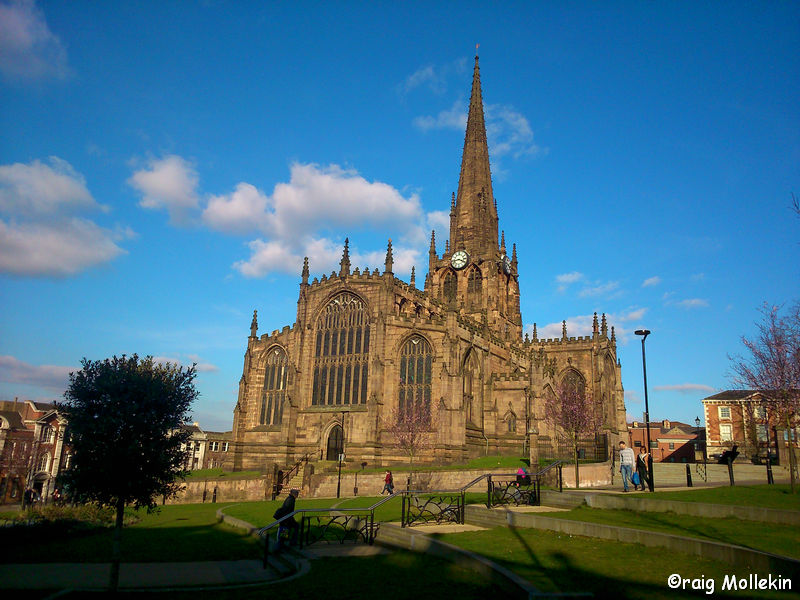
All Saints' Church (Minster), Rotherham - 10.03.14 (2)

All Saints’ Church

Elizabeth Burton, born circa 1840 in Wombwell, is my second great aunt and daughter of Thomas Burton and Ann Pickersgill.

In 1858, Elizabeth married William Bowler Crossland in All Saints’ Church, Rotherham. For a number of years, Elizabeth and William lived in Greasbrough before moving to live in central Rotherham.

Elizabeth was a shopkeeper, selling secondhand clothes, on Drummond Street, in Rotherham, roughly where the TESCO petrol station stands today.

drummond-street-rotherham-copyright-colin-leonard-2

Drummond Street

To my knowledge, Elizabeth and William issued four children, two of them being William Thomas Bowler Crossland and Eliza Jane Bowler Crossland. Below are four newspaper articles pertaining to Elizabeth and William.

THE ROTHERHAM ADVERTISER, SATURDAY, MAY 4, 1895

ROTHERHAM FIREMEN’S LONG SERVICE MEDALS.

effingham-arms-rotherham-24-11-08-5

Effingham Arms

On Tuesday evening, Sergeant William Bowler Crossland, who, we regret to record, died yesterday morning, and Sergeant Potter, members of the Rotherham Corporation Fire Brigade, were presented with long service medals. A social gathering took place at the Effingham Arms, and the presentation was made by Capt. Taylor of Doncaster, a member of the Council of the Fire Brigade Association, who had been deputed to discharge the duty by Sir Charles Firth, president of the association. In the absence of Superintendent Turner, who has recently suffered from indisposition, and is now recruiting at Southport, Deputy-Superintendent Williams occupied the chair. Sergeant Crossland was unable to be present at the ceremonial, he being at the time confined to his bed. He had been twenty-five years connected with the local fire brigade service, and for twenty-six years had been engaged in the water-works department of the old Rotherham and Kimberworth Local Board of Health, and afterwards the Corporation. He was highly respected, and his decease will be regretted by many friends. He was 59 years of age.

fire-station-rawmarsh-road-rotherham-1930s

Rotherham Fire Station

CROSSLAND. – May 3rd, at Drummond street, Mr. William Bowler Crossland, aged 57 years.

THE ROTHERHAM ADVERTISER, SATURDAY, MAY 11, 1895

FUNERAL OF A ROTHERHAM FIREMAN.

The funeral of Sergeant William Bowler Crossland took place on Sunday, at the Rotherham Cemetery, the Rev. W. A. Holiday being the officiating clergyman. The mourners were Mrs. Crossland, Mr. and Mrs. W. Crossland, Mr. and Mrs. F. Jarvis, Mr. and Mrs. G. H. Crossland, Mr. and Mrs. G. Crossland, Mrs. Morton, Mr. and Mrs. T. Burton, Miss K. Crossland, Miss F. Crossland, Miss J. Crossland, and the grandchildren, Master F. Jarvis, Miss J. Jarvis, and Miss L. Jarvis. Deceased had been connected with the waterworks department of the Corporation for a large number of years. He was a member of the old Local Board of Health Fire Brigade, and upon the formation of the Corporation Fire Brigade he transferred his services to it, his total service extending over a period of 28 years. He had also been connected with the working staff of the Rotherham Theatre Royal for about 24 years.

The deceased was 57 years of age. He was followed to the grave by the members of the brigade and the working staff of the Theatre. The ex-superintendent, Major Hirst, was present and Deputy-superintendent Williams was in command. Superintendent Turner was unable to be present in consequence of ill-health. Deceased had been a member of the Effingham Lodge of the Independent Order of Oddfellows, and about thirty members of the lodge joined in the procession.

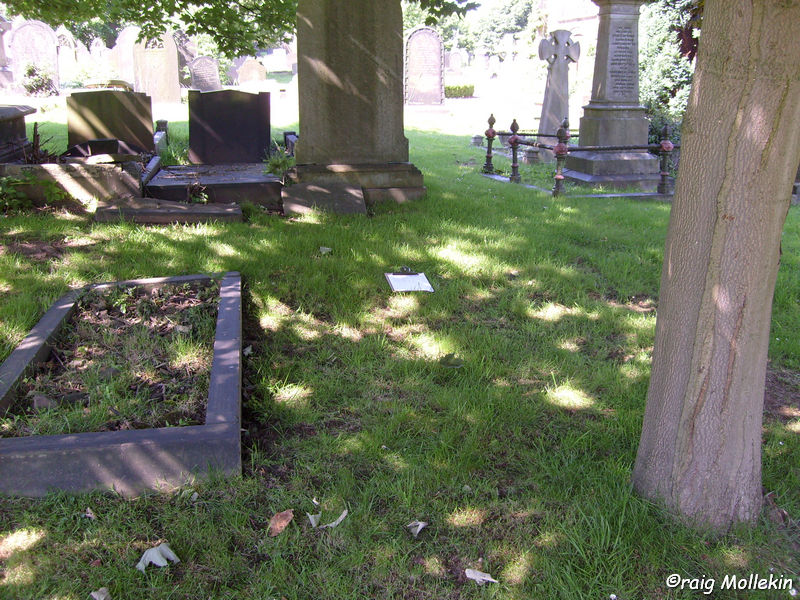
67-moorgate-cemetery-rotherham-2nd-new-b-52-24-06-09-1

Elizabeth & William’s grave

The coffin was borne on the fire engine, which was partially covered by a Union Jack. Wreaths had been forwarded by the members of the Fire Brigade, Mr. Manning, manager of the Theatre Royal, Mrs. Crossland, Mr. and Mrs. Jarvis, Mr. and Mrs. G. Crossland, the Misses Crossland, Messrs. B. and W. Green, and the working staff of the Theatre Royal. The funeral arrangements were carried out by Mr. T. W. Outram.

THE ADVERTISER, SATURDAY, OCTOBER 14, 1905.

CROSSLAND. – October 7th, at 11 court, Drummond street, Rotherham, Elizabeth Crossland, aged 65 years.

Johann Mölleken

JGM, Annie Stacey & Johann Mölleken (1)

John G, Mollekin, Annie & John Mollekin

My great grandfather, Johann Mölleken (known as John Mollekin) was born in 1866 in Hull, approximately four years after his parents, Johann Mölleken and Henrietta Muehlenweg, had arrived in England after emigrating from Prussia.

John married twice, issuing six children with his first wife, Jennie Slingsby (who died in 1905), who were called, Hilda Annie (1894 to 1974), Gwendoline Henrietta (1896 to 1896), John Gilbert (1897 to 1979), Dorothy (1899 to 1992), Jennie (1903 to 1993) and Enid May (1904 to 1904).

THE DAILY MAIL, MONDAY, JANUARY 16, 1905.

MOLLEKIN. – January 13th, at 112, Mersey-street, the dearly beloved wife of John Mollekin. Friends please accept this (the only) intimation. Interred Western Cemetery, Spring-bank, Tuesday, the 17th.

saint-georges-church-sheffield-27-09-05-1

Saint George’s Church

John married again, to a widow called Annie Walters (nee Stacey), in 1907 in Saint George’s Church, Sheffield. John adopted Annie’s son, Samuel Leslie Walters.

John established his own construction company in Hull some time in the 1890s. In the 1895 Kelly’s Directory for Hull, John is trading as a Joiner under the name of, ‘Mollekin & Smith’. I’m not sure who the ‘Smith’ is, but I know that the family were friends with a Schmidt family. John’s first marriage was in fact witnessed by a Elise Schmidt and his niece married a George Andrew Schmidt.

John built a number of streets in Hull and named a couple after his children. Two of these were called, Dorothy Grove and Gilbert Avenue. Dorothy Grove and Gilbert Avenue were demolished circa 2011.

samuel-l-mollekin-1932

Les Mollekin

According to his daughter, Dorothy, John ‘fell to pieces’ upon the death of his wife, Jennie, in 1905. This event combined with the burden of looking after four children seemed to contribute to the demise of John’s business. Within one month of Jennie’s death in February 1905, John appears on the payroll of his brother in law’s firm, Slingsby Machinery Merchants.

By 1907, John had left Hull and was residing in Laughton en le Morthen near to Rotherham. Around this time, John’s brother, Hermann (known as Herbert) had been contracted to build houses in Laughton en le Morthen so it is probably safe to assume that it was around this time that John began working with/for his brother. It is not known when John stopped working with Herbert, but in the 1940s my father remembered him working for a joinery company in Rotherham.

John like my father took a keen interest in cricket and would play the game with my father even when he was in his 70s. John was also a keen a supporter of Rotherham United.

When my father was twelve, John gave to him a Belgian pin fire pistol and steel sword that had belonged to John’s parents, presumably to protect them on their voyage to England and potential threats in a foreign land.

Johann Mölleken & Annie Stacey (1)

John & Annie

It is stated in John’s obituary that he was the first President of Kingston Hull Rovers Football Club. There are numerous newspaper articles published in the late 19th century and early 20th century that make mention of a President called ‘Mr’ Mollekin, but usually no Christian names were given. A couple do state ‘H’ Mollekin and one published in 1898 (published below) states that Herbert was elected President whilst John was elected Vice-President. Herbert moved to Pontefract circa 1896 and became President of their football club. But it is not clear when and which brother held which responsibilities at Hull Kingston Rovers other than in the aforementioned 1898 article. It is worth noting that Herbert Mollekin wasn’t the first President either, so it may be that John was.

Between the 1910s and 1940s, John and his family resided at ‘Rossmoyne’, 81 Rotherham Road, Maltby. After the death of his second wife, John lived with his children and their families. John died at 13 St. John’s Road, Rotherham in 1948, five years after his second wife, Annie, had died. He’d just completed a game of dominoes with his son in law, climbed the stairs to his bedroom, sat on his bed and died.

Stanley Mollekin (3rd from left) & Johann Mölleken (right corner) (Copyright Ann Mollekin)

John (top right hand corner)

THE LATE NURSE MOLLEKIN

The interment took place on Wednesday of Nurse Annie Mollekin, wife of Mr. J. Mollekin, of 81, Rotherham Road, Maltby. She was 81 years of age, and a native of Derbyshire, but had resided in Maltby over 30 years. She had been a nurse for 50 years, and did valuable work for St. Dunstan’s and other organisations. A service was held in the Parish Church, conducted by the Vicar. The mourners included Mr. J. Mollekin (widower), Mr. and Mrs. J. G. Mollekin (son and daughter-in-law), Mr. and Mrs. Webb, Mr. and Mrs. Shearing and Mr. and Mrs. J. Webster (sons-in-law and daughters), Miss Muriel Webb (grand-daughter), Mrs. G. Hardy (Bulwell), Mr. J. Whitaker, Mr. and Mrs. H. Mollekin, Mrs. A. Pearson, Mrs. G. Brown and friends. Floral tributes were sent by ‘Husband and Son,’ ‘Flossie and Walter,’ ‘Jack, Edith and children,’ ‘Fred, Dorothy and Hilda,’ ‘Jennie, Jack, Fred and Leslie,’ ‘Grandchildren, Rotherham,’ ‘Grandchildren, Wickersley,’ ‘Donald, Douglas and Dorothy,’ ‘Nieces and nephews (Merseyside),’ ‘Bert and Daisey,’ ‘Nieces and Nephews (Maltby),’ ‘Dot, George, Doreen and auntie (Bulwell),’ ‘Marion, Percy and children.’

Walliker Street

Walliker Street, Hull

Below is a selection of newspaper articles that pertain to John including his obituary.

THE DAILY MAIL, FRIDAY, AUGUST 6, 1897
ACCOUNTS, RECEIPTS & LITIGATION.

At the Hull County-court this morning, before Judge Bedwell, John Mollekin, joiner, Walliker-street, brought an action against William Neman for £2 12s 6d for goods supplied. Mr Fieldman was for the plaintiff, and Mr Locking for the defendant. The plaintiff supplied the defendant with timber, worked up into doors, &c., amounting to £20 12s 6d. The defendant paid £13 on account, and there was a dispute as to the balance, the plaintiff making admissions as to the payment of the £13, while the defendant contended that he had paid the plaintiff £15. A number of informal receipts were produced. Mr Holdich suggested that the plaintiff, on one visit to the defendant, said there had been a mistake, and he gave a receipt for £10 instead of £5. He suggested the plaintiff stole this receipt and destroyed it, and that the books had been altered to agree with the new account. His Honour gave judgment for the defendant, beyond the sum paid into Court (£2 12s 6d and costs). Costs to defendant.

Rotherham Road, Maltby (no. 81) - 29.04.07 (5)

Rossmoyne, Maltby

THE DAILY MAIL, TUESDAY, MAY 9, 1899
“ROVERS’ LIMITED?”
SUGGESTIONS AT THE ANNUAL MEETING.

A “breeze” was threatened at the onset of last night’s annual meeting of the Kingston Rovers F. C., which was well attended at the Forester’s Hall, by the ex-president, Mr Ward, suggesting that certain matters mentioned in the secretary’s report were a reflection upon the late officials. It was impossible for a former treasurer to make out a detailed report, because at that time they were simply professional footballers working under the amateur cloak. He also desired to know why he and his partner had not received copies of the report. Perhaps it was that they were not wanted.

President H. Mollekin denied that there was truth in Mr Ward’s views, and mentioned that the report under notice was the secretary’s, not that of the treasurer.

Belgian pin fire pistol (made circa 1861) - 31.08.12 (15)

John’s Belgian pin fire pistol

The secretary’s report was unanimously adopted, and the treasurer, Mr G. Whitaker, reported that the income had been £1,845 18s 0½d, and the expenditure £1,861 19s 5d being a balance of £16 1s 4½d on the wrong side. The income from gates etc., was £1,743 8s 6½d. Two years ago the subscriptions were £24 11s 6d; now they stood at £102 9s 6d (applause). As to the expenditure, the players’ wages were £602 4s, and other expenses including guarantees, £719 2s 9½d. It was the first time, said the Treasurer, they had been able to publish a true sheet.

On the motion of Mr R. T. Hudson, seconded by Mr H. Walker, it was decided that in future the annual subscriptions to the club be 10s 6d, 7s 6d, and 5s, to admit to the North Stand, the South Stand, and the field only, respectively.

The meeting agreed, on the proposal of Mr H. Walker, seconded by Mr S. Hill, that the club be managed by the president, four vice-presidents, hon. secretary , hon. assistant secretary, hon. treasurer, and a committee of seven members, the captain and vice-captain to be members of the same.

douglas-k-shearing-johann-molleken-copyright-lucy-shearing

John with grandson Doug

Mr C. H. Savage moved that a second team be run by the club. He believed they could get good men in the city, and would find such a team beneficial to the club.

The President thought it would be advisable to leave the matter to the committee, as the ground would not last for double the number of matches. The ground was not fit.

Chorus of Voices: Let’s have a new ground (hear, hear).

A Voice: Turn the club into a limited liability company.

The President: The committee are alive to your interests.

Mr Cotes seconded the Secretary’s proposal, which was adopted.

The officers appointed were: – President, Mr H. Mollekin; vice-presidents. Messrs R. T. Hudson, W. Roadhouse, J. Mollekin, and J. Newton; hon. secretary, Mr. E. Brinham; hon. treasurer, Mr. G. Whitaker; captain, Mr. A. Kemp; vice-captain, Mr A. Starks; and committee, Messrs B. R. Wilson, H. Walker, G. Gibbs, G. Batty, J. Lovell, C. Bell, and C. T. Savage.

THE DAILY MAIL, FRIDAY, MAY 3, 1901
HULL NEW STREET WORKS.
AND BUILDING OPERATIONS.

A meeting of the Hull Corporation Works Committee was held this afternoon, Alderman Lararard presiding.

St. Johns Road, Rotherham (no. 13) - 24.09.06 (6)

13 St. John’s Road, Rotherham (demolished)

It was stated that a Local Government Board inquiry would be held shortly into an application for power to borrow £17,000 for Hedon-road paving, £900 for lavatories in the Market-place, and £6,094 for land at Stepney-lane.

The Medical Officer and City Architect were instructed to report as to whether the City Land Syndicate, Limited, could build on the football field adjoining the Cottingham drain, which it was now proposed to law out as a street.

The following plans were passed: – J. Mollekin (Amended), eight houses, Haltemprice-street and Hawthorn-avenue.

Other plans were also passed for other builders but this article was abridged by Craig Mollekin.

THE DAILY MAIL, MONDAY, NOVEMBER 3, 1902
PLANS PASSED: BUILDING TRADE.

The following list of plans approved by the Hull Works’ Committee gives an indication of the position of affairs in the building trade of Hull: –

J. Mollekin, six houses, Liverpool-street.

Other plans were also passed for other builders but this article was abridged by Craig Mollekin.

THE ADVERTISER, SAT., APRIL 10th, 1948

Grange Lane Cemetery, Maltby - 07.09.12 (1)

Maltby Cemetery

The death occurred suddenly yesterday week of Mr. John Mollekin, aged 81, late of Maltby, at 13, St. John’s Road, Rotherham, the home of his daughter, Mrs. J. Webster.

In his younger days Mr. Mollekin was a builder at Hull. He was the first president of Hull Kingston Rovers Rugby Football Club, and was also a keen cricketer. He came to reside at Maltby 36 years ago and his wife died there in 1943.

The interment took place on Tuesday in Maltby Cemetery following a service at Wickersley Parish Church conducted by the Rev. W. Sorby Briggs.

The family thank Mrs. P. Grounds for her kindness and generous help; also relatives, friends and neighbours for kindness, sympathy and floral tributes.

The funeral arrangements were carried out by Messrs. Elmore, Doncaster Road, Rotherham.

The Cat’s Paw & Hilda Annie Mollekin

John & Hilda Mollekin

John & Hilda Mollekin

Hilda Annie Mollekin, the daughter of John Mollekin and Jennie Slingsby, is my great aunt and sister of my grandfather, John Gilbert Mollekin. She was a Nurse but later specialised in Chiropody which she practised from her home. Hilda was born in Hull in 1894 and with her family moved to South Yorkshire where they were residing when the 1911 Census was conducted. However, she returned to Hull, to live and work. Why she chose to return to Hull when the rest of her family were living in South Yorkshire, I am unsure, but I do know that some of her extended family were residing in Hull at the time.

My father used to visit his aunt, Hilda, at her home in 15 Holderness Road (Hull), when he was a child and his father maintained links, occasionally holidaying with her. My father remembered that Hilda, who never married, had a lodger, who would lay in a bed in the front room, looking out of the window all day. My father recalled that this ‘lodger’ who was called Mr Altman was disabled and couldn’t walk. Mr Altman was German and would tell my father all kinds of stories which he enjoyably listened to. One was of how he was living in England but was forced to return to Germany to fight in the First World War. A couple of people have contacted me in recent years stating that they remembered Mr Altman looking out the window every day and that he was a well known man in Hull.

Hilda

Hilda

Hilda’s aunt was called Henrietta Elise Mölleken who was born in 1857 in Prussia. Henrietta’s family had settled in Hull and she married a butcher called Charles Harry Köhler in 1884. Henrietta, Charles and their family had moved to Birkenhead by the time the 1901 Census was conducted where Charles had set up a butchery business. By 1911, the family were living in Belfast where Charles was continuing with his business. Charles and one of his daughters died in Belfast and the rest of the family seemed to return to Birkenhead. The newspaper article states below that Hilda had an Irish friend. I know that my grandfather, John Mollekin, used to often visit Ireland with my grandmother and my aunt, Beryl and when he became a widower, continued with these visits. John was a friend of the Irish Prime Minister, Éamon de Valera, with whom he enjoyed playing golf. Which friend/s or even family that were living there after 1911 or even now, I have no clue.

Hilda died at 15 Holderness Road in 1974.

Below are a couple of newspaper articles that pertain to Hilda and they made the front page in Hull. Hilda was a very a ‘prim and proper’ person and I can only assume that she was very naive in her actions.

DAILY MAIL
HULL., THURSDAY, JULY 15, 1937.

Hull Court Sequel to Seizure of Irish Sweepstake Receipts

GARAGE RAID RECALLED

Two Men and Woman Fined for Sales of Tickets

Hilda (middle)

Hilda (middle)

A SEQUEL to a police raid on a Liverpool garage was heard at Hull Police Court to-day when three persons – a certified midwife, a Corporation employee, and an insurance agent – appeared before the Stipendiary Magistrate (Mr J. R. Macdonald) and were fined for selling Irish Hospitals Sweepstake tickets.

During the hearing of one case Mr MacDonald declared: “It is up to your friends who put you up to this thing to pay your fine. You have been the catspaw and the monkey ought to pay.”

(Note. – The Stipendiary was alluding to the origin of the word catspaw, which comes from the fable of the monkey using the cat’s paw to take chestnuts out of the fire.)

WOMAN’S THREE BOOKS

First to appear was the certified midwife, Hilda Mollekin, of Queensgate street, and she pleaded guilty.

Mr A. G. Harrison, prosecuting, said when the Liverpool police carried out a raid on a garage some of the receipts found were addressed to “various people in Hull.”

Mollekin, said Mr Harrison, was one of these people. Thirty receipts were found in the envelope addressed to her.

When seen by Detective-Constable Robinson, continued Mr Harrison, Mollekin said she received three books of tickets for the Derby from a friend in Ireland without asking for them, and went on to explain how they had been disposed of.

The detective said Mollekin had a previous good character.

“FOR POETIC JUSTICE”

Helena E. Köhler, Dorothy Mollekin, John Mollekin & Hilda Mollekin in Jersey - October 1957

Helena E. Köhler, Dorothy Mollekin, John Mollekin & Hilda Mollekin in Jersey – October 1957

Mollekin to-day told the court: “I just received the tickets from Ireland – I did not apply for them. I am very sorry it has happened – I know what will happen to the next lot of tickets that comes along.”

Mr Macdonald asked Mr Harrison how much Mollekin had “made” out of the sales, and was told “about £3.”

Mr Macdonald commented that for “poetic justice” the fines imposed on people for such offences should go to the support of our own hospitals.

Mollekin denied that she had made anything out of the sale. She explained that one book was “a family syndicate,” so she could make nothing out of that; and that half of a book went into the fire.

“SOLD THREE TICKETS”

”I actually sold three tickets,” she said. “There were 30 tickets. Six went into the fire. I kept the other book.”

Mr Macdonald said he felt that perhaps Mollekin had made nothing out of the sale, and imposed a fine of £2, and ordered her to pay the costs, which included 1½gns. solicitor’s fee.

He then made the remarks with regard to the catspaw and monkey.

Hilda's Business Card

Hilda’s Business Card

THE YORKSHIRE EVENING POST, THURSDAY, JULY 15, 1937

Three summonses relating to the sale of Irish Hospital Sweepstake tickets were dealt with by the Hull Stipendiary Magistrate, Mr. J. R. MacDonald, to-day.

Opening the case against Hilda Mollekin, certified midwife, of Queensgate Street, Mr. A. G. Garrison (Town Clerk’s Department) said in May the Liverpool police raided a garage and found sweepstake receipts, several being in envelopes and addressed to Hull. Thirty receipts were addressed to Mollekin, who, when interviewed by Detective Robinson, said she received three books on the Derby from a friend in Ireland without having asked for them.

Asked how much profit Mollekin had made, Mr. Harrison replied that it would be about £3.

The magistrate said that poetic justice would be done if the fine could go to a Hull hospital.

Mollekin said she did not make anything out of the books. She sold only three tickets.

15 Holderness Road (demolished)

15 Holderness Road (demolished)

She was fined £2 and costs.

William Thurlow, Corporation labourer, of Regent Street, summoned in respect of the 24 receipts said he kept most of the tickets himself and sold the balance to friends. He was fined 20s. and costs.

George Cyril Canty, insurance agent, of Linton Avenue, was summoned in respect of 48 tickets.

Mr. T. L. Widdy, defending said Canty got 20 books altogether, but only sold 48 tickets. There was no complete book sold. He made nothing out of it. He was fined £2 and costs.