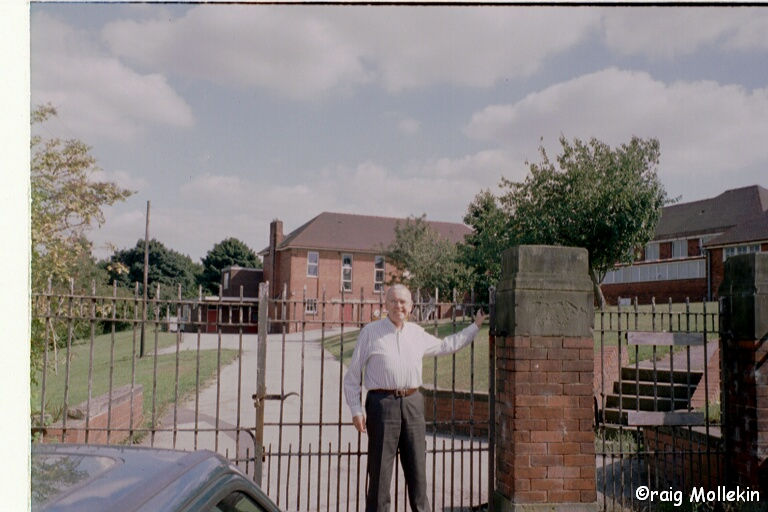
Schooling In The War Years

Dalton & Listerdale Infant & Junior School

Below is a piece of writing my father wrote regarding his early schooling years in Wickersley, South Yorkshire:-

My early years of life were spent in growing up in a semi-rural, private housing estate, about three miles east of Rotherham, an industrial town in the bottom of a valley.

The whole of my formative education took place at Dalton and Listerdale School, in the period of time which is closely parallel to the duration of the Second World War.

If this period of strife and conflict was indicative of this particular time, it was mirrored by my battles and skirmishes with some of my fellow school mates and authority in the persona of the Head Teacher.

With the onset of war came rationing of clothes, food, and associated wants and unfulfilled needs and desires.

Some of my earliest memories were of school. I must have been an early reader, as I can remember helping other children to read.

A sturdy climbing frame, built into the wall in the infants playground, was a particular favourite. As I made my solitary progress around the labyrinth of steps, ladders and tunnels, my imagination conjured up images of heroic deeds accomplished by past, long dead warriors. For a brief time, I was in heaven!

The teachers were quite a diverse collection of individuals. Some time served professionals, some of uncertain age and qualification, brought back into service by war demand. Some not loath to use ruler or fist, when their patience ran out.

One teacher, a choleric Welshman with the predictable name of Morgan was a truly alarming figure. At best a genial, kind hearted man, able to instill learning into his charges, at worst, violent and subjected to rage. I recall him beating a friend of mine, a mild mannered boy, around the classroom, because the culprit, had the temerity to draw a line without a ruler.

Miss Hiscock, a gentle, a self effacing, late middle aged lady, left no enduring memories.

Miss Ward, 35ish, suave and efficient poise, commanded whole hearted respect from the toughest of boys.

And Miss Bracegirdle, quite young, with sturdy build and eager manner. Nothing girlish, with her and her “jolly hockey sticks” approach.

But the memory invoked by the Headmaster remains permanently engraved on my conscious. With his misplaced humour and malicious sarcasm, meant his teaching methods were fatally flawed. For years the recital of multiplication tables gave me problems, as a result of his teaching methods.

Ironically, later, when we took our two eldest children to Dalton and Listerdale for their education, Mr. Lake was still incumbent at the school, and they left at the age of eleven, with no noticeable adverse, effect on their psyche!

For my cousin Dorothy, who was in the same class, conditions were more pleasant.

In one lesson where I failed to give a satisfactory rendition of the nine times table, Mr. Lake, with fiendish relish, seized the chance to compare my abject failure to my cousin’s obvious, intellectual superiority.

Needless to say, cousin Dorothy passed the intelligence quotient at eleven and I failed.

The daily routine started in the school’s main hall. Proceedings got underway with a prayer, followed by Miss Ward accompanying the pupils, on the piano. Traditional songs were sung, some with rousing air such as, “The British Grenadiers” and the “Men of Harlech” then to the lifting refrain of the “Lincolnshire Poacher” and “John Peel” to the hauntingly score of the “Ash Grove”.

Then the Head Teacher addressed us on points of order and interest, such as, allowing the girl whose father was a sailor, to show us a bunch of bananas, or naming pupils who had transgressed the school’s good conduct reputation by their obnoxious behaviour to some one or something, usually out of the school’s bounds.

The assembly was brought to a close by the singing of hymns and the saying of the Lord’s Prayer.

The mid-day meal was brought from outside kitchens and was served in the main hall. The cost of the meal was half a crown, or 12.5p, a week.

Prunes and custard was a regular feature, and flat sponge puddings in a large tins, tasted of salt on the underneath.

There was infrequent dance lessons which I enjoyed. I learnt the “Saint Bernard” Waltz, from that.

There were no excursions, educational or otherwise, but with the school being juxtaposed with the wood, there were occasional forays with the class on nature walks.

There was plenty of recreational space at the front and back, most of it grass covered. In the warmer weather most of the children played on the grass, often involving the boys wrestling. There was one incident, where boys wrestling on the grass started to fight. I was involved. I cannot remember the reason for the dispute, just that I was very angry. The boy I was fighting was, older, bigger and enormously tall! I mounted a ferocious assault, throwing my punches in a frenzy of hate, all of which he blocked, with his massive arms. Finally I stopped, exhausted. My opponent, then, disdainfully, threw me down, sat on my chest and spat in my face!

Popular games were marbles and, in season, conker playing. Horse chestnuts were in abundance in the adjacent woods. Of course, collecting of the great tree’s nuts was great fun.

Most food was rationed. Even so, we never went hungry. Cereals: Weetabix, Corn Flakes and Shredded Wheat were usually available sometimes depending on supply or the number of food coupons in the ration books. A favourite for breakfast was tomato dunk. My granny fried canned tomatoes, and passed slice after slice to me and my brother.

For tea, we had, sometimes, a boiled egg and slice after slice of bread and margarine, thinly spread with jam.

There was virtually no evidence of sweets, biscuits or such. I recall one occasion when I was finishing off the remains of an apple, when a school mate said “gis your cob”. Even though they were not rationed.

“Crisps” were in short supply. Favourite place to get some, was in the local pub, if you dared to risk going in.

On rare occasions, my mother used to bring Walls ice cream, wrapped in newspaper, from town. To this day, I still prefer to eat ice cream, preferably “Walls”, nearly melted.

On Saturdays I did the week’s big shopping for the weekend. You were registered with a butcher, who took care of your coupons, and in return provided you with so much meat. My mother designated the type, and I chose the joint.

For a while I walked round to the shops. Till one day I noticed my dad’s “push-bike” in the coal place. I did not own a bike, but I learned at eight to ride. This was a highly traumatic experience. My brother purloined a dubious specimen and set me off on a steep hill. Careering wildly down the hill without much control, I crashed into a hedge at the bottom. But from that day, I could ride.

With the village being in the country, it was surrounded by woods and farmlands. In consequence, crops of of potatoes, peas, turnips, as well as the usual wheat corn and such.

When I was aged eight, I went out, one day, with my brother and two friends, and we decided to get a turnip. Of course the turnip was in a farmer’s field. We were just about to eat the turnip, after skinning it with a sharp knife, when the farmer, Mr. Burden came up to us. He said he was going to report us to the police. Which he duly did. With the result that the village “Bobbie” Mr. Baron knocked at our back door, after a few weeks, investigating the alleged crime. He came again, and again, and again. When I used to see him coming, I made a hasty retreat, to the back garden, where we kept two rabbits. Anyway, the Policeman’s visits, came to an end, when my brother received summons to attend the West Riding County Court. He was found guilty of the charge of stealing a turnip from Burden. Because of his age, eleven, he escaped more severe punishment. Later on, in life, he was in court for a minor traffic offence, and the “turnip” was on his criminal record. I did not have to attend, because of my age.

A common practice was to keep livestock, to help with the ration. We had rabbits, which were “Flemish Giants”, and were of gigantic proportions. When I lifted them out from the hutch, after biting my fingers, they often managed to escape. Their usual goal was the vegetable plot, where their voracious nibbling reduced the salad crop to a minimum.

Like most kids I loved to read comics, but they were in short supply. You were very lucky to get a “Dandy” or “Beano” at the newsagents, you had to be early. So we had to exchange old comics. It was a common experience, to answer the door to one of the friends, who wanted to “swop” his comics for yours.

There was no T.V., so the “wireless” was the major entertainment in the home. The “pictures” were favourite. The local chapel showed “silents”, two hours for 6d. Further afield, in Rotherham you had a choice of six picture houses and a theatre.

With my father working on the L.M.S. Railway, we had cheap travel on holiday. We went to relations in Crail, Scotland, travelling for about thirteen hours.

Our back garden led directly onto waste land, where a saw mill’s shavings were dumped. We used to jump from quite a height into the shavings. It was quite a risk, because sometimes, if the shavings were freshly dumped, it was red hot in the centre.

There was a company working a stone quarry, which closed down early on in my life. The stone was soft sandstone. Later we came across a number of large storage buildings with a vast number of carvings in the stone. It was wondrous behold. Of course they were carvings for graves etc.

I have no recollection of any adult taking me to school; apart from one occasion, on a half day holiday, for eating pancakes on Shrove Tuesday; when my father noticed me meandering, forgetfully, on the track, and carried me home on the crossbar of his bike.

I had two main routes to school, which was a mile away. One was the “woodway” from the bottom of the Listerdale Estate and top of the woods. The other was the “roadway”, the main road from Listerdale to the Brecks. Both routes had their attractions but the roadway gave the chance to see heavy “Churchill” tanks and other military hardware passing the school. Another attraction on this route was the ornamental pond, in the grounds of Lister’s ‘Castle’. This was full of marine, wildlife, which we, often, observed from the bank side.

Lister’s ‘Castle’ was a pseudo semi-castellated edifice; which to us looked very grand; built, in the 1930’s by housing magnate, Joe. Lister.

A mandatory piece of equipment which all school children must carry to and from school was the gas mask which was designed to protect from poisonous gases dropped in an air attack.

Special test centres were set up at school, where the efficacy of the masks were assessed by using school children in simulated gas attack conditions.

There was an air raid shelter built at school, where we had practice drill.

When the air raid warning sounded, when we were at home, it did not mean a dash for the local shelter, because my mother decreed that we were safer at home.

James B. Mollekin
Swinton
23 March 1998
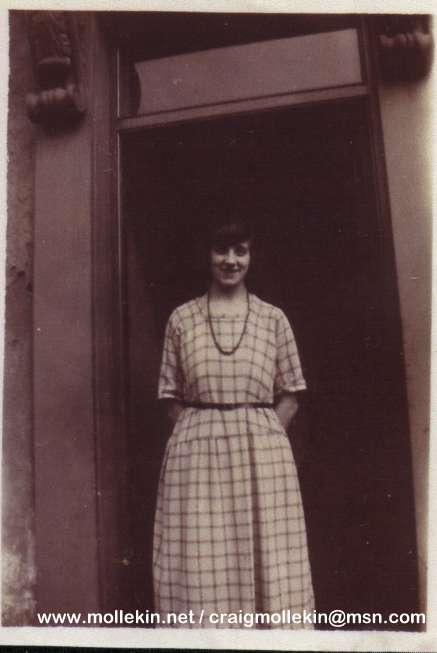
Gertrude Ivy Mollekin

Ivy Mollekin

Gertrude Ivy Mollekin, born in Pontefract, is my first cousin, twice removed and daughter of Herbert Mollekin.

Below is a newspaper article published shortly after Ivy’s death.

ROTHERHAM ADVERTISER – SATURDAY 28th MARCH 1931 – DEATH OF MISS G.I. MOLLEKIN

The death occurred yesterday week of Miss Gertrude Ivy Mollekin, daughter of Mrs. and the late Mr. H. Mollekin, of ‘The Grange,’ Maltby. Miss Mollekin was only 30 years of age.

Prior to the interment, which took place in the Maltby Parish Churchyard on Monday, a service was conducted in the Parish Church by the Rev. H. R. Everson.

(Grave No. 30) Saint Bartholomew's Church, Maltby (8)

Ivy’s grave

The mourners were Mrs. Mollekin (mother), Mr. and Mrs. G. H. Mollekin (brother and sister-in-law), Mr. and Mrs. E. Mollekin (brother ad sister-in-law), Mrs. Brookes (sister), Mr. and Mrs. McGlade (brother-in-law and sister), Mr. and Mrs. S. Mollekin (brother and sister-in-law), Mr. and Mrs. H. L. Mollekin (brother and sister-in-law), Mr. and Mrs. Stan Mollekin (brother and sister-in-law), Mr. and Mrs. J. Sadler (brother-in- law and sister), Messrs. Claud, Fred, and Jack Mollekin (brothers), Mr. Skinner and daughter (uncle and cousin), Mrs. Pearson (aunt), Mr. and Mrs. J. Mollekin (uncle and aunt), Mr. Morgan R. Jones, Mr. A. J. Booth, Mr. E. Davy and Mr. A. Plant (Sheffield), Messrs. T. Ridgway, M. Wilden, H. Box and E. Shaw acted as bearers. Wreaths and floral tributes were sent by ‘Mother,’ ‘Fred, Claud and Jack,’ ‘Sybil and Jack,’ ‘Mabel and Ernest,’ ‘Harry, Dolly, Basil and Beryle,’ ‘Sid and Lill,’ ‘Dorothy, Ernest and family,’ ‘Uncle Walter and cousins,’ ‘Bert, Daisy, and Herbert,’ ‘Lizzie and Walter,’ ‘Aunt Alice,’ ‘Winnie and Stanley,’ Mr. and Mrs. J. Mollekin, Mr. and Mrs. Fletcher and family, Mr. and Mrs. A. J. Booth, Ald. And Mrs. Dunn, Mr. and Mrs. M. R. Jones, Mr. and Mrs. K. Davy, and Mr. and Mrs. F. Hunter.

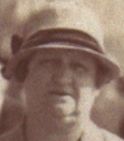
Bertha Kennington

Bertha Kennington

Bertha Kennington, born in Hull, is the wife of my great grand uncle, Herbert Mollekin.

Below is a newspaper article published shortly after Bertha’s death.

ROTHERHAM ADVERTISER – SATURDAY 24th DECEMBER 1938 – THE LATE MRS. BERTHA MOLLEKIN

The funeral took place in the Maltby Parish Churchyard on Tuesday of Mrs. Bertha Mollekin, of Blyth Road, Maltby, who died last Friday. The deceased lady, who was 78 years of age, collapsed at her home. A native of Hull, Mrs. Mollekin had resided in Maltby for 34 years. Her late husband was in business there as a master builder up to his death nine years ago. He will also be remembered as a northern racehorse owner. Mrs. Mollekin did not take an active part in local affairs, but she always supported any deserving cause. She had 16 children, and leaves eight sons and four daughters, with 27 grandchildren and one great grand-child. Prior to the interment a service was conducted in the Parish Church, Maltby, by the Rev. W. A. Burtees, who also officiated at the graveside. The mourners included Mr. and Mrs. G. H. Mollekin, Mr. and Mrs. Ernest Mollekin, Mr. and Mrs. Sidney Mollekin, Mr. and Mrs. Stanley Mollekin and Mr. and Mrs. Jack Mollekin (sons and daughter-in-law), Mr. Fred Mollekin and Mr. Claud Mollekin (sons), Mr. and Mrs. E. J. McGlade, Mr. and Mrs. H. Nicholson, Mr. and Mrs. J. Sadler and Mr. and Mrs. H. Brooks (sons-in-law and daughters), Mrs. Pearson (sister), Mr. and Mrs. J. Mollekin (brother-in-law and sister-in-law), Mr. Frank Hunter (who had worked with Messrs. Mollekins for about 50 years), Mrs. E. Davy, Mrs. Harris and Mrs. E. Dunn. Messrs. Barker C. White, Stables, E. Davy and T. Ridgeway represented the workmen of Mollekin Bros., and Messrs. Firth and W. Godber the firm. Messrs. Morgan R. Jones (Surveyor) and Mr. R. Oddy (Sanitary Inspector) represented the Maltby Urban District Council. Others present were Mr. Charles Stevens, Mr.

Bertha’s Grave

George Brown, Mr. Sadler of Sandbeck, Mr. and Mrs. Barlow, Mrs. T. Holdsworth, Mr. A. J. Booth, Miss Franks and Mrs. Davies. Floral tributes were sent by ‘Dolly, Harry and children,’ ‘Fred and Claude,’ ‘Harry, Ada, Polly and Derrick,’ ‘Mabel and Ern,’ ‘Jack and May,’ ‘Stan and Winnie,’ ‘Jack and Gilbert,’ ‘Sybil, Jack and Betty,’ ‘Ernest, Dorothy and grandchildren,’ ‘Bertie, Daisy and Herbert,’ ‘Sid, Lil and children,’ ‘Alice Pearson,’ Mr. and Mrs. E. Dunn, ‘Hatty,’ ‘Lauri Steeples,’ George Smith, chairman and members of the Maltby Urban District Council, Mrs. Harris, Mr. and Mrs. Whitley and family, Mr. and Mrs. F. Hunter, Maltby workmen of Mollekin Bros., Cannock workmen of Mollekin Bros., E. Butler and Sons, ‘Aunt Annie and Uncle Jack,’ Mr. and Mrs. T. White, ‘Thomas and Charles,’ Mr. and Mrs. E. Davy, ‘W. Godber,’ Mr. and Mrs. F. Pearson and family, Mr. and Mrs. J. T. Downing and family, Mr. and Mrs. J. T. Downing, of Sheffield, Mr. and Mrs. J. C. Stevens, Halliday and family, Mrs. Bootman, Mr. and Mrs. T. Houldsworth etc. The relatives of the late Mrs. B. Mollekin wish to thank the doctor for his kindness to Mrs. Mollekin during her illness, also those who sent kind messages of sympathy and floral tributes during their great bereavement.

Rowbottom – Mollekin Marriage

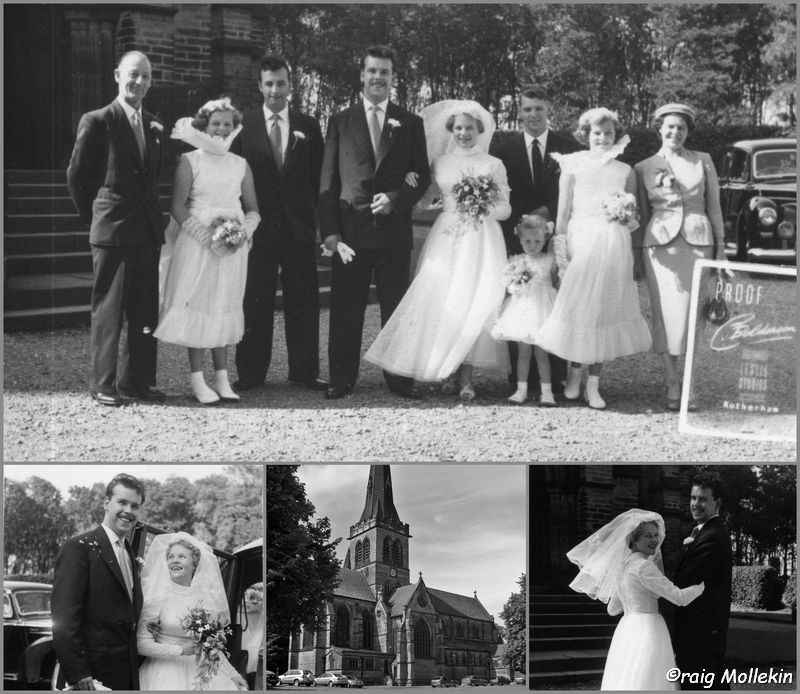
Mollekin - Rowbottom Marriage Collage

Mollekin – Rowbottom Marriage

My parents were married in September 1957. Below is a newspaper article which describes this occasion:-

The marriage took place at Wentworth Church last Saturday of Miss Jean Rowbottom, eldest daughter of Mr. and Mrs. H. Rowbottom, 3. Street Cottages, Wentworth, and Mr. James Barrie Mollekin, youngest son of Mr. J. G. Mollekin, 109. Melciss Road, Wickersley, and the late Mrs. Mollekin. The Rev. R. B. H. Greaves, of Elsecar, officiated, and the organist was Miss E. Tradewell.

The bride, given away by her father wore a gown of white lace over nylon and a short veil and pearl coronet head-dress, and carried a bouquet of pink roses, lilies-of-the-valley and fern.

George & Dragon, Wentworth

George & Dragon

The bridesmaids were Misses Denise and Ann Rowbottom (bride’s sisters) wearing white ballerina-length nylon dresses, pink Juliet caps and elbow length nylon gloves; and Miss Susan Mollekin, wearing a white net over pink silk dress with white accessories. All three carried posies of pink carnations, sweet peas and fern.

The best man was Mr. John Mollekin and the groomsman Mr. Tom Kelsall.

The bride’s mother received 57 guests at the George and Dragon Hotel in a pink two-piece, grey hat and gloves and wearing a spray of pink carnations.

The honeymoon was spent at Paignton, Devon, the bride travelling in a royal blue costume with accessories to tone.

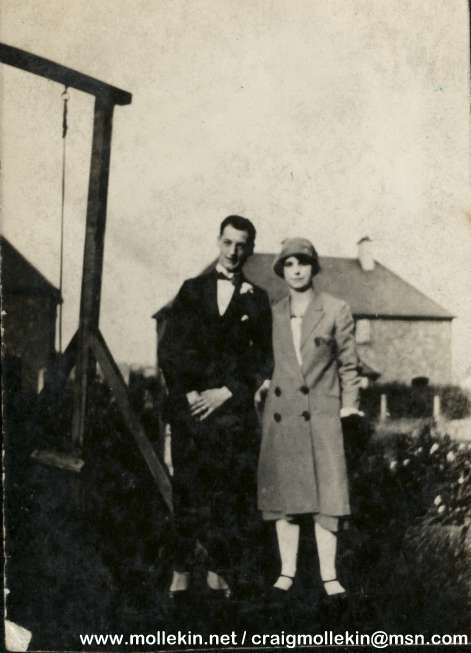
Pinder – Mollekin Marriage

Pinder – Mollekin Marriage

My paternal grandparents married in 1925 and were called Edith Mary Pinder and John Gilbert Mollekin. Below is a newspaper article which describes this occasion.

WEDDING AT EASTWOOD – PINDER – MOLLEKIN

A wedding which took place at the Eastwood Wesleyan Chapel on Monday week, aroused an unusual amount of local interest, owing to the close association of the bride with the Eastwood Chapel. The contracting parties were Miss Edith Mary Pinder, eldest daughter of the late Mr. M. H. and Mrs. A. Pinder, of Bethel road, Rotherham, and Mr. John Gilbert Mollekin, son of Mr. and Mrs. John Mollekin, of Maltby. The officiating minister was the Rev. H. Bemrose Spencer.

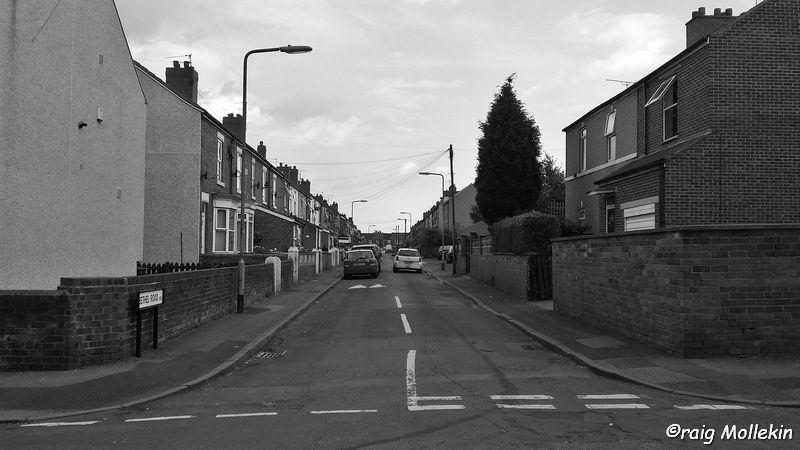
Bethel Road, Eastwood, Rotherham - 06.07.17 (1)

Bethel Road, Eastwood, Rotherham

Many relatives and friends from Sheffield, Scarbro’, Blackpool, Woodhouse, Maltby, and other places were present.

The bride was charmingly attired in a pretty blue costume, with hat to match. Miss Marjory Pinder gracefully performed her duties as bridesmaid to her sister, and was similarly costumed in style and colour. Mr. J. F. Pinder (brother of the bride), of Eastdene, gave the bride away, and Mr. Alfred Ernest Hunter, of Sheffield (cousin), carried out the duties of best man. Mr. Francis Pinder (grandfather of the bride), presided at the organ. The hymns, “Lead us Heavenly Father” and “O Perfect Love” were sung, and as the bridal pair were leaving the church the organist played Mendelssohn’s “Wedding March.”

The guests afterwards adjourned to the home of Mr. J. F. Pinder, Eastdene, where the repast was served.

Pinder – Mollekin Marriage

Later in the day, the bride and bridegroom journeyed on to Scarbro’ to spend their honeymoon at the home of the bride’s aunt, Mrs. Dickinson, of “Rotherwood House,” North Side.

The bride was the recipient of many beautiful presents, the outstanding gift being one from Mr. Hirst, her late employer, of the firm of Messrs. Hirst and Son, tobacco manufacturers, Leeds and Scarbro’. The bride held a very important position at the Scarbro’ branch of their business in Bar street, and was held in high esteem by the head of the firm and employees. The gift from Mr. Hirst consists of a pretty cut glass salad bowl, mounted with a sterling silver hand round the top, accompanied with two silver spoons.

This post was originally published on Mollekin Portalite on 12/10/2011.

A Maltby Wedding

Bertha L. Mollekin

Bertha Lily Mollekin, born in 1892 in Hull, is my first cousin, twice removed and daughter of Herbert Mollekin.

Below is a newspaper article published shortly after Bertha’s marriage to Halliday Crompton.

ROTHERHAM ADVERTISER – 17TH FEBRUARY 1912 – A MALTBY WEDDING – MOLLEKIN – CROMPTON

The wedding of Mr, Halliday Crompton, of Ravenfield, second son of Mr. W. W. Crompton, solicitor, Bury, Lancashire, and Bertha Lily, eldest daughter of Mr. H. Mollekin, Maltby, took place at St. Bartholomew’s Church, Maltby, on Thursday, in the presence of a large congregation of relatives and friends. A reception was held immediately after the ceremony, in the Assembly Rooms, Maltby, which were suitably decorated for the occasion. About 50 guests attended. The happy couple were the recipients of many choice and valuable presents. The bride groom’s gift to the bride was a beautiful chased gold watch wristlet and to the bridesmaid a gold brooch set with a Ceylonese jewel. The bride’s gift to the bridegroom was a gold and diamond tie slide.

Saint Bartholomew’s Church

Among the presents from the many friends were the following: The bride’s father and mother, household linen and domestic utensils; from the bridegroom’s father, cheque, and from his mother a mahogany roll-top desk and a cheque; silver toast rack, Mr. and Mrs. Addy; silver sugar bowl, Mr. and Mrs. Batty; silver sugar basin and sifter, Mr. and Mrs. Berwick; silver bonbon dish, Miss M. Berwick silver and china cake dish, Mr. W. M. and Miss Briggs; oak clock, Mr. Karl Crompton; seltzogene and silver-mounted milk set. Mr. N. Crompton; table lamp, four cushions, silver-mounted salts, mustard and pepperettes, Mr. A. Crompton; pair of oak-framed engraving, Mr. and Mrs. P. Crowther; leather suit case, Mr. Clifford Crompton; silver-mounted flower case, Mrs. B. Cornhall; hall set, Miss Dufty; worked linen towel cover, Mr. W. Dickson; silver egg stand, Mr. and Mrs. Dyson; tea service, Mr. and Mrs. Elce; pair of silver photo frames, Mr. B. and Miss Foers; silver crumb spoon, Mr. and Mrs. Fretwell; case of fish eaters, Mr. W. Grime; silver-mounted oak biscuit barrel, Mr. and Mrs. Haywood; quilt, Mr. Jarvis; silver cake stand, Mr. and Mrs. F. Hopkinson; silver-mounted sugar sifter, Mabel Mollekin; teas service, Bert Mollekin; ink stand, Miss May and Mr. G. Morrell; silver toast rack, Miss V. and Mr. T. Morrell; silver flower stand, Miss R. and Mr. P. Morrell; silver sugar dish, Miss B. and Mr. O. Morrell; silver egg stand, Miss M. Morrell and Mr. A. Merryweather; silver and china fruit stand, Mr. and Mrs. Millard; coal vase, Mr. H. Nicholson; silver sardine dish, Mr. and Mrs T. Pearson; double dinner service, Mr. and Mrs. W. Pearson; two Wedgwood salts, Misses Vera and Emma Smith; eider-down quilt, Mr. R. Pearson; quilt, Miss Smith; dinner service, Mr. and Mrs. J. Smith; silver mounted biscuit jar, Mr. and Mrs. Plant; Sheraton cardtable, Mr. and Mrs. S. Roberts; carvers in case, Mr. T. Trueman; silver jam tray, Miss Turlow; worked d’oyleys, Miss Trueman; brass arm and Ore brasses; Mr. and Mrs Yates.

During the afternoon the happy pair left Maltby by motor for Doncaster en route for London, where the honeymoon is to be spent. The guests were entertained during the evening, having a very enjoyable concert and dance.

This post was originally published on Mollekin Portalite on 10/10/2011.

Herbert Mollekin

Herbert Mollekin (centre)

Herbert Mollekin (centre)

Johann Hermann Mölleken (known as Herbert Mollekin) is my great grand uncle and was born in Sunderland, in 1863, to parents, Johann Mölleken and Henriette Muehlenweg.

In 1888, Hebert married Bertha Kennington in Hull. Together, they issued sixteen children, who were called, George Herbert (1889 to 1970), John Ernest (1890 to 1974), Bertha Lily (1892 to 1927), Harold (1893 to 1893), Alice Ada (1894 to 1942), Harry Leonard (1896 to 1976), Mabel (1897 to 1974), Dorothy May (1898 to 1970), Albert Sydney (1899 to 1976), Gertrude Ivy (1901 to 1931), Stanley (1902 to 1989), Sybil (1903 to 1993), Edward Arthur (1904 to 1904), Norman Frederick (1906 to 1990), Claude (1908 to 1968) and Jack Everatt (1910 to 1963).

Herbert was a prolific house builder and was considered to be a good employer by his workers. Further details regarding Herbert’s building activities can be read here.

Below is a newspaper article which gives an insight into Herbert’s life and achievements.

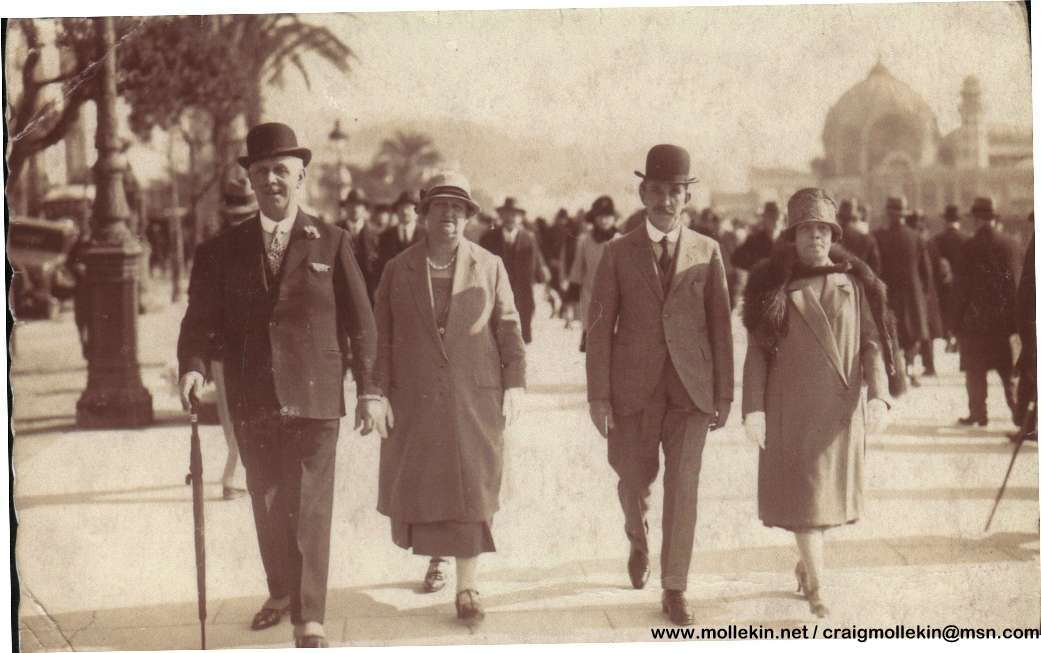
Herbert Mollekin in Nice (left)

Herbert & Bertha in Nice

ROTHERHAM ADVERTISER – SATURDAY 2ND MARCH 1929 – MR H. MOLLEKIN –

DEATH OF WELL KNOWN MALTBY CONTRACTOR

TURF SUCCESS

The death took place in a Sheffield nursing home on Monday night of Mr. Herbert Mollekin, of The Grange, Maltby. He had been in a critical condition for some days.

The news of Mr. Mollekin’s death caused profound regret throughout South Yorkshire, for he was well known both as a builder and a Turf personality. A typical self-made man, he started his career as a working joiner, his energy and enterprise winning for him an enviable position in the building industry. The firm of Mollekin and Sons may, in fact, claim to be one of the largest building contracting firms in the district. He was a Northerner, but spent the greater part of his early days in Hull and Pontefract. Leaving joinery and becoming a bricklayer, he went to Pontefract, where he first worked as a builder.

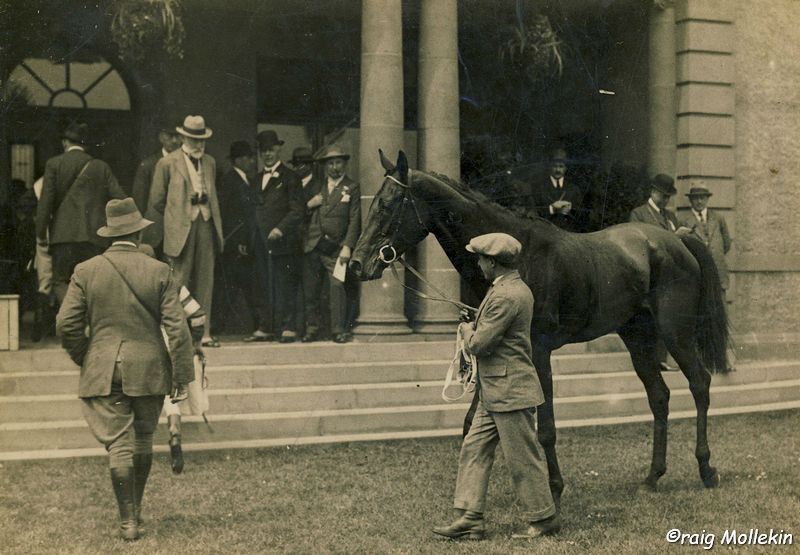
Hebert at the Doncaster Races with the Earl of Scarborough

Hebert at the Doncaster Races with the Earl of Scarborough

It is now over twenty years since he went to Maltby and carried on his trade, his business enterprise being eventually rewarded. He always took a keen interest in Maltby, both as a business man and as a resident. He was virtually responsible for the rebuilding of practically the whole of Maltby, and there are many other mining villages throughout a wide area which have developed municipally under his hand. He started about 1910 to build the model village at Maltby, and although the progress of the scheme was impeded by the War, Mr. Mollekin took it up again afterwards. When sinking operations commenced at Thurcroft about the year 1913, he secured building work there, and again achieved the distinction of establishing almost an entirely new village.

He also built Rhodesia village, near Shireoaks; Council houses at Rawmarsh, Thurcroft, Blackwell, and South Normanton. Other contracts executed by him included the new elementary school at Thurcroft, the Technical Institute at Dinnington, and the new-type elementary school at Bramley.

Herbert Mollekin (right)

Herbert Mollekin (right)

PROMINENT TURF PERSONALITY.

Mr. Mollekin was also widely known through his career on the Turf. His association with Melton Vasey, his trainer and chief advisor, was a most satisfactory one, although it commenced only in 1922, when he made his debut as an owner. He was a very popular figure at all the northern meetings, and particularly at York, Manchester, Pontefract, Ayr, Newcastle and Redcar. At all these he had taken valuable prizes, and although he was not so successful at Doncaster, he was always well represented at all three meetings. He and Melton Vasey did a great deal to establish training in Doncaster and to increase its importance as a centre, apart from it’s importance as a meeting place. He commenced in a very modest style in the sport which claimed his undivided enthusiasm. He followed his horses wherever they were and the success of his first purchases, Balzac and Pickwell encouraged him to extend his operations. While he never gave a great amount of money for his horses, he and his trainer had a remarkable knack of picking up things cheaply. One of his most prolific winners was Miss Connie, which he purchased at the Doncaster September sales for £100 and which won him in stakes something like £5000, including the Old Newton Cup at Haydock Park and a £1000 race three years ago. The horse, Amazement also proved a successful investment, for he bought it out of a selling race at Doncaster and it afterwards took the Gosforth Park Cup and the Carlton Handicap. King Willow came very close to taking the season’s first big race at Lincoln several years ago when it ran 3rd to Tap in. It will be recalled that five years ago a number of horses at Belle Vue got loose, including a number of Mr. Vasey’s charges, King Willow being rather badly kicked, while another, Soval, upon which Mr. Mollekin and Mr. Vasey had set high hopes, was badly injured. Foul play was suspected and the affair caused a remarkable sensation in racing circles. It was always thought that someone had deliberately set the horses loose. Mr. Mollekin offered a substantial reward, but the culprit or culprits were never traced.

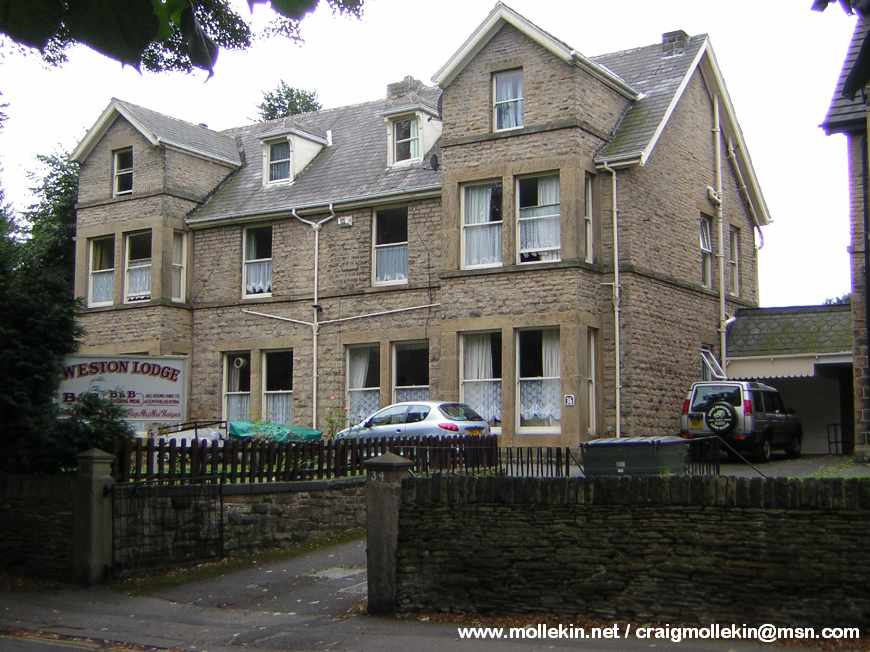
The Grange

The Grange

KEEN PERCEPTION.

Keen perception was illustrated in the purchase of Mr. Vasey, on behalf of his patron, of four yearlings at the Newmarket Sales. Abbott’s Luck, which cost 100 guineas; Abbott’s Son, 80 guineas; Corn Sheaf, 60 guineas; and Tracite, 35 guineas. All won races. Abbott’s Luck taking the Corby Plate, worth £500, at Carlisle, and a £1,000 race at Manchester.

Other of his horses which did well were French Martin, Bold Wase, Poet’s Dream, Savage Lass, Rock Ruby, Battery Smoke, Baalbeck, and Balglick, while Dryhead, bought out of a seller, won the Batthyany Stakes, worth £500, at Lincoln. Hard Rock, which Mr. Mollekin bred himself, was his nomination for this year’s St. Leger, and had already been well spoken of. Noctiluce was still another good winner; while Great Speech also took first place several times. Last season Silver Castor, which cost only £50, won three good races.

Mr. Mollekin took a keen interest in his Tickhill Stud, where he had a number of good class animals in training.

Broomhall Place

Broomhall Place

Six of Mr. Mollekin’s sons are engaged in the business, one of them, Mr. Jack Mollekin, spending a short time under Mr. Vasey but increasing in weight put an end to his competitive riding. Mr. Jack Mollekin is now in charge at Tickhill.

Mr. Mollekin also leaves six daughters.

THE FUNERAL.

The funeral took place at Maltby yesterday. Prior to the interment in the Maltby Churchyard, there was a service in the church, conducted by the Rev. H. R. Everson (Vicar).

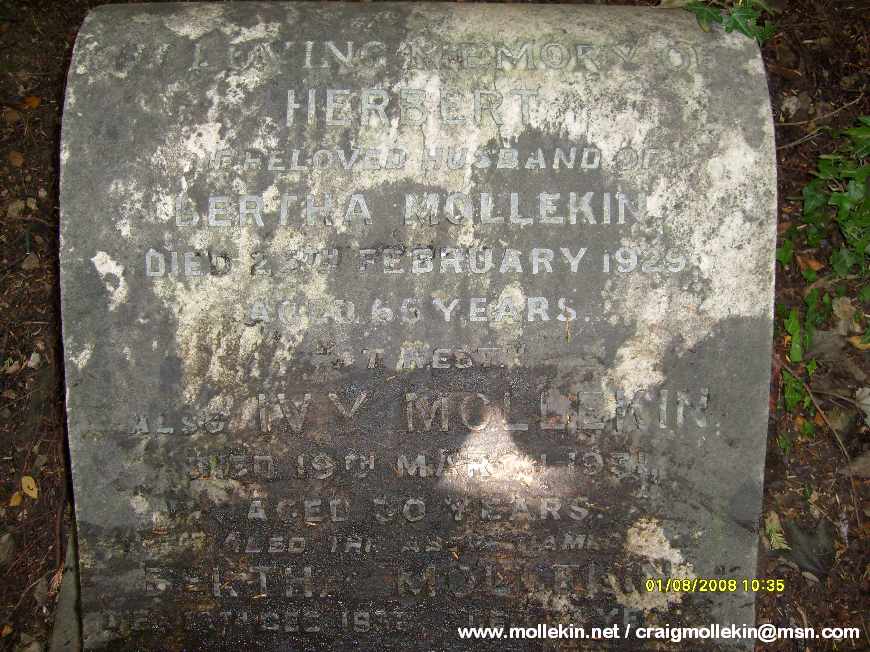
Ivy's grave

Herbert’s grave

The family mourners were Mrs. Mollekin (widow), Mr. and Mrs. G. H. Mollekin (son and daughter-in-law), Mr. and Mrs. E. Mollekin (son and daughter-in-law), Mrs. H. Nicholson (daughter), Mr. and Mrs. E. McGlade (son-in-law and daughter), Mr. and Mrs. Harry Mollekin (son and daughter-in-law), Mr. and Mrs. H. Brooks (son-in-law and daughter), Mr. and Mrs. Stanley Mollekin (son and daughter-in-law), Mr. and Mrs. Sidney Mollekin (son and daughter-in-law), Miss Ivy Mollekin (daughter), Mr. and Mrs. J. R. Sadler (son-in-law and daughter), Messrs. Fred, Claude and Jack Mollekin (sons), Mr. Jack Mollekin (brother), Mr. and Mrs. Skerrow (brother-in-law and sister-in-law), Mrs. Pearson (sister-in-law), and Mr. H. Crompton (son-in-law). Others present were Mr. Joe Taylor (stable jockey), Mr. Melton Vasey (trainer), Mr. T. Frost (Bawtry), Mr. Herbert Fox (Doncaster), Messrs. J. T. Downing and K. Downing (Sheffield), Mr. Chas. Farrar of Doncaster (representing the West Riding County Council Education Architects’ Department), Mr. C. N. Hodgson (Rotherham), County Alderman E. Dunn, J. P. and Mr. Hugh Ross (representing the local branch of the Yorkshire Miners’ Association and the Maltby Urban Council). Mr. F. Roebuck (clerk to the Council), Mr. M. R. Jones (surveyor) and Mr. R. G. McNaught (assistant surveyor), Mr. H. C. Harrison (representing the Doncaster Rural District Council), Messrs. H. Barnard, G. Fitton, and E. Nelson (Tickhill stud employees), Messrs. E. H. Lockwood (representing the Maltby Show Committee), Mr. T. Fawcett (Doncaster), Mr. and Mrs. T. B. Buckley (Maltby), Mr. F. Lidgett, Dr. E. E. Dufty, Mr. and Mrs. R. P. Marsh, Mr. G. H. Ashforth (Rotherham Builders’ Supply Co.), Mr. George Fox (Yorkshire Amalgamated Products), Mr. W. Catchpole (Maltby Metallic Brick Co.), Mr. Gilbank (gardener at The Grange), Messrs. E. Raper, A Fisher, and A. Stables (representing the Maltby Cricket Club), Messrs. H. Cutts and C. Daniels (Maltby Salvation Army). A large number of employees of the firm of H. Mollekin and Sons also attended, among them being Mr. F. Hunter the oldest workman who has been with the firm for thirty years. Messrs. J. Beeden, G. Lawrence, J. Wrigley, B. Reid, G. F. Clarkson, W. Goodacre, H. Wingfield, M. Wilding, N. White, F. P. Arker, H. Box, R. Longbottom, G. Smith, J. Wood, G. Brown, and T. Hunter. Wreaths were sent by the following, Mrs. Mollekin and children, Mr. and Mrs. Sadler, Mr. and Mrs. Skerrow, Mr. and Mrs. Pearson, Mr. H. Crompton and grandchildren, Mr. and Mrs. A. J. Booth, Mrs. Brooks, Mr. and Mrs. R. P. Marsh, Mr. C. Chambers, Dr. and Mrs. Dufty, Mr. and Mrs. T. Fawcett, Mr. and Mrs. J. Crowther, Mr. and Mrs. Melton Vasey, Mr. and Mrs. J. Taylor, Mr. and Mrs. Longbottom, Mr. and Mrs. Thompson and family, Mr. and Mrs. Hunter, Ald. And Mrs. Dunn, Mr. and Mrs. Doyle, Mrs. A. H. Brown, Mr. and Mrs. Booth (Worksop), Mr. and Mrs. Armstrong, Mr. and Mrs. Middleton, Mrs. Berwick, Mr. Stoepling and family, Mrs. Morgan and children, Maltby Branch of the Y.M.A., Directors of the Maltby Metallic Brick Co., Yorkshire Amalgamated Products Limited, Maltby Show Committee, staff of the Tickhill Stud Farm and the employees of Messrs. H. Mollekin and Sons.

This post was originally published on Mollekin Portalite on 15/06/2011.