Prince of Wales Power Station, Rotherham

Remains of Prince of Wales Power Station

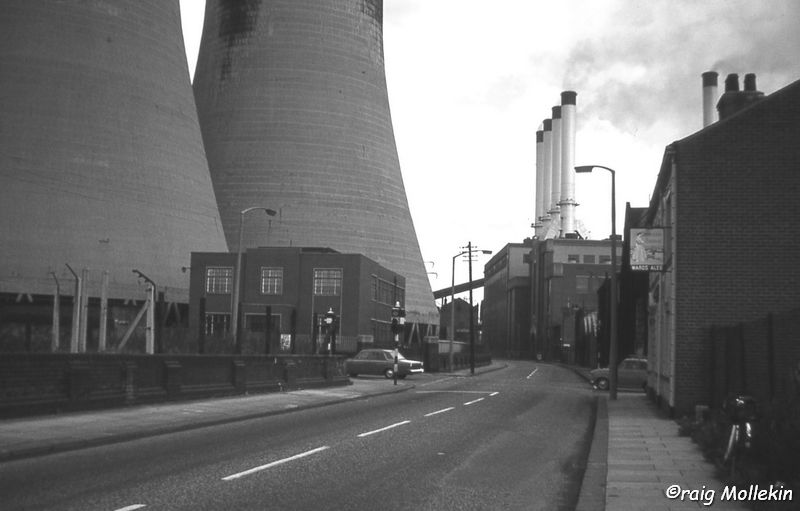
The Prince of Wales Power Station in Rotherham was located on Rawmarsh Road and was opened by the Prince of Wales (the future King Edward VIII). It was coal-fired and operated between 28/05/1923 and 30/10/1978 and had an operating capacity of 56 megawatts. Being located at the side of the canal, I’m sure coal would have arrived via this waterway.

The cooling towers for this power station were a landmark in Rotherham for many years. They must have been long gone before my living memory because I can never remember seeing the towers although my parents could remember them well. Rawmarsh Road was a main route, especially for buses into Rotherham and so the towers and the station would have been a regular sight for visitors of the town.

I remember reading in an old edition of the Rotherham Advertiser that once the power station had been decommissioned, a few proposals for its further use were put forward, one of these being to put a skating ring into one of the towers. All of the proposals must have failed for one reason or another as the vast majority of the site was cleared and now homes a variety of industrial units.

Rawmarsh Road, Rotherham (Copyright Colin Leonard) - 1964

Prince of Wales Power Station, Rotherham

My second great uncle, Francis Thomas Pinder, who qualified as an Electrical Engineer worked at the power station upon its opening for a good number of years. I’m sure his brother (my great grandfather, Matthew Henry Pinder) who was the Manager of the nearby Water Works would have encouraged his application to the Rotherham Corporation.

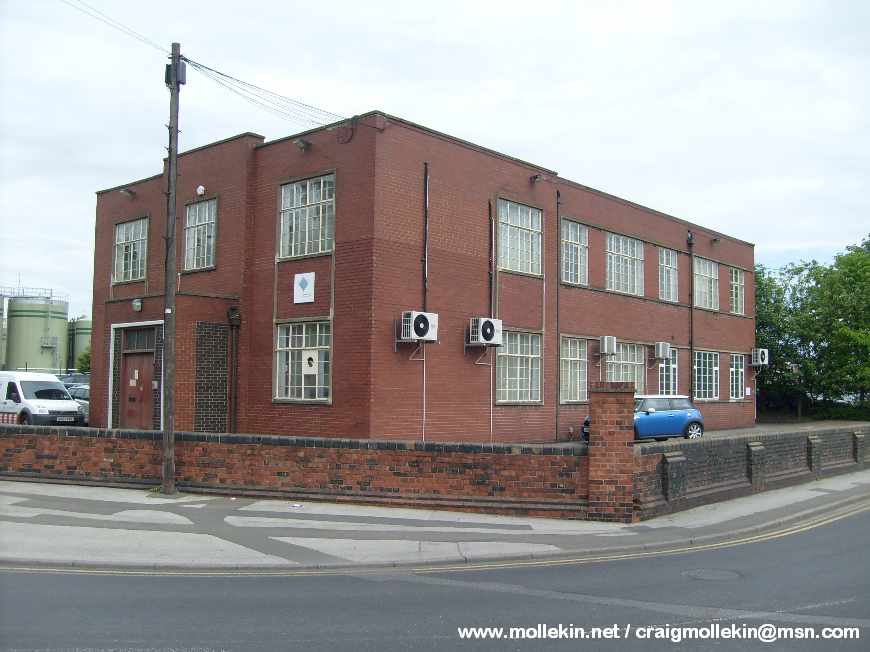
Nothing remains of the power station today except for one building which I imagine by the looks of it operated as the power station’s Control Centre, although this is only my opinion.

This post was originally published on Mollekin Portalite on 01/05/2011.

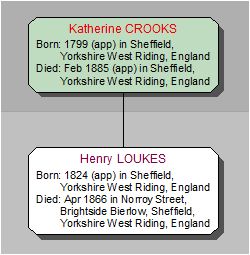
Henry Loukes born circa 1824 in Sheffield, South Yorkshire

Henry Loukes

According to Henry’s marriage certificate, his father was a Farmer called John Loukes. However, this cannot be so.

John Loukes died on Sunday 6th December 1818 and was buried at All Saint’s Church, Ecclesall Bierlow, Sheffield on Tuesday 8th December 1818.

According to Census Returns and his marriage certificate, Henry was born circa 1824.

There is no mention of Henry in the Will of John Loukes:-

‘…..educating and bringing up my two sons, John Loukes and William Loukes during their respective minorities….’

Henry’s mother, Katherine Loukes (nee Crooks) possibly named John as his father due to conditions stipulated in the Will of John Loukes:-

‘…….respectively upon and in upon first to permit my wife to have the use of beds, six chairs, two tables and such other rents of my furniture at friends and my trustees may think necessary to furnish a small house during her (Katherine) natural life if she shall so long continue my widow and unmarried but not otherwise…’

So, clearly, should Katherine no longer remain John’s widow, she would have something to lose.

On the 1841 Census, Katherine appears to be married to William Allen. By 1881, Katherine is widowed but has retained the surname, Allen. Perhaps William Allen is the father of Henry. If this was the case and had Henry not been an illegitimate child, Henry Loukes would have been called Henry Allen. Subsequent descendants who held/hold the surname, Loukes, would have/would be, called Allen. The only person who would have known for sure the name of Henry’s father was would have been his mother, Katherine, who died in 1884/1885.

This is a revised version of a post which was originally published on my WordPress Blog on 12/12/2008 and republished on Mollekin Portalite on 21/04/2011.

Joseph William Loukes and the Sheffield Blitz

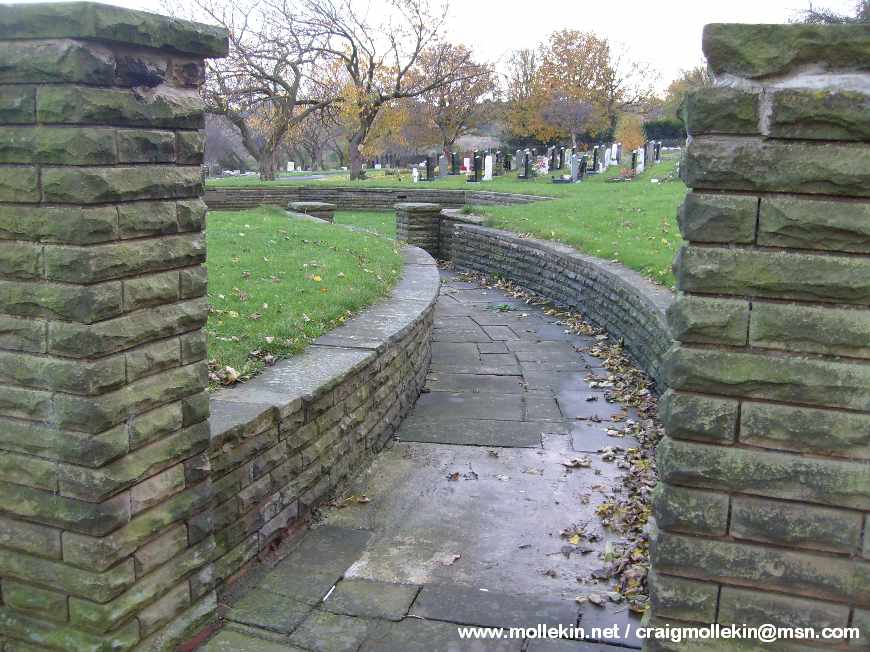
Blitz Garden

During the evenings of Thursday 12th and Sunday 15th December 1940, around 300 German aircraft, consisting of Junkers Ju 88’s, Dornier 17’s and Heinkel 111’s, flew to Sheffield on bombing raids.

Sheffield was targeted by the Luftwaffe due to its importance as a steel and armament centre and the campaign against Sheffield was code named Crucible.

The German aircraft were guided by an early radar style radio beam which was fixed to a target. In the case of Sheffield this beam was fixed to the eastern area of the city where steelworks and armament factories where prevalent. The English were able to intercept this beam however and bent it towards the city centre instead of the steelworks.

At the time of the bombing raids, the Vickers works (located in Brightside Lane) were the only place in the country to possess a drop hammer capable of producing crankshafts for the Rolls Royce Merlin engine which powered both the Spitfire fighter and Lancaster bomber planes. Vickers were solely responsible for manufacturing Barnes Wallace’s bouncing bombs and the heaviest ever 10 ton ‘Tallboy’ and ‘Grand Slam’ earth quake bombs. Also in 1940, Hadfields East Hecla steelworks (located in Vulcan Road and now mainly covered by the Meadowhall shopping complex) were the only steelworks in the country to produce 18 inch armour piercing shells.

Vickers, Hadfields and a multitude of other vitally important steelworks survived the bombing raids relatively unscathed but nevertheless, approximately 450 high explosive bombs were still dropped and as a result, over 660 lives were lost, 1,500 more were injured and 40,000 were made homeless. 3,000 homes were demolished with a further 3,000 badly damaged. A total of 78,000 homes received damage. Sadly, my third cousin (William Joseph Loukes) and his wife (Edith) were killed in 197 Olive Grove Road during the night of Thursday 12th December 1940. Number 197 is now the site of modern housing.

The Commonwealth War Graves Commission had recorded this couple with the surname of Lonkes.

I initially found the deaths of Joseph and his wife whilst browsing the Index to the “Civilian War Dead Roll Of Honour” for Northumberland, Durham and Yorkshire (http://www.genuki.org.uk:8080/big/eng/Indexes/NE_WarDead/). The surname, Lonkes, rang alarm bells and sure enough, when I checked the death indexes, I couldn’t find anything for a Joseph and Edith Lonkes but there were entries in the the January quarter of 1941 for a Joseph W. Loukes (aged 68) and an Edith Loukes (aged 67). These deaths are both recorded on the same page in the same volume in the General Records Office (volume: 9c / page: 1248). This indicates that the deaths were recorded at the same time (which is likely as the couple died together).

The Commonwealth War Graves Commission wouldn’t consider a change to their records without firm documentary evidence. I visited City Road Cemetery in Sheffield in November 2008 in the hope that the couple might be commemorated on the wall of the Sheffield Blitz Garden. They aren’t however which means that the couple aren’t buried in the communal plot and will have their own burial plot somewhere else (presumably because their bodies would have been identifiable). I decided to contact the Sheffield Indexers (www.sheffieldindexers.com) in the hope that they might have a burial record for the couple in City Road Cemetery. They haven’t but Tony Morton e-mailed to me an extract of the 1936 Kellys Directory which clearly shows Joseph William Loukes residing in 197 Olive Grove Road, Sheffield (where Joseph and Edith died). I e-mailed this extract to the Commonwealth War Graves Commission who accepted this as sufficient documentary evidence and have amended their records as a result.

Tragically, Joseph’s third cousin (William Kitson) was injured at 10 Tummon Road, Sheffield on Friday 13th December 1940 as a result of the Blitz and died in Wharncliffe Emergency Hospital in Sheffield on Saturday 21st December 1940. William Kitson was buried in City Road Cemetery, Sheffield on Friday 27th December 1940. William Kitson is my third cousin, three times removed.

This is a revised version of a post which was originally published on my WordPress Blog on 23/01/2009 and republished on Mollekin Portalite on 18/04/2011.
Launch of WEEK 42

WEEK 42 is the latest and hopefully the last in a long line of blogs that I’ve published. I started blogging in 2008, using the self hosted version of WordPress (.org). The hassle of hosting this and maintaining the security etc. influenced my decision to abandon it. I then began experimenting with the blog hosted by Blogspot/Blogger. Due to persistent (over two years) problems with the indexation of the blog posts by the internal Google crawler, I have abandoned Blogspot/Blogger and opted for the WordPress (.com) platform.

Anyway, please feel free to follow this blog or comment on any of the posts.