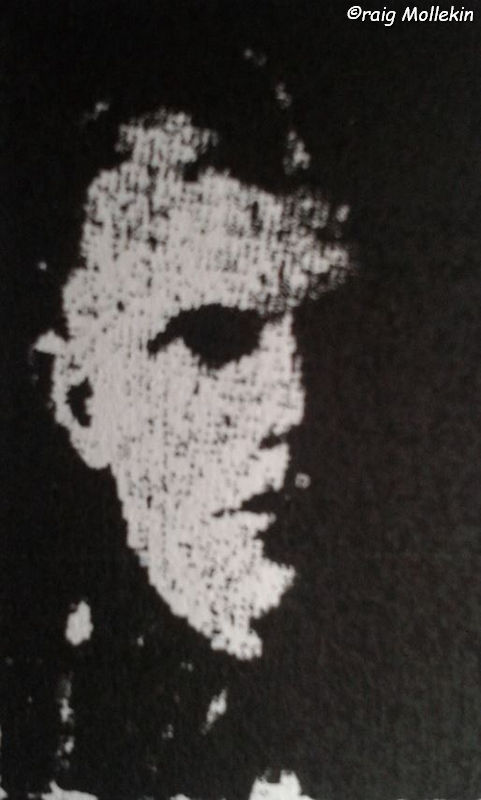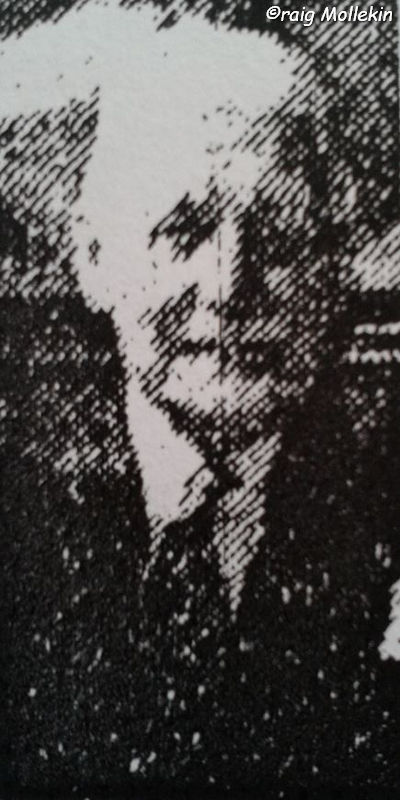
Death of Mary Ann Marsden (nee Pinder)

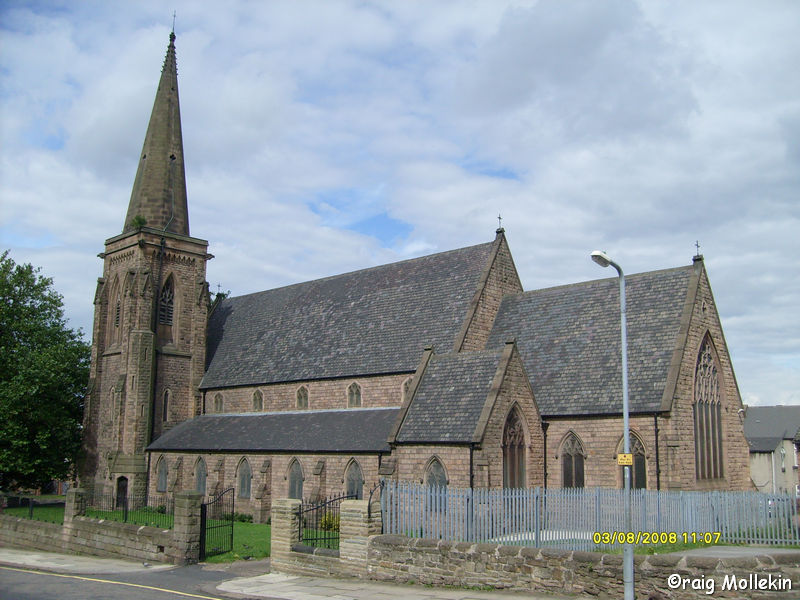
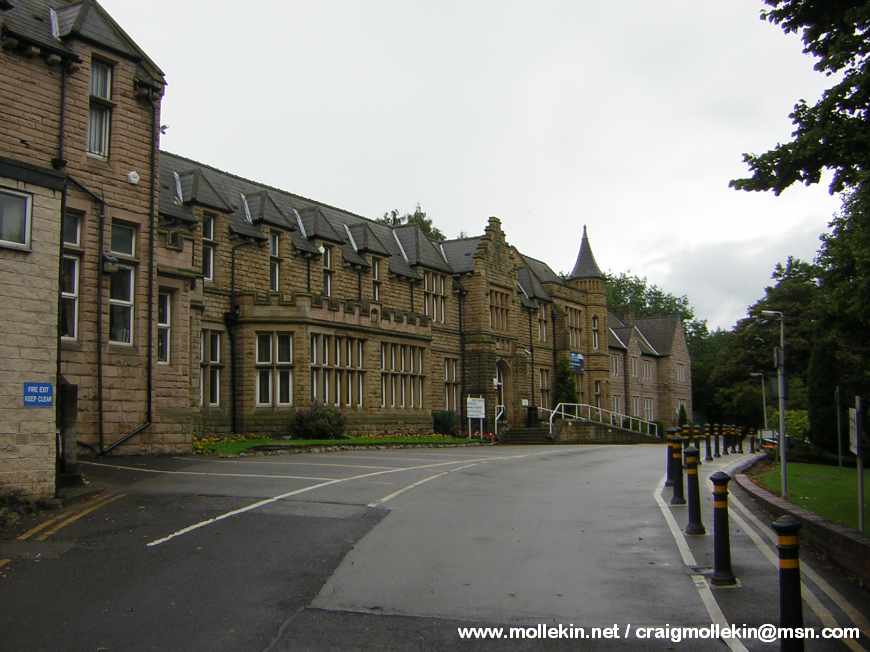
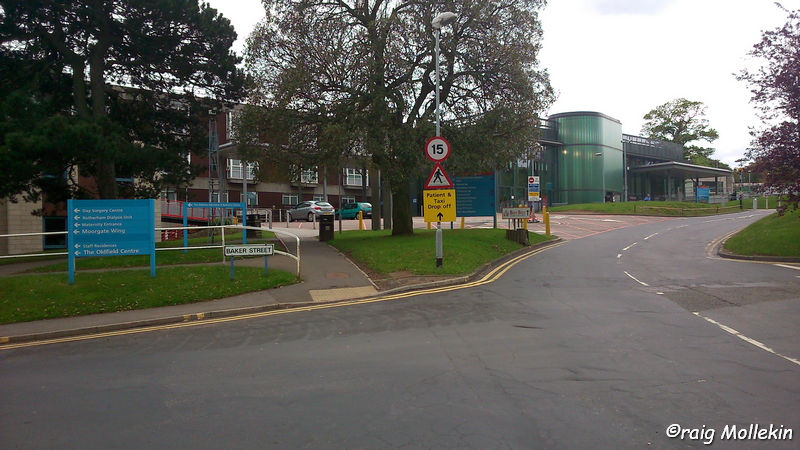
Leeds Infirmary

Leeds Infirmary

Mary Ann Pinder is my second great aunt. She was born in 1855 to parents, Thomas Pinder and Mary Shackleton.

In July 2009 after meeting a distant cousin, I learnt that Mary had died as a result of a boiler explosion. Because Mary didn’t seem to reveal her true age on Census Returns, trying to find a corresponding death entry was difficult. Mary married Sam Marsden in Rotherham in 1895 and below is a newspaper entry pertaining to her death.

THE YORKSHIRE POST. WEDNESDAY. April 16. 1913.

FIVE DEATHS AT AN INFIRMARY.

Five deaths at the Leeds Infirmary were investigated by the City Coroner (Mr. J. C. Malcolm) at the Town Hall yesterday.

Three of the cases were the results of burning accidents, and the victims were Harry Haigh Fern, two years of age, of 11, Parsonage View, Leeds; Reginald Fletcher, aged three years, of 1, Tennyson Street, Pudsey; and Mary Ann Marsden (48), wife of the caretaker at the Girls’ High School, Headingley Lane, Leeds. The clothing of the two children caught fire while they were playing with matches, and in the case of Mrs. Marsden her blouse was set alight at a gas stove. Verdicts of “Accidental death” were returned in each case.

Jas. Alderson, aged 10 years, of 7, Dalmeny Terrace, Rodley, fell a distance of seven and a half feet from a warehouse “landing” whilst at play on Saturday. He died from hemorrhage caused by the injuries. The jury agreed that the boy’s death was accidental. Frederick George Sales (53), out porter, of 4, Wharfedale Street, Leeds, died whilst under anaesthetic. The jury concurred with the doctor’s statement that an operation was necessary in consequence of internal injuries, and returned a verdict that death was due to misadventure.

Joseph Goodall and the Lund Hill mining disaster

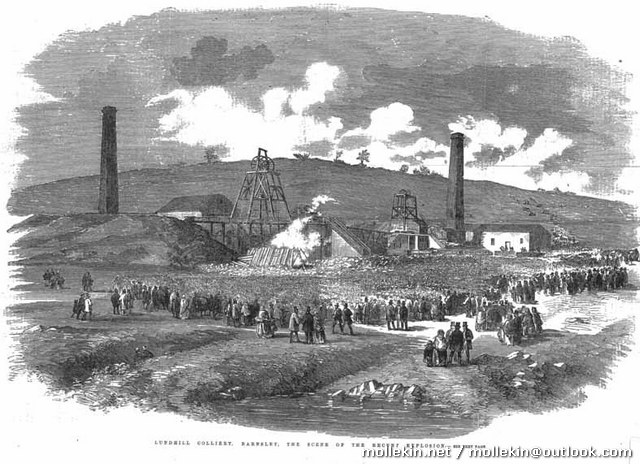
Lundhill mining disaster

Lundhill mining disaster

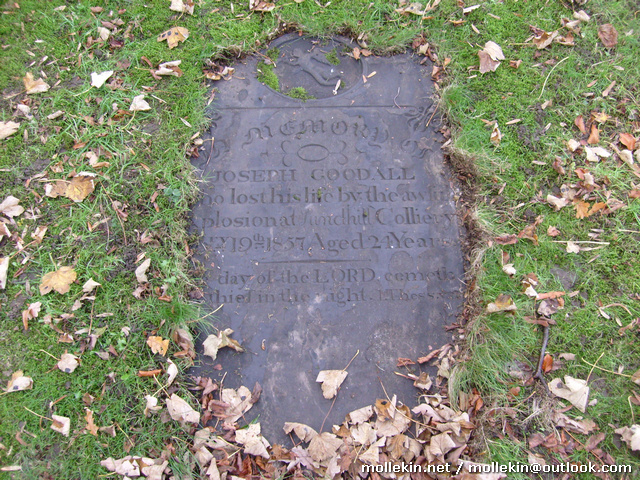
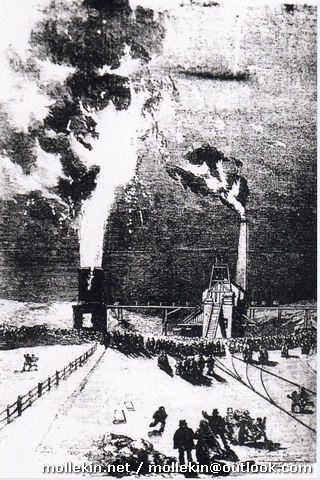
Joseph Goodall is my 4 x great uncle. On 27th February 1857, Joseph was killed in one of the worst mining accidents ever to occur when a fire-damp explosion ripped through the underground workings of the Lund Hill colliery, near Barnsley. 189 men and boys were killed. One family alone lost seven members. It took five months to recover Joseph’s body from the mine after which he was buried in Saint Thomas’s Churchyard in Gawber. Queen Victoria and Prince Albert donated £300 to the disaster fund which was subsequently set up. Below is a transcription of a newspaper article published shortly after the disaster.

DREADFUL COLLIERY ACCIDENT

Lundhill mining disaster

Lundhill mining disaster

It is our melancholy duty to record one of the most awful and fatal colliery accidents which has perhaps taken place in the history of coal mining in this country. The scene of this sad occurrence was at Lund Hill, near Hemingfield, about six miles from this place, and one from the Wombwell station on the South Yorkshire Railway, known as the Lund Hill Colliery, at present worked by a firm under the name of “The Lund Hill Coal Company”. The accident occurred about 12.15 a.m., on Thursday last. During the time that the banksmen and the above-ground workmen were at dinner, a loud explosion was heard, and almost at the same moment the corf and chair suspended in the drawing shaft were driven with extraordinary violence against the head gear of the shaft, by which the latter was considerably broken. The alarm spread immediately, and the most direful consequences of a terrific explosion were soon made evident to all. The cupola of the air shaft was rest asunder; and the volumes of fire and smoke which issued there-from depicted fear all around.

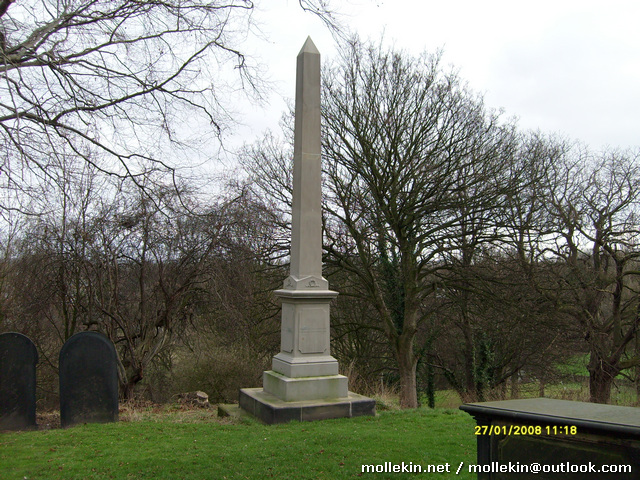
Lundhill disaster monument, Darfield

Lundhill disaster monument, Darfield

The workmen at hand immediately hastened to the spot, and under the superintendence of Mr. Coe, the viewer of the mine, proceeded to repair the head gear of the shaft, in order to render assistance to the workmen down in the mine. But in the mean time no person can describe the scene which speedily followed. As the alarm spread, the most fearful forebodings sat upon each countenance. Messengers were despatched for assistance in every direction to the neighbouring collieries, and in a very shot time the vicinity of the pit was alive with the most distressing and horror-stricken faces. The surgeons from Barnsley and the district were summoned or volunteered to render assistance to any of the men who might be got out. But before any of the unhappy beings who were at work in the mine could be got out, a large concourse of the wives, children, and relatives of those in the mine were gathered round the pit hill, and the most appalling and heart-rending sight was presented. The despairing shrieks of the women and children, and the fear which sat upon the faces of all assembled cannot be here adequately described.

Saint Thomas the Apostle, Gawber

Saint Thomas the Apostle

Joseph Goodall's grave

Joseph Goodall’s grave

The number of persons who descended the shaft in the morning would be about 180, including men and boys; and from the above-ground appearances, those experienced in mining expressed but faint hopes for the lives of those below, The utmost efforts were, however, made to prepare for a descent into the mine, and many times were those persons attempting to gain an entrance drawn up and down the shaft before the chair could descend to the bottom. The effort being at last successful, they, however, only succeeded in rescuing about 19 from the bottom of the shaft. Those men, being engaged in the dip workings, had rushed to the pit shaft on the first shock of the explosion; and, awful to relate, these 19, with about 12 persons who came out of the pit at dinner time, and just before the explosion took place, are all that are that saved out of the number who entered that morning. The sacrifice of life must therefore amount to near 150 persons who have thus met an untimely death, in this most fearful of all calamities which has yet befallen this mining district. The report of the disaster soon spread far and wide, and but few persons could at first believe the report circulated, so fabulous indeed did it appear. The owners of the colliery were telegraphed for, and messengers despatched to inform them of the awful tidings. Mr. (missing text) work to subdue the fire, but, at the hour of our account leaving on Friday the fire still continued, and the pit remained sealed up to stop the current of air which feeds the flame in the cupola shaft. On Friday the interest seemed only to increase, and thousands of persons assembled at the colliery. Many to satisfy themselves of the reality of the accident, and many more unhappily to bewail the fate of those buried in the dark abyss below. We shall endeavour, in our subsequent editions of the week’s paper, to present any further information which we can obtain relevant to this dreadful catastrophe.

Growing up in Wentworth, South Yorkshire

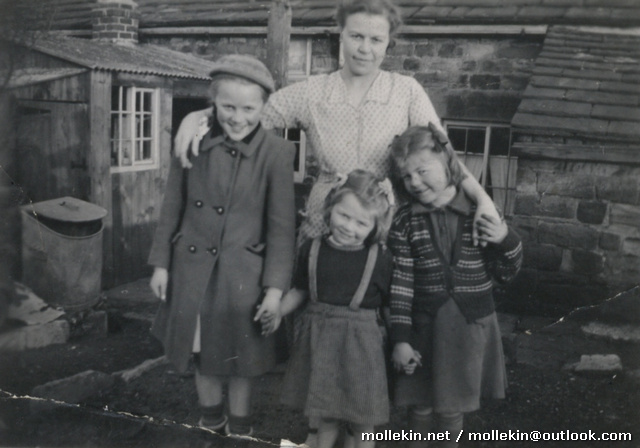
Mum with her mum and sisters

Mum with her mum and sisters in Wentworth

In this entry I have written about my mother’s memories of growing up in Wentworth. Amongst other aspects of growing up in Wentworth, I have detailed who lived in the cottages on mum’s street. Because of the vast period of time that had elapsed since mum had lived there and talking to me, some details regarding who lived where and at what numbers, may be slightly inaccurate, although details of the actual families and people are accurate. This entry will be of particular interest to people who were living at Wentworth in the 1940s and 1950s although I hope it will have a general interest to anybody who knows the area. Some of the more personal detail will hopefully appeal to my relations.
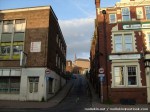
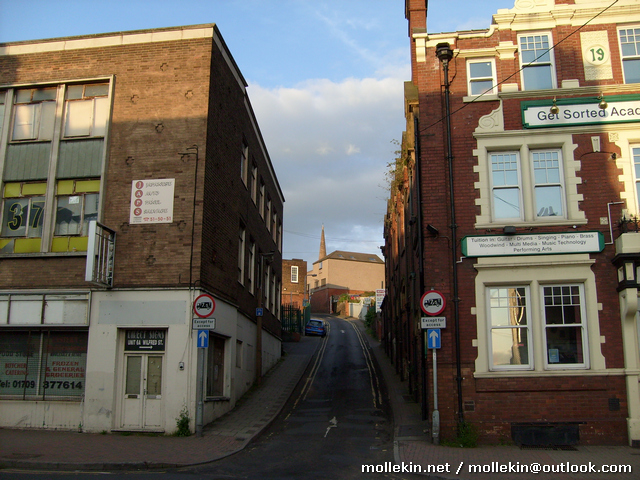
Wilfred Street, Rotherham

Wilfred Street, Rotherham

My mum was born in her grandmother’s house in Wilfred Street, Westgate, Rotherham in 1938 and spent her early years living in Greasbrough. In 1944, my mum and her family moved to live at Street in Wentworth.

Schooling in Wentworth

Mum attended the Wentworth Church of England School for 5 years between 1944 and 1949. Miss Tradewell was 1 of 3 Teachers and was the one who taught the youngest children. Then after Miss Tradewell, it was Mrs Smith (7 – 9 year olds) who my mum remembered as a being good Teacher. Mrs Smith was nicknamed Miss Louisana by the children. After Mrs Smith, it was Mrs Wright who was also the Head Teacher. Miss Tradewell lived close to the School on Main Street in Wentworth. Miss Wright lived in a small cottage on Church Walk.
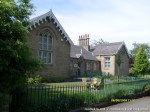
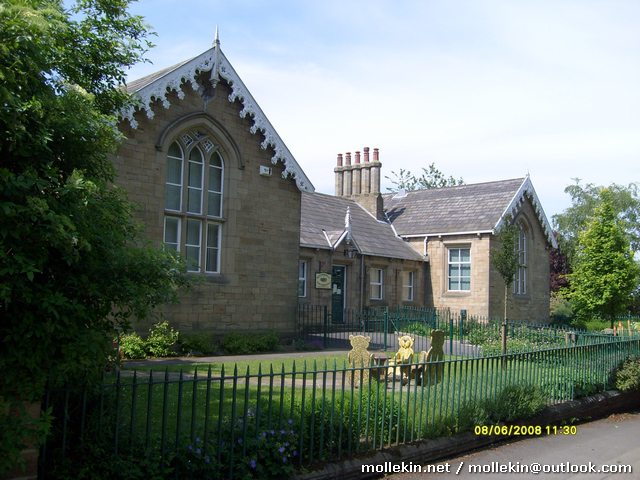
Wentworth School

Wentworth School

Mum remembers speaking to Miss Wright after she’d left School regarding her progress etc. A neighbour of Miss Wright was Molly Chappell.

11+ children used to have a lesson behind the blackboard.

There were the usual School activities such as Christmas concerts and Harvest Festivals.

One incident that mum remembered and that made her mum laugh was when she came home singing ‘that’s the way the honey goes’ when it should have been ‘that’s the way the nanny goat’.

There used to be nice jam pasties at dinner time at School which which didn’t consist of normal strawberry/raspberry jam.

Shops in Wentworth

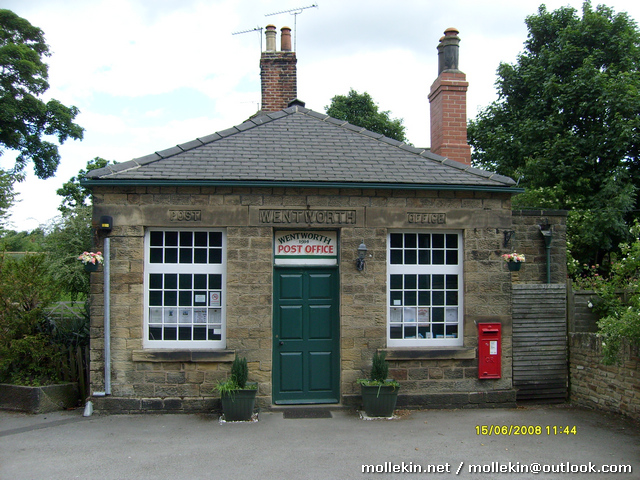
Wentworth Post Office

Wentworth Post Office

Shops in Wentworth were the Cobblers, Joseph Hills Butchers, Bassendales Newsagents (opposite to the Cobblers and Butchers), a sweet shop (possibly run/owned by Miss Godfrey) which was basically a front room and then the Cooperative Store (Mr Green was the Manager and his daughter was called Anita).

Opposite Bassendales was the Harry Wheatcroft garage which later became the Bistro. Harry Wheatcroft married June Wigfield. The Wigfield family were Estate workers at Wentworth Woodhouse and lived at Lea Brook.
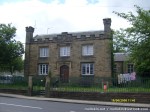
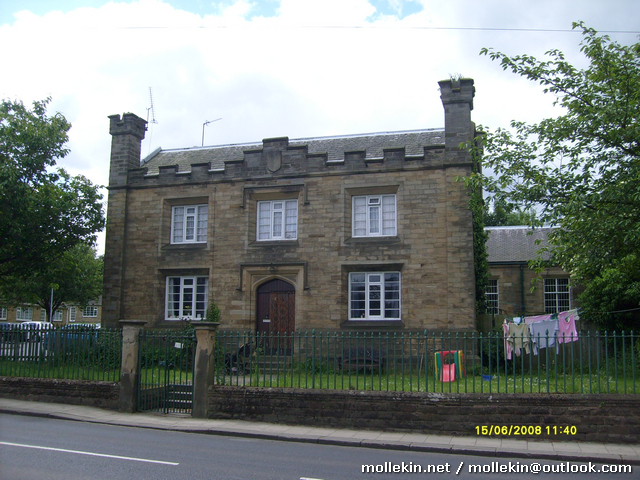
Mechanics Institute, Wentworth

Mechanics Institute, Wentworth

There wasn’t a Baker’s shop in the village, but a man called Gerald from Binns’s Bakery used to come round in a van with bread.

The Post Office was run by Mr Ibbotson.

There was ‘the hole in the wall’ which sold vegetables and which bordered on where the Garden Centre is now.

Asquith’s used to come round in a lorry with vegetables and fruit. After the Second World War mum remembered buying a quarter of cherries from Asquiths.

There was a mobile chip shop that came round once a week but mum remembered the chips as being dire.

There was a mobile Library that came to the village once a week, but there weren’t many good books to loan. Instead, mum would go to the Mechanic’s Institute for her books.

Entertainment in Wentworth

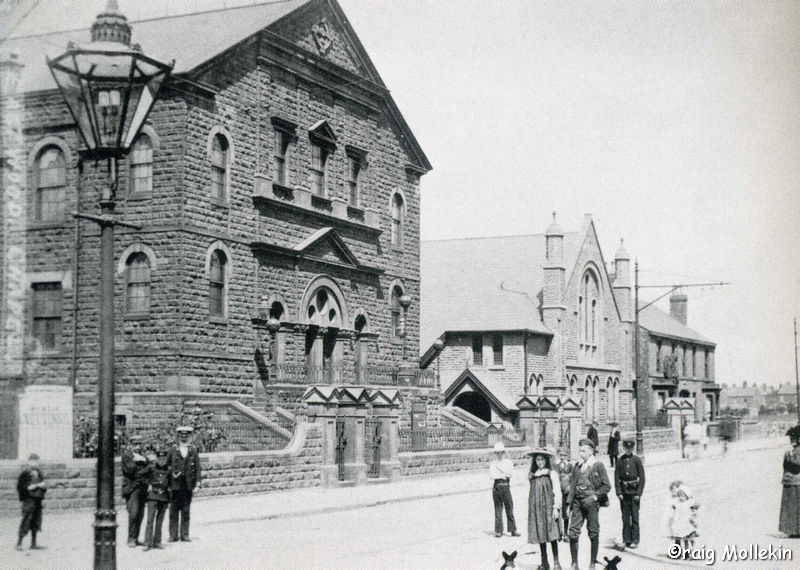
Wesleyan Chapel, Clayfield Lane, Wentworth

Wesleyan Chapel, Clayfield Lane, Wentworth

Mr Ibbotson (the Post Master) was also a Preacher and used to give a sweet to each of the children before showing films in the Chapel on Clayfield Lane. This was every Tuesday night.

When aged 7, mum remembered going to Wentworth Woodhouse for a concert to say goodbye to the American soldiers. Songs sung included ‘In The Gloaming’ (sang with Joan Ogle), ‘When The Lights Go Low’ and ‘With A Hundred Pipers.’ Mum practised beforehand at the Goddard’s house. Mum remembered being blamed for singing out of tune but believed she was the scapegoat because she was the youngest.  Consequently she was quick to point out who was actually at fault!

Mum used to pay one penny to go up Hoober Stand and that would allow you to go in and out as much as one wanted.
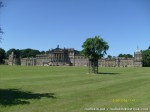
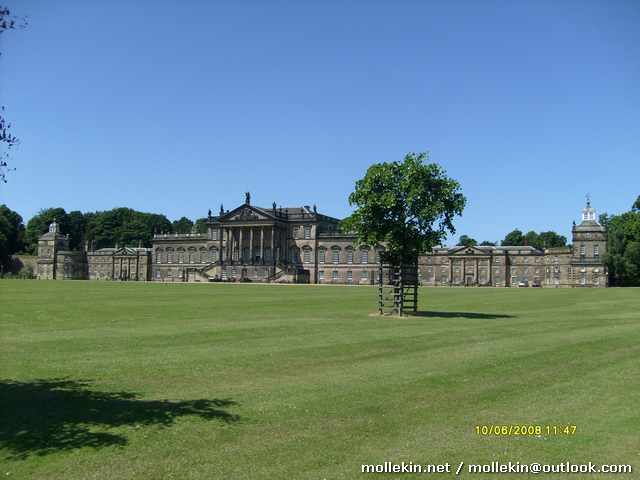
Wentworth Woodhouse

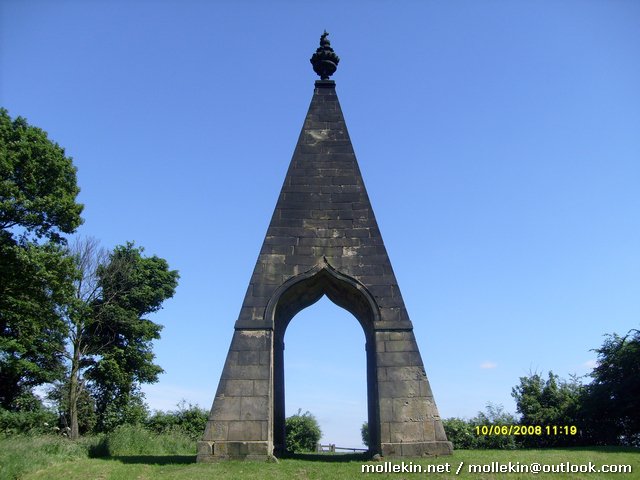
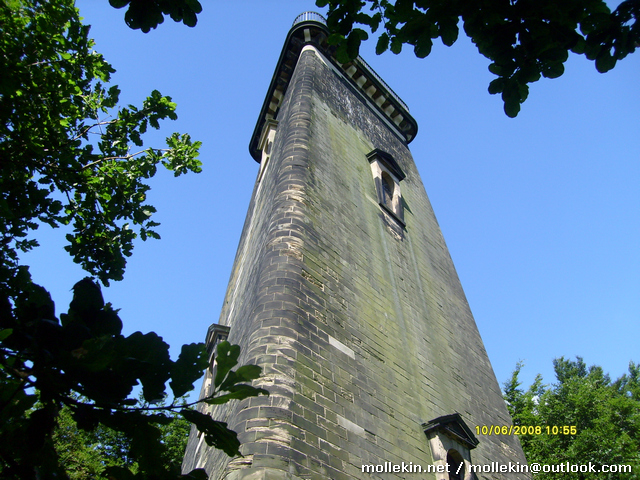
In the Autumn, mum would collect chestnuts at the end of the lane in the wood near to Needle’s Eye.

On Bonfire night, there would be a competition between the bonfires of Lea Brook and Street. Don Cooper (Joyce Robinson’s friend) used to prepare and do the bonfire and fireworks every year on Airey’s field.

At Christmas time, mum would sing carols around the Street and down to Colonel Langdon’s house which was across the fields at the top of the yard off the lane. Colonel Langdon had a big house and had something to do with the Wentworth Estate.
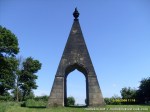
Needle’s Eye, Wentworth

Healthcare & Police

Wentworth was served by Doctor Mills who had white hair and lived on Clayfield Lane.

There was no Dentist in the village – it was in Wath at Dunford House (originally the home of the Whitworth brewing family).

The village Policeman was called ‘Bobby Bunfield’ and he lived in the bottom house before going towards Elsecar on Main Street.

Neighbours and other Wentworth people

#3 Street – This is where my mum and her family lived. Prior to moving in, somebody had been keeping ducks in the house. The house was electrified, but there was no gas supply, so food was cooked on a Primus stove in the kitchen. There was a range in the living room. Upstairs, there were 3 bedrooms. A bathroom was put in upstairs years later. Circa 1952, the toilet was moved from the end of the garden to a flushing version outside of the back door.

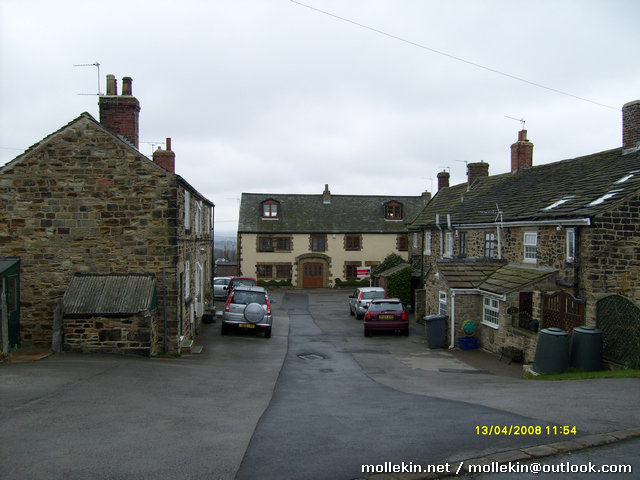
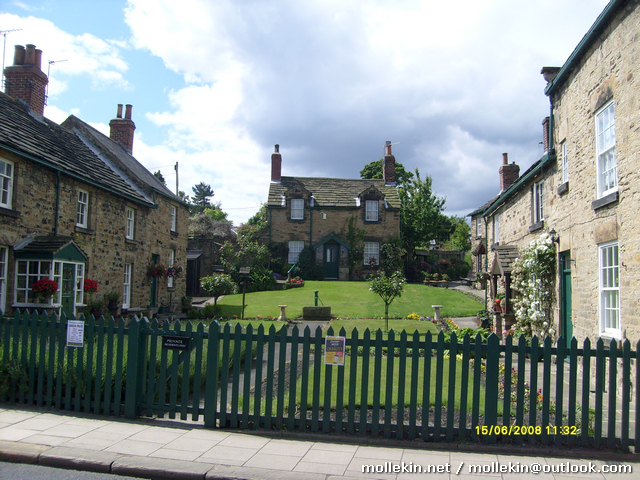
Street cottages, Wentworth

Street cottages, Wentworth

#1 Street – The Chantry family. These were old people but nice. After the Chantry family had left, the Smith family moved in and then the Owen family (mum remembered that their daughter was called Dorothy). With regards to the Smith family, Walter Smith was the father, Edna was his wife and Michael was their son. Walter pounced on mum after climbing over a stile, down a field at the top of the Street yard which led to Landon Drive on Cortworth Lane and stole her purse. Walter was sent to prison and died there. Howard Davies (brother of 2) who might have been a labourer on the Estate also lived at #1 at one point and mum remembered him having two brothers.

Satchel snatched from schoolgirl

WATH police are to-day searching for a man aged about 35, who snatched a school satchel from a 15-year-old schoolgirl in Talbert-drive, Street-lane, Wentworth.

Most of the contents of the satchel have been recovered except for a purse, which contained 11s.

The girl was Jean Rowbottom, of Street Cottages, Wentworth, who was on her way to school.

The description of the man is: Dressed in dirty raincoat with belt, dark-coloured scarf, woollen gloves and believed to be wearing Wellington boots and no hat.

#2 Street – Jim Wright and his wife Dorothy lived here and they didn’t have any children. Mum remembered Jim as being an odd man; very tall with ostrich like legs and with a piping voice. Mum’s mum and dad were close friends with the Wright family. They eventually went to live in Malton, North Yorkshire and mum remembered visiting them and returning home in the dark and being scared. They may have had something to do with the Estate. Tommy Tinker and wife with their daughter, Mary, moved into #2 after the Wright family had left.

Next to Jim Wright and family were the Hill family. Mavis Hill was the daughter and was older than mum and when she got married, she lived around the corner from the Street. She ended up running off with a Jehovah’s Witness and mum never saw her again. There was also a son. When mum’s mum and dad were having their kitchen and living room asphalted in the late 1950’s (after mum was married), they moved into the empty Hill house for about a week. After the Hill family left, the Fuller family moved in. Jean(ie) Fuller was mum’s friend and was a little younger. They used to play ball against the smooth toilet brick wall. Jean’s hands were always bandaged up with black tar bandages due to eczema. Jean had a brother called Tony. Their parents were called Tom and Rene.
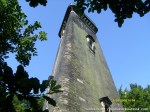
Hoober Stand, Wentworth

Hoober Stand, Wentworth

Next to the Hill family were the Bamforth family. They had a daughter called Joy.

The Lidgett family lived in the next house along from the Bamforth family. Everard and Diane were the children and were quite posh. Their dad might have been called Ted and their mother had a fancy name. Everard was older than mum but Diane was of the same age. After the Lidgett moved out, the Nuttall family moved in. They were called Jim and maybe Ada. Their daughter was called Winnie. But Ada had about 4 daughters from a previous marriage; Ida was one of them and mum was friends with her. Winnie married an Irish man and they ended up living with my parents in Greasbrough for a while but she died young.

In the house along from the Nuttall family, was the Airey family. A branch of the Airey family lived in Swinton and some are buried there.

Around the corner from the Airey houses were more dwellings and gardens. The aforementioned Mavis Hill moved into one of these at one point.

The corner bottom right house was the Wright farm. The wife was nicknamed as the black widow as she dressed in black and always looked miserable. Apparently she wasn’t well liked for some reason. They had a daughter called Enid. Enid married Lol Hunt’s brother (Ken). Ken and Enid then took on the Hunt house because Lol and family moved (they may have gone to to live in the neighbouring hamlet of Harley). The Wright Farm had fields at the back although the first field at the back was Airey’s field. Bonfires were held on the Airey field and may also have been occupied by ponies. The Wright field was at the side/back of the Airy Field.

Lol Hunt, with children David, Elaine, Irene, Ian, Peter and Paul (twins) resided in the next house along at bottom on the same same side as mum’s home. Lol Hunt may have been a Miner. Lol’s brother (the aforementioned Ken) might also have been a Miner.

The grandparent’s of mum’s friend (Joyce Cooper) lived in the next house along. Joyce’s grandfather had been a Miner. Mum remembered that their house had a carpet! They had a son called Colin and he married a lady called Irene. After the Cooper family had moved out, Kath Airey who married Jack Howse, moved in. They issued a daughter called Pamela. Jack Howse may have been a Miner. Mum’s mum and dad became friends with the Howse family and would to go to the Greasbrough Brass Band Club together, opposite Green street. Jack and Kath’s nephew, Geoffrey Howse, is the author of many local history books. When very young, my mum’s sister, Ann, swallowed half a needle whilst eating a pomegranate. Kath Howse was called upon to help retrieve the needle. Cotton wool was somehow utilised in this procedure.
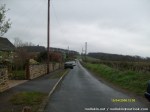
Street, Wentworth

Street, Wentworth

Next along was Mrs Parkin who mum remembered living in a tiny cottage. Mum didn’t recall ever actually seeing her.

#5 Street – The Hopkin family lived there, Terry and Val. After the Hopkin family left, the Davies family moved in. They were called Faith and possibly Walter. Walter had served in the Second World War and became a Postman afterwards. Their daughters were called Lynn and Linda. Terry and Val Hopkin moved to Rockingham Road in Swinton and are buried in Saint Margaret’s Churchyard.

Next to the Hunt family was Fred Airey’s small holding (hens and he had a field). He lived with his parents (his father was called Oscar). Fred Airey used to have a lorry and cleared the middins out at the back of Street and would chuck some rotten smelling red powder out after doing so. Mum believed he must have been employed by the Council. His father, Oscar, was a Miner.

Opposite the Street yard was the Parkin residence.

Carrying just on from the Street were more dwellings. Mum remembered Frank Airey moving into one when he got married. There was a woman who my mum’s mum knew who lived in one and she worked in a Butcher’s Shop in Greasbrough. The White family also lived around here and mum remembered that their son was called, David.

Further along around the corner of Street was another row of dwellings. Joyce, Morris and Agnes, Donald and Brian lived in the house next to the ‘old garden’. At the very right end of this row from looking at it was the Carr family. They had a daughter called Annie and a Donald Carr lived there who may have been a son. In the house to the left of the Carr’s home was the Davies family. Len was the father, who mum remembered as being quite an officious character and might have worked in the Parkgate Chemical Works and his wife or grandma was called Edith. Their children were called Sheila and Peter. Sheila married Pete Thompson and moved to Scotland. The Burley family was in the next house and one of them married the sister of an Edith Davies whose family may have originated from Wath.
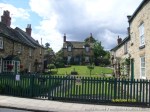
Paradise Square, Wentworth

Paradise Square, Wentworth

In the next house was the Hague family. They had a son called Eric who was younger than Joyce Robinson. Mum watched the 1952 coronation on the Hague’s television. This part of the Street was called ‘Down Row’.

Mum remembered a Johnny Wardle (who later became a cricketer for England) and that his sister worked on the Burrough’s buses that passed through Wentworth.

Other people that mum remembered from around Wentworth were, Barbara Jones (lived in Paradise Square), Terry Kingston, Ian Lomas (now a Councillor), Bridon Exley (from Harley), Joan and Elizabeth Chapman, Philip and Margaret Whitaker, Tom Evans and George Wright, a Farmer who lived on Glasshouse Green.

Mum thought she remembered a Barbara Burley in the Mechanic’s Institute.

Mum also remembered a Joy Bamforth being born.

World War II

During World War II, there was an Anderson air raid shelter at the top of the yard that was beside Tommy Tinker’s house. Mum remembered the shelter being there for years after.

Evacuees lived in Hoober House. Mum knew a girl called Brenda who was one of these. Evacuees also lived off Cortworth Lane.

At the end of the war, there was a street party at the bottom of the Street yard.

Mum’s dad had to put the car away under cover on George Wright’s farm for winter because of petrol rationing.

Mum’s dad trained ‘Bevin Boys’ at New Stubbin Colliery, Greasbrough during the war and at night time was a Saint John’s ambulance driver attending to causalities of the Sheffield Blitz. On one occasion he attended a large underground air raid shelter where everybody had squashed in to keep safe. Unfortunately a bomb had hit and everybody suffocated to death whilst stood up.

Friends

One of mum’s friends was Joan Lill who was the daughter of the Landlord of the George and Dragon.

On one occasion, mum went to the Church Fair with her friend, Sandra Rispin and her mother asked ‘what did you bring her for?’  Sandra lived on Main Street.

George & Dragon, Wentworth

George & Dragon

Mum’s friend, Joyce Robinson, lived in the Lodge next to the Mausoleum and her parents were the Caretakers for the Mausoleum.

Shirley from Lea Brook was also mum’s friend.

Miscellaneous

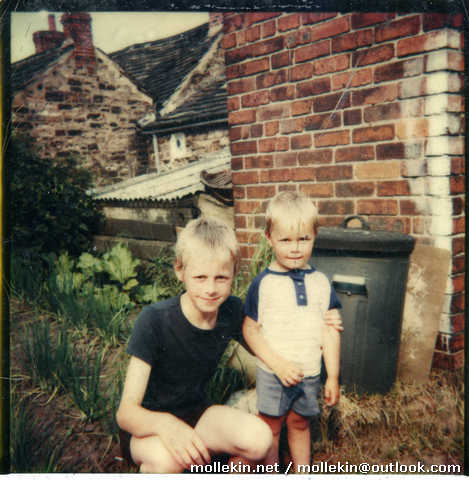
Craig Mollekin (right) in the back garden of 3 Street, Wentworth in 1979

Craig Mollekin (right) in the back garden of 3 Street, Wentworth in 1979

There are a number of hamlets in Wentworth. One is Lea Brook and the Jones family lived there (Mrs Jones might have worked at Wentworth Woodhouse with mum’s mum), the Laister family whose relations (Ernie) lived at end of the lane with his dad near to Needle’s Eye. Bryan West lived at Lea Brook. Another hamlet was Hoober where Les Marsden lived there.

There were no street lights in Street.

Mum’s dad used to keep chickens in the back garden. Moran chickens, bantam chickens and Rhode Island red chickens are varieties that he kept. Mum never remembered eating the chickens but remembered them being given to relations. The chickens were on the right hand side of the garden as you looked down, next to the toilet and for a time there was just a scraggy lawn on the left hand side as looking down with a gooseberry bush in the hedge. The hens would hide their eggs in the hedges and undergrowth and the cocks would ferociously defend them. Mum’s dad had to ‘neck’ a few that got too vicious.

H1N1

H1N1

H1N1

The 1918 flu pandemic (the H1N1 strain) that lasted between January 1918 and December 1920 infected 500 million people and killed up to 100 million. Unlike normal influenza, the 1918 strain generally affected healthy, younger people. This was due to their stronger immune systems overreacting. People would often contract pneumonia and die due to suffocation from their own secretions. It is interesting to note that the 1918 flu pandemic caused more deaths than the whole of World War One. It is thought to have originated at Camp Funston in Kansas, America in March 1918. Due to the infected troops living in close proximity to each other and because they travelled around the world, the deadly flu virus soon spread.

Fred Rowbottom

Fred Rowbottom - death certificate

Fred’s death certificate

My great grandfather, Fred Rowbottom, born in 1873 in Parkgate, Rotherham and husband of Frances Emily Brough, died from the 1918 flu virus. Fred caught it and his doctor told him to stay in his house, but he decided that the pub might make him feel better. He went out on a very cold night, contracted pneumonia and subsequently died. Fred is the son of Albert Rowbottom and Charlotte Yates

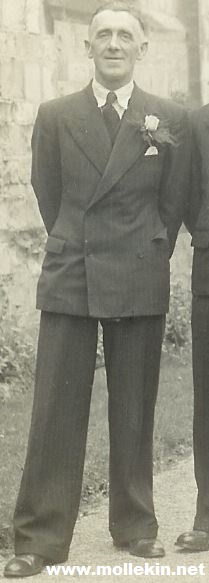
I know that at least 4 other members of my family tree died from this deadly virus. Below are a couple of newspaper articles regarding two families in my tree that suffered. The first regards the death of my great great granduncle who was called William Henry Remmington and the second is regarding my first cousin, thrice removed (Bernard Vincent Early (son of Priscilla Walker Berry and Jesse Early)) and his family.
Remmington. W. H.

Remmington. W. H.

William H. Remmington

THE ADVERTISER. SATURDAY. JANUARY 11. 1919.

DEATH OF ONE OF THE ORIGINAL TERRITORIALS

A VICTIM TO INFLUENZA

Transport Driver W. Remington (1/5 York and Lancaster Reg.), son of Mr. and Mrs. Remington, of 9, The Crofts, Rotherham, who is reported to have died of pneumonia, following influenza, in France on December 20th last, was one of the original members of the 1/5 Batt. York and Lancaster Regt. (the local Territorials) which left England in April, 1915. He was 23 years of age, and joined the Army on the outbreak of the war. At the time of his illness he was on the point of being demobilised in order to return to work at the Silverwood Colliery.

36 - Moorgate Cemetery, Rotherham (Early) - 28.08.05 (1)

Early grave

THE ADVERTISER. SATURDAY. MARCH 8. 1919.

EARLY. – Bernard Vincent Early, aged 30, died at 6, Lister Street, on Thursday, Feb. 27, from influenza. Elizabeth Early, aged 31, wife of the above, who died on Friday, Feb 28. Cyril Early, aged 11 months, infant son of the above, died March 5.

The relatives of the above beg to thank the workmen of Messrs. Steel, Peech and Tozer Ltd. for their practical sympathy, the bearers who volunteered to carry the little family to the grave, and all friends for their expressions of grief in this sad event.

Frank Jarvis Pinder

Frank J. Pinder

Frank Jarvis Pinder is my first cousin, thrice removed and son of Alfred Henry Pinder.

Frank was born in 1877 and in 1903, he married Bertha Longdon.  Together, they issued two children, one of them being Alfred Henry Pinder.

Below is a newspaper article(s) published shortly after his death.

THE ADVERTISER, SAT., JAN. 19TH, 1963

OBITUARY

MR. F. J. PINDER

Mr. Frank Jarvis Pinder, of 33, Fitzwilliam Road, Rotherham, died on Tuesday at the home of his grand-daughter. He was 85.

Born in Masbro’ Street, Mr. Jarvis had lived in the Rotherham area all his life. He was employed as a brass finisher at Gummer’s Ltd., for more than 50 years, and retired when he was 82. Previously, he had worked in a similar capacity at Stone’s and Gumby’s, of Rotherham.

Mr. Pinder was a keen gardener, and was a former secretary of the St. Ann’s Gardens and Allotments Society. During World War I he served as secretary to the Rotherham Hospitals Potato Scheme. Singing was another of his interests.

Saint Stephen’s Church

He attended the St. Stephen’s Church, Eastwood, where he was a member of the Parochial Church Council, and had been a sidesman.

He leaves two sons, and a grand-daughter. His wife died more than 10 years ago. Cremation takes place to-day, at Rotherham after a service at St. Stephen’s Church, Eastwood.

PINDER. – Suddenly, on January 15th, at his grand-daughter’s residence, 21, Vernon Road. Frank Jarvis, aged 85 years, of 33, Fitzwilliam Road, a dear father and grandad. Service at St. Stephen’s Church, to-day (Saturday), 11 a.m., cremation, Herringthorpe, 11.30 a.m.

New houses for Maltby

Herbert Mollekin

Herbert Mollekin

My great uncle, Herbert Mollekin, was a prolific house/estate builder and below is a newspaper article regarding the completion of a new batch of houses in Maltby.

THE ADVERTISER, SATURDAY, OCTOBER 9, 1926

NEW HOUSES FOR MALTBY.

ALD. E. DUNN CONGRATULATES CONTRACTOR ON FINE WORK.

WHEN HOUSES COST £135.

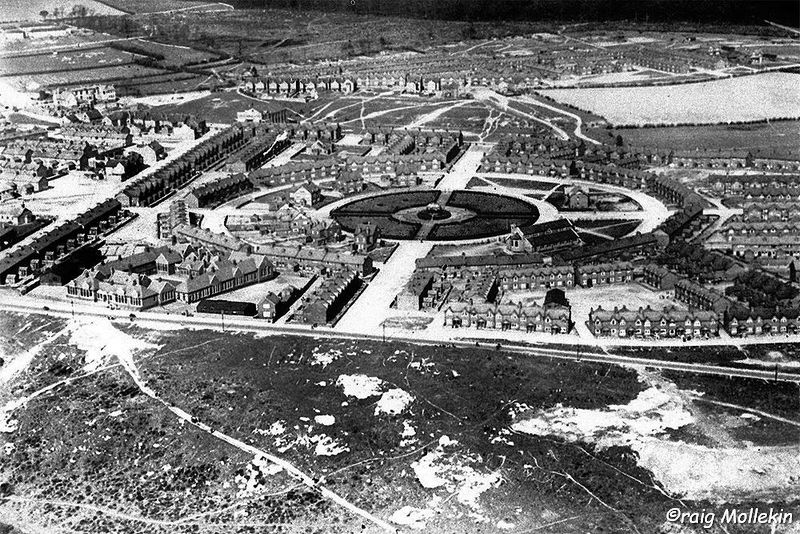
At a cost of £17,781 17s., thirty-six houses have been built by the Maltby Urban District Council, and they were officially handed over to the Council on Wednesday by Mr. H. Mollekin, the contractor.

maltby-model-village

Maltby Model Village

The Council have now completed 112 houses, 76 of which were commenced some years ago by the Rotherham Rural District Council, but which were completed by the Maltby Urban District Council. Twelve of the 36 new houses, which are built on either side of a new road called Rolleston Avenue, are of the “non-parlour” type. The architect was Mr. Morgan R. Jones, engineer and surveyor to the Maltby U.D.C. The keys of the houses will be handed over to the tenants on Monday.

After an inspection of the houses on Wednesday by members of the Council, headed by County Alderman E. Dunn, Councillor H. Shaw (vice-chairman of the Maltby U.D.C.), and Councillor H. Ross (chairman of the Housing Committee), a luncheon was provided by Mr. H. Mollekin at the Queen’s Hotel, Maltby.

Proposing the health of Mr. Mollekin, Ald. Dunn thanked him for providing the luncheon, and congratulated him on the erection of the very fine houses they had just inspected. He was sure that no member of the Council who had just inspected the houses could have any ground for complaint. He (Ald. Dunn) had seen many housing sites, and he thought he could claim to be a pioneer with regard to Maltby housing. He thought that the severing of Maltby from the Rotherham Rural District Council had been amply justified. He hoped that the tenants who were going to occupy the houses would be house proud and would take advantage of the land at the rear or the houses. He saw no reason why this housing site should not become one of the most picturesque of its kind in the country.

Mr. Mollekin had been responsible for the building of about 1500 houses in Maltby, and the miners in the district were very grateful to him for the splendid houses he had erected for them.

The vice-chairman of the Council (Mr. H. Shaw) endorsed all Ald. Dunn had said. The Maltby Council, he thought could fairly claim to have set a good example to many other local authorities.

Mr. Mollekin, replying, said he had been living in Maltby for 21 years. He recalled the time when big houses were built and sold for £135, and the contractor had to make the roads as well. Nowadays, the bricks alone cost that amount.

Speaking of the relations which should be maintained between employer and employee, Mr. Mollekin said, “If there is any distinction between employer and employee, we shall never get on well with labour in this country.”

He refused to believe that the British workman had altered since the Great War.

Pinder – Turnbull Marriage

marjory-pinder-early-1930s

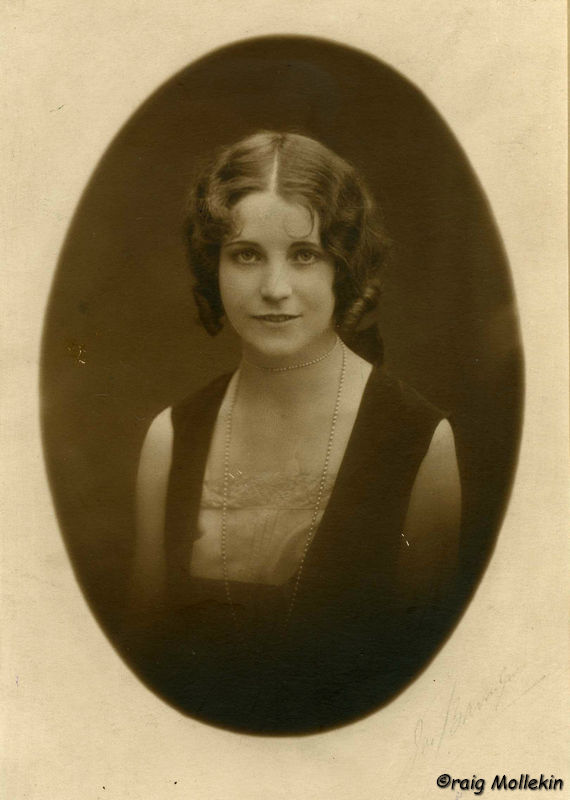
Marjory

Marjory Pinder, born 1907 in Rotherham, is my great aunt and daughter of Matthew Henry Pinder and Alice Cunnington

In 1934, Marjory married George Alaister Turnbull.  Below is a newspaper article(s) which describes this occasion.

THE ADVERTISER, SATURDAY, AUGUST 18, 1934.

AN EASTWOOD WEDDING.

SCHOLASTIC BRIDE AND BRIDEGROOM.

TURNBULL-PINDER.

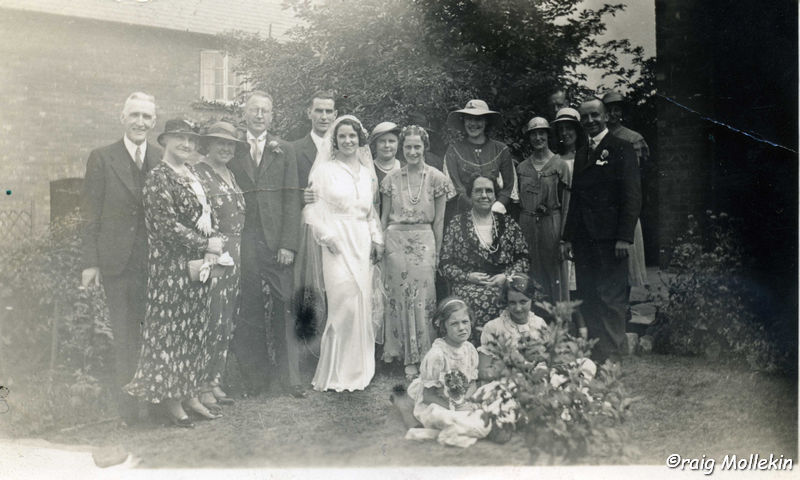
pinder-and-turnbull-wedding-rotherham-16-08-34-1

Pinder – Turnbull Wedding

The marriage took place in the Eastwood Methodist Church on Thursday of Miss Marjory Pinder, M.A., the younger daughter of Mrs. Pinder, of East Dene, Rotherham, and the late Mr. M. H. Pinder, to Mr. G. A. Turnbull, B.Sc., the only son of Mr. And Mrs. W. Turnbull, of Newcastle-on-Tyne.

The marriage service was conducted by the Rev. G. W. Thorn (Circuit Superintendent Minister), and the organist was Mr. Harold Rooks.

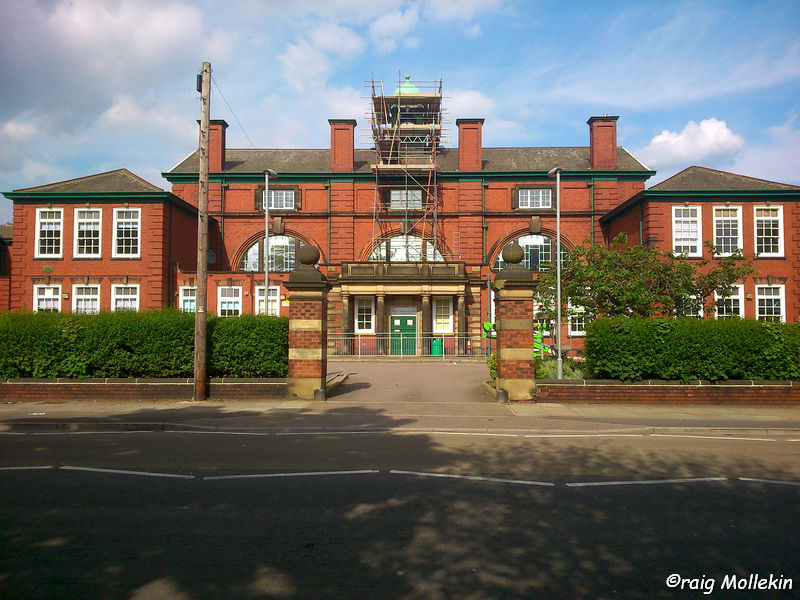
The bride, who was educated at the Rotherham High School and took her degree at the Sheffield University, has since been French and music mistress at the Shiremoor Modern School. The bridegroom, who was educated at Rutherford College, Newcastle-on-Tyne, took his degree at the Durham University and is mathematics master at Bedlington Secondary School.

rotherham-girls-high-school-middle-lane-rotherham-01-06-14-1

Rotherham Girls High School

The bride was attired in a charming ivory satin gown, combined with wreath and veil, and carried a bouquet of cream roses. The chief attendant, Mrs. Sidney Addy, was dressed in green floral georgette and carried a bouquet of lemon carnations. The two junior attendants (nieces of the bride) were dressed in primrose georgette and carried Victorian posies of marigolds.

A reception was held in the Methodist Church Schoolroom, Eastwood.

The honeymoon is being spent in North Wales, and the newly-married couple will take up their residence in Morpeth, Northumberland.

Eastwood Methodist Chapel - about 1904

Eastwood Methodist Church

The father of the bride was for many years Water Department Superintendent for the Rotherham Corporation.

TURNBULL – PINDER. – At the Eastwood Methodist Church on Thursday, August 16th, by the Rev. G. W. Thorn. George, the only son of Mr. And Mrs. W. Turnbull, of Newcastle-on-Tyne, to Marjory, younger daughter of Mrs. Pinder, of East Dene, Rotherham.

Leonard George Briggs

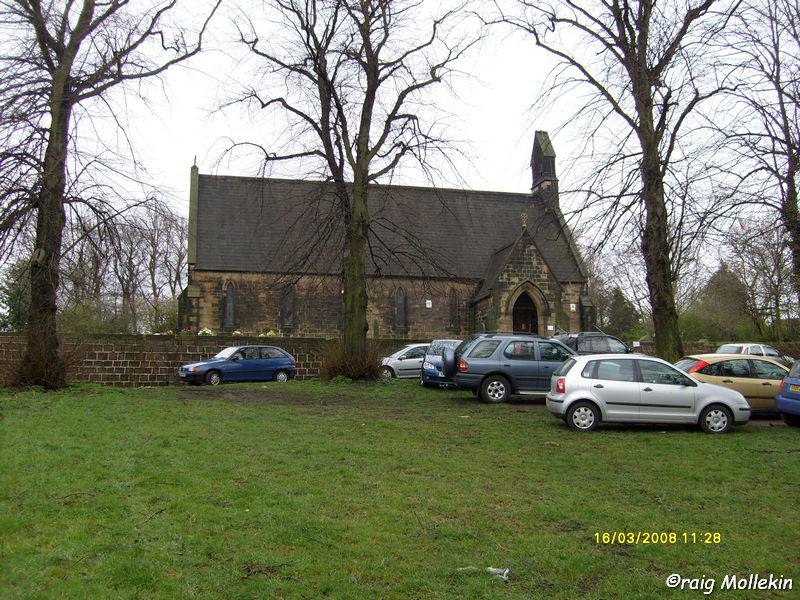
holy-trinity-church-dalton-16-03-08-4

Holy Trinity Church, Dalton

Leonard George Briggs, born in Rotherham, is my fourth cousin and son of George T. Briggs and Phyllis Brunt. Below is a newspaper article(s) published shortly after his death.

THE SOUTH YORKSHIRE AND ROTHERHAM ADVERTISER, SATURDAY, DECEMBER 17TH, 1966

GIFT FOR YOUTH PROJECT INSTEAD OF A WREATH

Neighbours of a 19-years old Rotherham youth, who died of cancer on Monday have started a collection for a project at the Dalton Parish Church Youth Club, an organisation which the youth, Leonard George Briggs, of 143, Herringthorpe Valley Road, East Herringthorpe, Rotherham, always supported.

The collection, which will probably be used to help to purchase a Land Rover for the youth club, was first intended to buy flowers for Leonard’s funeral yesterday, but his mother, Mrs. Phyllis Briggs, decided that the money would be far better spent buying something of lasting use to the youth club.

Doncaster Gate Hospital, Rotherham - 19.08.07 (4)

Rotherham Hospital

Mrs. Briggs told “The Advertiser” this week: “When the collection was first started among the neighbours, it was intended to buy a wreath for Leonard’s funeral, but after having a word with the Rev. Peter Challen, we decided that the money would be of far more use if it was put towards some youth project. As my son took a great deal of interest in the Dalton Parish Youth Club, it was thought that this would be the best place for the money”

Leonard, who died at his home, had been an Able Seaman with the Royal Navy, and developed cancer while abroad. In January of this year, he was discharged from the Royal Navy Hospital, Portsmouth, where he had been receiving treatment, and was admitted to the Rotherham Hospital, Doncaster Gate. In February, he was allowed home, but after a short time was taken to the Sheffield Royal Infirmary.

VERY HAPPY

After two weeks, Leonard was once again allowed home, where he spent most of his time practising for the driving test which he had hoped to take next year: “We never told him the nature of his illness as we did not want to worry him unduly. In fact, right to the end he was very happy and had even made plans for a camping holiday in Scotland next year”.

East Herringthorpe Cemetery, Rotherham - 29.12.15

Rotherham Crematorium

Leonard received an honourable discharge from the Navy in September, along with a report of his excellent character and the Borneo Star for fighting in Vietnam and Singapore.

He was educated at the High Greave Primary School and Spurley Hey Secondary School. He was also a member of the Eastwood View Working Men’s Club. He leaves his mother, father, two brothers and two sisters.

Cremation took place at Rotherham yesterday, following a service at the Dalton Parish Church, conducted by the Rev. P. Challen.

BRIGGS. – Leonard George, aged 19 years: ex-Royal Navy, eldest son of George and Phyllis Briggs (nee Brunt), and beloved brother of Lynn, Gerald, Carol and David; passed peacefully away after much suffering, December 12th.

Reunited with Grandma and Aunty Dot.

Beautiful memories woven in gold. This is the memory we tenderly hold.

BRIGGS. – Leonard, aged 19 years, passed peacefully away after much suffering, December 12th at home, 134, Valley Road. Beloved nephew of Margaret and Lol, and a beloved grandson of George and the late Dolly.

BRIGGS. – Leonard George, beloved nephew of Nora and George, dear cousin of Steven and Philip.

BRIGGS. – Leonard George.

Never to be forgotten.

Grandad and Grandma Brunt.

George Herbert Mollekin

George H. Mollekin

George H. Mollekin

George Herbert Mollekin, born in 1889 in Hull, is my first cousin, twice removed and son of Herbert Mollekin.

Bert marred twice, firstly to Mary Allison who died suddenly in 1952 and secondly, to Daisy’s friend, Dulcie Wild, in 1953.

Bert issued one child, called, Herbert Randal Mollekin.

Below are a couple of newspaper articles published shortly after Bert’s death.

THE ADVERTISER, FRI., MAR. 6TH, 1970

DEATH OF MR. G. H. MOLLEKIN

The death occurred recently at his home, of Mr. George Herbert Mollekin, of 16, Harvest Road, Wickersley. He was 80, and a former building contractor.

For most of his working life, Mr. Mollekin was associated with the Maltby firm of C. Mollekin Ltd. He began work at the firm with his father, and after his death, Mr. Mollekin and his brother, Mr. E. Mollekin, took control of the business for a number of years.

Mr. Mollekin spent most of his life in Maltby and had lived in Wickersley for about three years. During his younger days he was a keen sportsman.

He leaves a widow. Cremation took place last Saturday at Rotherham following a service conducted by Cannon W. Sorby Briggs.

MOLLEKIN. – On February 25th, George Herbert, the beloved husband of Dulcie Mollekin, passed away at his home, 16, Harvest Road, Wickersley. Service and cremation was at Rotherham Crematorium, Saturday, February 28th.

Suzanne Jarvis

rotherham-general-hospital-09-05-15-3

Rotherham General Hospital

Suzanne Jarvis is my fourth cousin, once removed and daughter of Leslie Jarvis and Elsie Breckin.  Below is a newspaper article published shortly after an inquest into her tragic death.

THE ADVERTISER, FRI. MAY 25TH, 1984

HORSE FALL GIRL HAD BLOOD CLOT IN HER HEART

A contraceptive pill could have contributed to the death of a 21 years-old girl who died almost a month after being thrown from a horse, a Rotherham inquest heard this week.

Suzanne Jarvis, of Simmonite Road, Kimberworth Park, died in Rotherham District General Hospital from a blood clot in her heart.

At the time, doctors were finally winning their battle to heal the injuries she sustained in the riding accident, revealed Dr David Slater, the consultant pathologist at the Royal Hallamshire Hospital.

Suzanne was thrown from her horse on January 7th, while she and her friend, 17 years-old Julie Hatfield, were exercising two horses from a riding stables on West Bawtry Road, where Julie was on a youth training scheme.

As the girls rode towards Whiston traffic lights, Suzanne’s horse started to shy as an articulated lorry went by.

Suzanne, who was leading the way, was thrown into the road after the horse fell down on its right side.

Julie said that the horse had turned 180 degrees while shying, but added that she hadn’t seen exactly what had happened next because she was struggling to keep her own horse under control.

Delivery driver Mr Anthony Doddy, who was following the lorry up the hill told the inquest the lorry was going very slowly and was not particularly close to the kerb.

He remembered seeing a horse’s tail and looking in to his rear mirror to see if he could pull out because he knew there was something ahead in the road.

“As I got nearer, I saw the girl lying in the road and I had to swerve to avoid her”, he said.

Lorry driver Mr Graham Kelly said the horse could have been frightened by the noise the engine of his lorry, which was carrying six tonnes of red dust for BSC.

“The lorry was making a lot of noise, but I didn’t expect it to disturb the horses. As I drew level with the first one, I saw its head go back and, when I looked in my near-side mirror, I saw the rear of the horse come close to the trailer, so I stopped further up to find out what exactly had happened”, he said.

Forensic tests showed that there was blue paint on some of Suzanne’s clothes and footwear which matched that from the near side mudguard of the lorry. But no traces were found on the saddle or on the horse, which suffered only slight scratches and lacerations, which were thought to have been caused when it struggled to its feet.

When Suzanne was admitted to the accident emergency unit at the the District Hospital, she was found to be suffering from multiple injuries.

Consultant orthopaedic surgeon, Mr Patrit Majumdar told the inquest she had fractured pelvis bones which were causing a pelvic haemorrhage. Because of this he didn’t prescribe anti coagulant therapy – treatment which would have helped to prevent blood clots from forming.

“If I had given her this treatment during the first week after the accident she would have died within 48 hours from a massive internal haemorrhage” he said.

“We had to weigh the risks” he added.

The day Suzanne died she was visited by two plastic surgeons from the Royal Hallamshire Hospital, who were to perform skin grafts on her legs.

She had to have operations on her legs to remove skin which had died through lack of blood, explained Mr Majumdar.

Another doctor told how impressed they were with the treatment Suzanne was receiving.

The court heard that Suzanne died at 11pm, after a major disturbance in her heart.

Consultant pathologist Dr David Slater said “It was probably the immobilisation which caused the deep veined thrombosis from which she died but with her type of injuries immobilisation was inevitable.”

“There is a small but significant risk of clots to any woman on the contraceptive pill – as was Suzanne”, he added. “It is unlikely that this was the cause f her clots, but it was an initiating factor.”

He added that thrombosis could set in despite the greatest medical care and attention.

The horse which Suzanne was riding was a seven years-old gelding which had been lodged at the stables for three months.

Its owner, Christine Griffiths, of Sheffield, explained that she had frequently exercised it on the same route. It had never showed signs of shying.

The inquest also heard that Suzanne was a proficient horse rider, who was studying to become an instructress.

Coroner Mr Kenneth Potter recorded a verdict of accidental death.