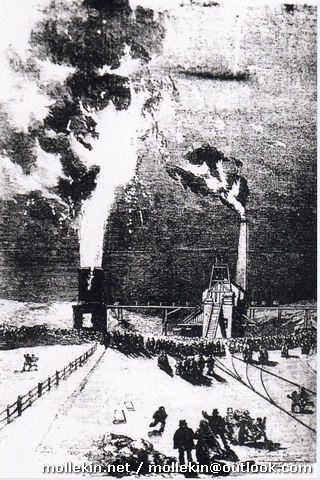
Joseph Goodall and the Lund Hill mining disaster

Lundhill mining disaster

Lundhill mining disaster

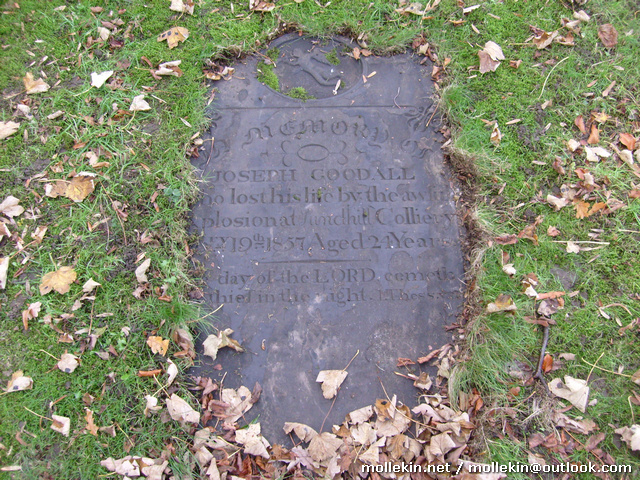
Joseph Goodall is my 4 x great uncle. On 27th February 1857, Joseph was killed in one of the worst mining accidents ever to occur when a fire-damp explosion ripped through the underground workings of the Lund Hill colliery, near Barnsley. 189 men and boys were killed. One family alone lost seven members. It took five months to recover Joseph’s body from the mine after which he was buried in Saint Thomas’s Churchyard in Gawber. Queen Victoria and Prince Albert donated £300 to the disaster fund which was subsequently set up. Below is a transcription of a newspaper article published shortly after the disaster.

DREADFUL COLLIERY ACCIDENT
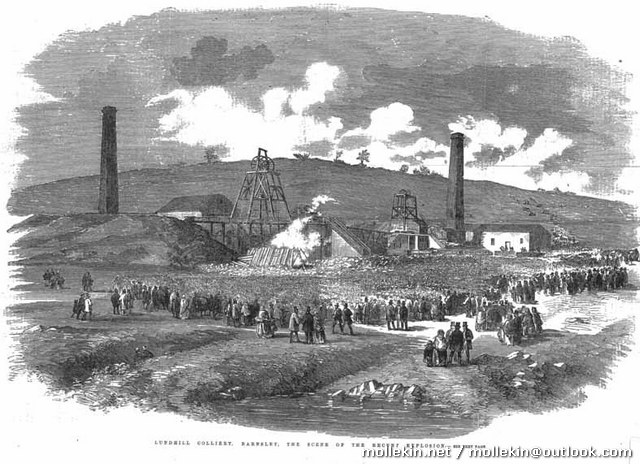
Lundhill mining disaster

Lundhill mining disaster

It is our melancholy duty to record one of the most awful and fatal colliery accidents which has perhaps taken place in the history of coal mining in this country. The scene of this sad occurrence was at Lund Hill, near Hemingfield, about six miles from this place, and one from the Wombwell station on the South Yorkshire Railway, known as the Lund Hill Colliery, at present worked by a firm under the name of “The Lund Hill Coal Company”. The accident occurred about 12.15 a.m., on Thursday last. During the time that the banksmen and the above-ground workmen were at dinner, a loud explosion was heard, and almost at the same moment the corf and chair suspended in the drawing shaft were driven with extraordinary violence against the head gear of the shaft, by which the latter was considerably broken. The alarm spread immediately, and the most direful consequences of a terrific explosion were soon made evident to all. The cupola of the air shaft was rest asunder; and the volumes of fire and smoke which issued there-from depicted fear all around.
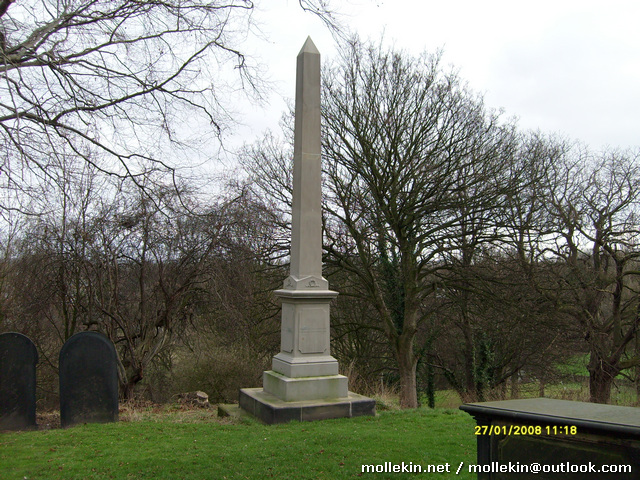
Lundhill disaster monument, Darfield

Lundhill disaster monument, Darfield

The workmen at hand immediately hastened to the spot, and under the superintendence of Mr. Coe, the viewer of the mine, proceeded to repair the head gear of the shaft, in order to render assistance to the workmen down in the mine. But in the mean time no person can describe the scene which speedily followed. As the alarm spread, the most fearful forebodings sat upon each countenance. Messengers were despatched for assistance in every direction to the neighbouring collieries, and in a very shot time the vicinity of the pit was alive with the most distressing and horror-stricken faces. The surgeons from Barnsley and the district were summoned or volunteered to render assistance to any of the men who might be got out. But before any of the unhappy beings who were at work in the mine could be got out, a large concourse of the wives, children, and relatives of those in the mine were gathered round the pit hill, and the most appalling and heart-rending sight was presented. The despairing shrieks of the women and children, and the fear which sat upon the faces of all assembled cannot be here adequately described.

Saint Thomas the Apostle, Gawber

Saint Thomas the Apostle

Joseph Goodall's grave

Joseph Goodall’s grave

The number of persons who descended the shaft in the morning would be about 180, including men and boys; and from the above-ground appearances, those experienced in mining expressed but faint hopes for the lives of those below, The utmost efforts were, however, made to prepare for a descent into the mine, and many times were those persons attempting to gain an entrance drawn up and down the shaft before the chair could descend to the bottom. The effort being at last successful, they, however, only succeeded in rescuing about 19 from the bottom of the shaft. Those men, being engaged in the dip workings, had rushed to the pit shaft on the first shock of the explosion; and, awful to relate, these 19, with about 12 persons who came out of the pit at dinner time, and just before the explosion took place, are all that are that saved out of the number who entered that morning. The sacrifice of life must therefore amount to near 150 persons who have thus met an untimely death, in this most fearful of all calamities which has yet befallen this mining district. The report of the disaster soon spread far and wide, and but few persons could at first believe the report circulated, so fabulous indeed did it appear. The owners of the colliery were telegraphed for, and messengers despatched to inform them of the awful tidings. Mr. (missing text) work to subdue the fire, but, at the hour of our account leaving on Friday the fire still continued, and the pit remained sealed up to stop the current of air which feeds the flame in the cupola shaft. On Friday the interest seemed only to increase, and thousands of persons assembled at the colliery. Many to satisfy themselves of the reality of the accident, and many more unhappily to bewail the fate of those buried in the dark abyss below. We shall endeavour, in our subsequent editions of the week’s paper, to present any further information which we can obtain relevant to this dreadful catastrophe.
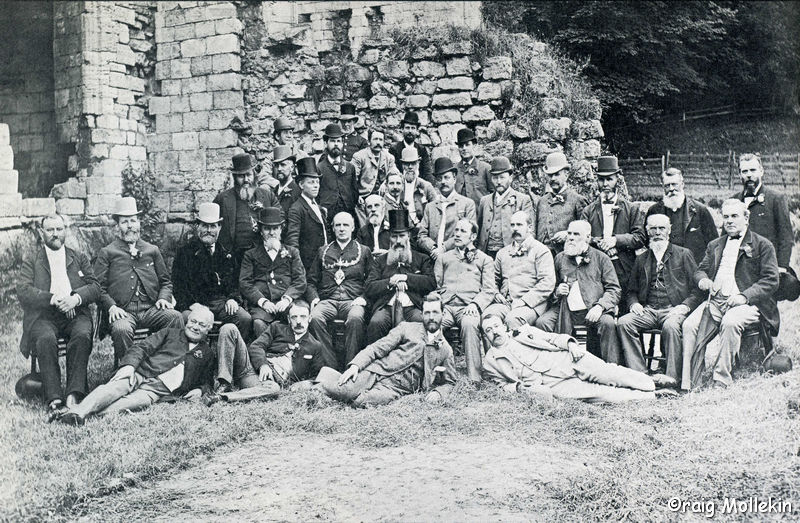
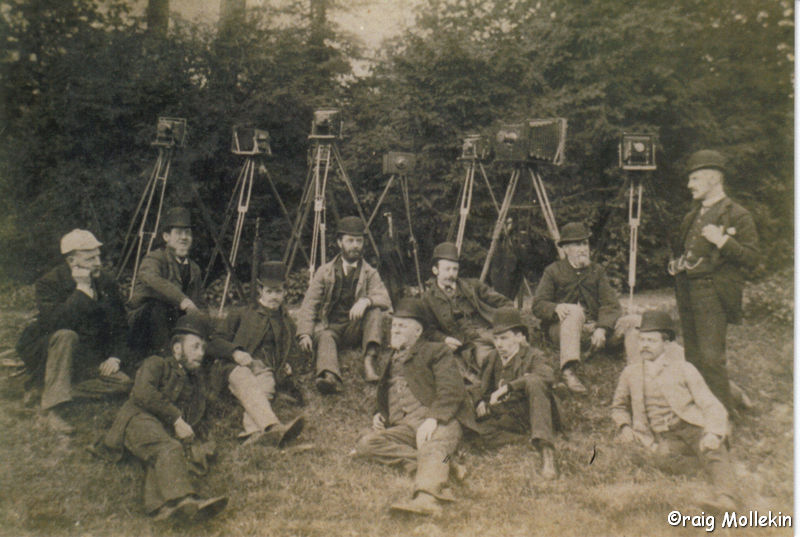
Luke Berry

Luke Berry - Roche Abbey, Maltby - 1889

Luke at Roche Abbey

Luke Berry is my third great grandfather and he was born in 1823 in Kexborough, Barnsley. In 1845, Luke married Jane Walker.

Luke and Jane issued seven children, four of which did not survive infancy; three succumbed in quick succession during the 1860s from Scarlet Fever. The surviving children were, Hannah Berry (1845 to 1924), Agnes (1847 to 1916) and Priscilla Walker (1852 to 1918). Hannah is my second great grandmother and she married Francis Pinder in 1867.

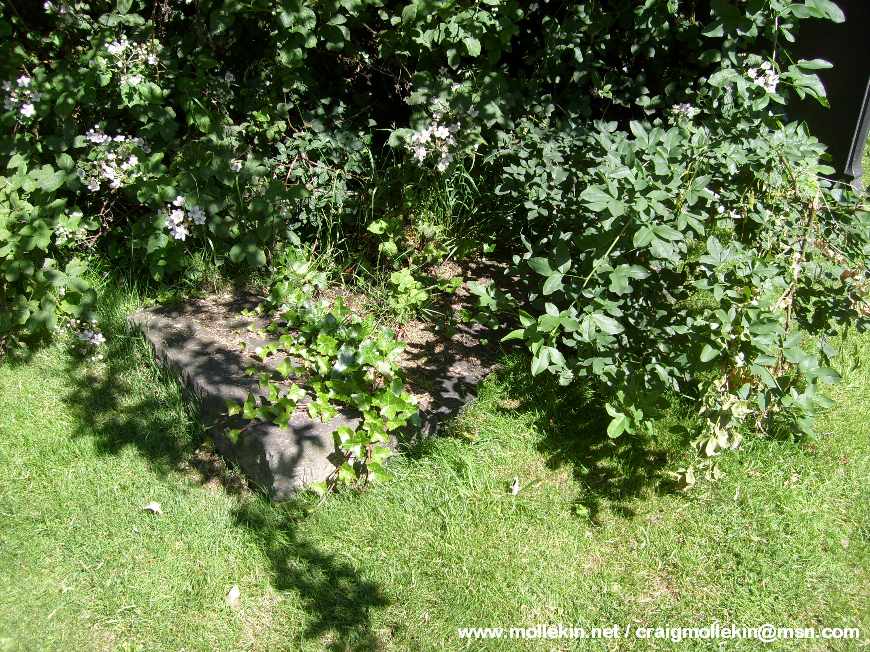
In the 1850s, Luke and Jane moved to live in Rotherham, where they remained. Luke died in 1891 and Jane in 1897. Their headstone still survives in Moorgate Cemetery, Rotherham, but has now toppled over and the inscription is no longer visible.

frederick-street-rotherham-copyright-colin-leonard-1965-1

Rotherham Waterworks

THE ROTHERHAM ADVERTISER – SATURDAY 19th DECEMBER 1891 – DEATH OF MR. L. BERRY, OF ROTHERHAM

We regret to have to record the death of Mr. Luke Berry, which took place at his residence, the Waterworks, Frederick Street, Rotherham, on Saturday evening. The deceased gentleman was 68 years of age. He had not been thoroughly well since June last, when he had the misfortune to be thrown out of a trap on his way to Ulley Reservoir. On that occasion he received a severe shock, and his heart had been in weak state ever since. However, he had only been confined to the house for about three weeks and was downstairs a few days before his death. Dr. Baldwin had been his medical adviser, and recently, Dr. Dyson, of Sheffield, was consulted. The cause of death was angina of the heart, coupled with an asthmatic condition.

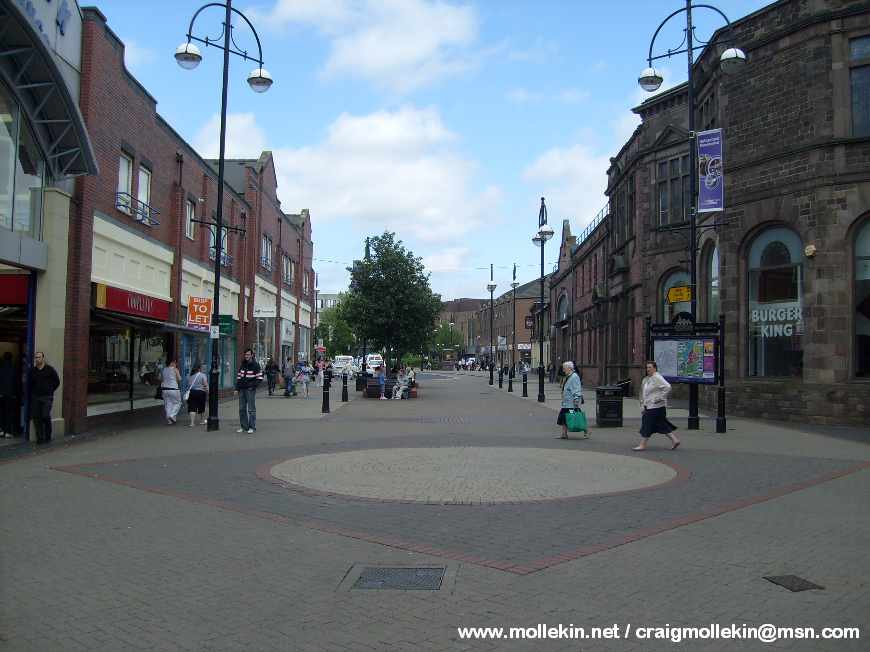
Frederick Street, Rotherham - 28.05.09 (3)

Frederick Street

Mr. Berry was a native of Kexbro’, near Barnsley. In his younger days he was engaged at Taylor’s Mills, Redbrook, and subsequently he was employed at Mitchell’s Ironworks, Worsbro’ Dale, as engine fitter and pattern maker. After a few years in that position he proceeded to the Kirkstall Forge, Leeds, belonging to Messes. Beecroft and Butler. It was at these works that the large engines at the Waterworks were produced. Mr. Berry had worked himself into a position of trust, and amongst other places visited Germany on the firm’s account. When the engines were erected at Rotherham, he had the management of the work, and as was customary with the firm with which he was identified, he stayed six months after their completion to see that all the work was in proper order. At the completion of that period the Local Board of Health secured his services as resident manager and engineer, a position which he retained for a period of 36 years.

Luke Berry - Roche Abbey - Circa 1889 (Copyright Liz Early)

Luke at Roche Abbey

Mr. Berry followed many scientific pursuits, and the observatory in the yard adjoining the house was an indication of the manner in which his mind was bent. Chemistry may be said to have been his favourite science, especially analysis, and he was able to test water and other liquids in a practical way. His apparatus shows he spared no expense in the acquisition of knowledge not only for the purposes of his profession, but also for his amusement. He constructed a valuable telescope, and also a sidereal timepiece, to and him in astronomical studies. At the time of his advent to Rotherham he made an organ. This instrument was used on one occasion at the Mechanics’ Hall, when an oratorio was performed. The organ was afterwards sold to Dr. Sewell, then organist of the Parish Church, and later it came into the possession of the Rev. Dr. Falding, and was used at the old Independent College, in College Road, Masbro’.

(Grave No. 69) Moorgate Cemetery, Rotherham - 24.06.09 (2)

Berry grave

Mr. Berry was fond of the microscope, and devoted some attention to photography, being a member of the council of the Rotherham Photographic Society, and also of the Rotherham Naturalists’ Society. Electricity found in him an earnest student. He introduced a system of electrical indicators, by which he could ascertain the depth of stored water at the reservoirs. He brought out several patents, one being a smoke consumer which is in use at the works at the present time. About twelve months ago he introduced a method by which two large boilers would do the work which four used to do, and saved something like £50 per month in fuel alone. As an organiser, his tact was clearly demonstrated in 1886, when there was a famine. For years he contended that Dalton was a necessity, the supply at Ulley, Pinch Mill, &c., not being adequate in the case of a continued dry period. The force of this brought home to the opponents of the scheme by the night and day labour which had to be done in a time of drought, to secure the use of the Dalton water. Mr. Berry took little or no part in politics although his views had a Conservative tendency.

For many years Luke was a local preacher in the Wesleyan Methodist denomination, first being identified with Talbot Lane and latterly with Eastwood Chapel. The deceased gentleman was held in great respect, and his demise is regretted by a large circle of friends. He leaves a widow and three daughters, viz, Mrs. F. Pinder, Mrs. J. Early, and Mrs. Brelsford.

Moorgate Cemetery, Rotherham - 13.07.09 (4)

Moorgate Cemetery

The interment took place at the Rotherham Cemetery, on Thursday, the officiating minister being the Rev. A. Westcombe. The mourners were Mrs. Berry, Mr. and Mrs. F. Pinder, Mr. and Mrs. J. Early, Mr. and Mrs. Brelsford, Mr. Mark Berry, Senior, Sheffield; Mr. Mark Berry, Junior; Mr. and Mrs. A. Price, Master Harry, the Misses Edith and Beatrice Pinder, Mr. W. A. Brelsford, Mr. Geo. A. Early, Mr. Walter Early, Barnsley; Mr. F. A. Early, Mr. Ernest Early, Mr. Jno. Walker, Barnsley; Mr. and Mrs. Geo. Wilson, Mr. J. Wilson, Miss Wilson, Hoyland; Mr. Herbert Walker, Miss S. A. Walker, Miss L. Walker, Miss M. A. Pinder, Mr. Palfreyman, and Mr. W. Crabtree, Doncaster. The members and officials of the Corporation followed in seven carriages. There were present Alderman Wragg, and Councillors F. Mason, G. Gummer, J. Pearce, T. Charles, J. Chesterfield, J. Cox, E. Hickmott, D. L. Winter, J. B. Habershon. The Mayor (Councillor W. L. R. Hirst) had written expressing his regret that he should be prevented by another engagement from attending the funeral. The Town Clerk (Mr. H. H. Hickmott) was unavoidably absent in consequences of having to be present at an important mining inquiry at Sheffield. The borough officials present were Mr. C. H. Muss (sic), borough accountant; Mr. E. Cooper, borough collector; Mr. G. J. Thurgarland, assistant to Town Clerk; Mr. J. Enright, chief constable; Mr. T. Bellamy, gas secretary; Mr J. Taylor, baths manager; Mr. H. Albiston, park keeper; Mr. E. C. May, park keeper; Mr. O. E. Parkin, sanitary inspector; Mr. H. J. Wright, stores keeper; Mr. J. Goodwin, gas manager; and Mr. W. Law, deputy market inspector. Wreaths had been forwarded by employees of the Waterworks, the officials of the Corporation, and from members of the family.

This post was originally published on Mollekin Portalite on 29/06/2011.